
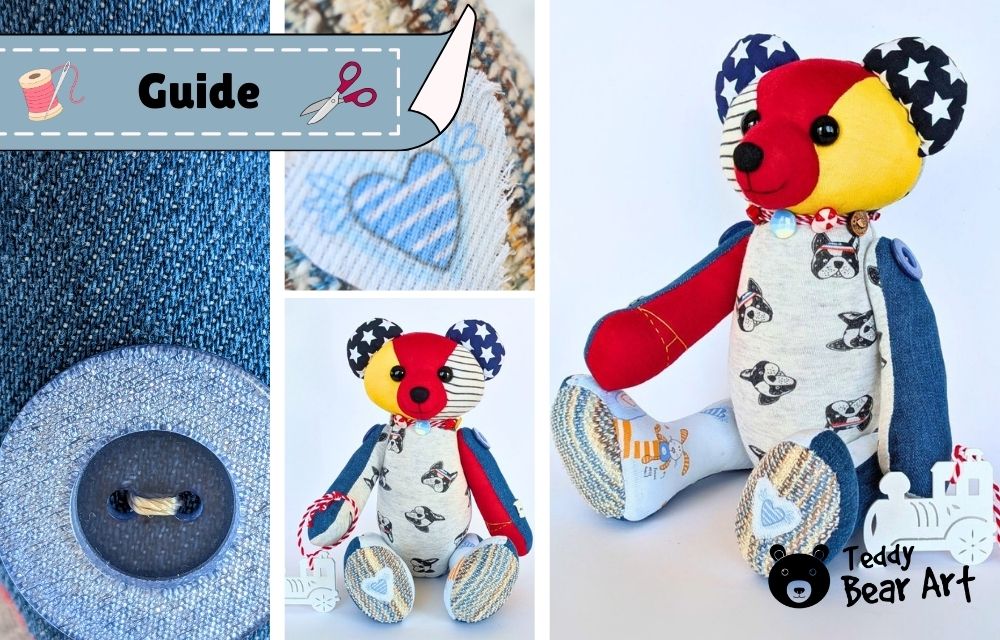

Making a keepsake teddy bear from meaningful clothing is one of the most touching sewing projects you can try. A memory bear out of baby clothes is a beautiful way to transform sentimental garments into a handmade keepsake that will be treasured for years.
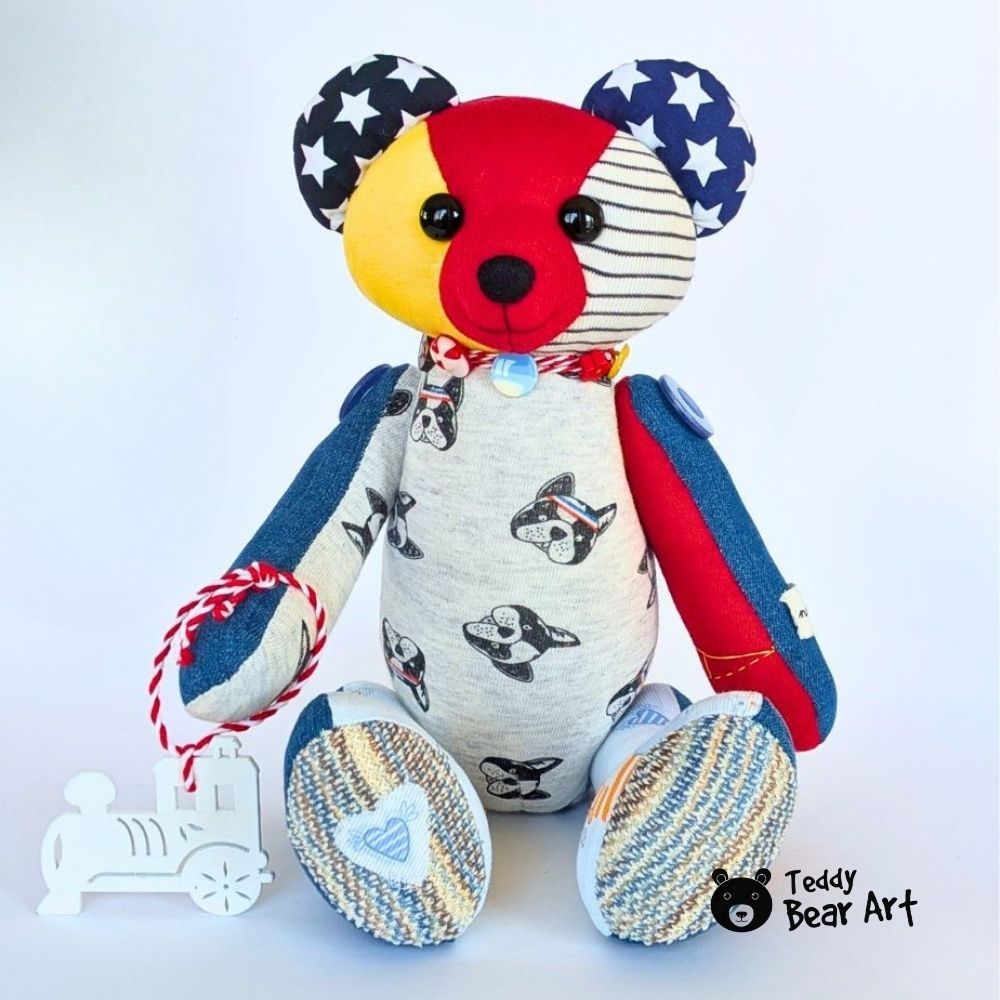
In this guide, you’ll learn what fabrics work best, simple tips for sewing with baby clothes, and helpful ideas for creating a meaningful memory bear that keeps its shape and character.
Memory bears are often created from baby clothes, children’s garments, or other sentimental fabrics. Instead of storing these clothes in a box, you can turn them into a soft keepsake teddy that holds memories for years.
Even small pieces of fabric from baby shirts, pajamas, or tiny pants can become part of a meaningful handmade bear.
What Is a Memory Bear?
A memory bear is a teddy bear sewn from clothing that has emotional value. Many people create them from:
• baby clothes
• children’s outfits
• favorite family garments
• clothing for special occasions
Because each piece of fabric carries a memory, every memory bear becomes unique.
Some bears are made from just one garment, while others combine many fabrics to create a patchwork-style keepsake.
Baby clothes are actually perfect for memory bear projects.
They are usually made from soft knit fabrics that are comfortable to touch and easy to shape when sewing.
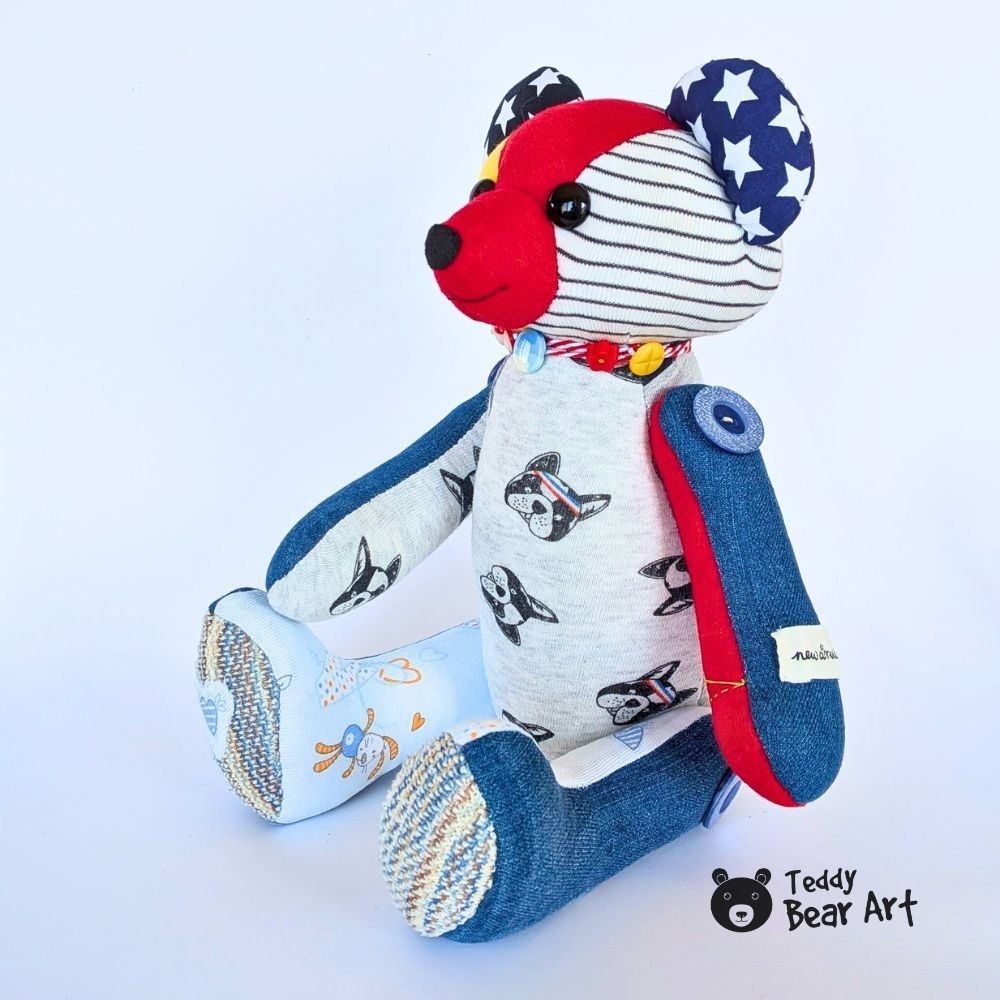
Another reason is sentimental value. Parents often keep small baby clothes for years, but rarely know what to do with them. Turning those clothes into a teddy bear keeps the memories visible and meaningful rather than hidden in storage.
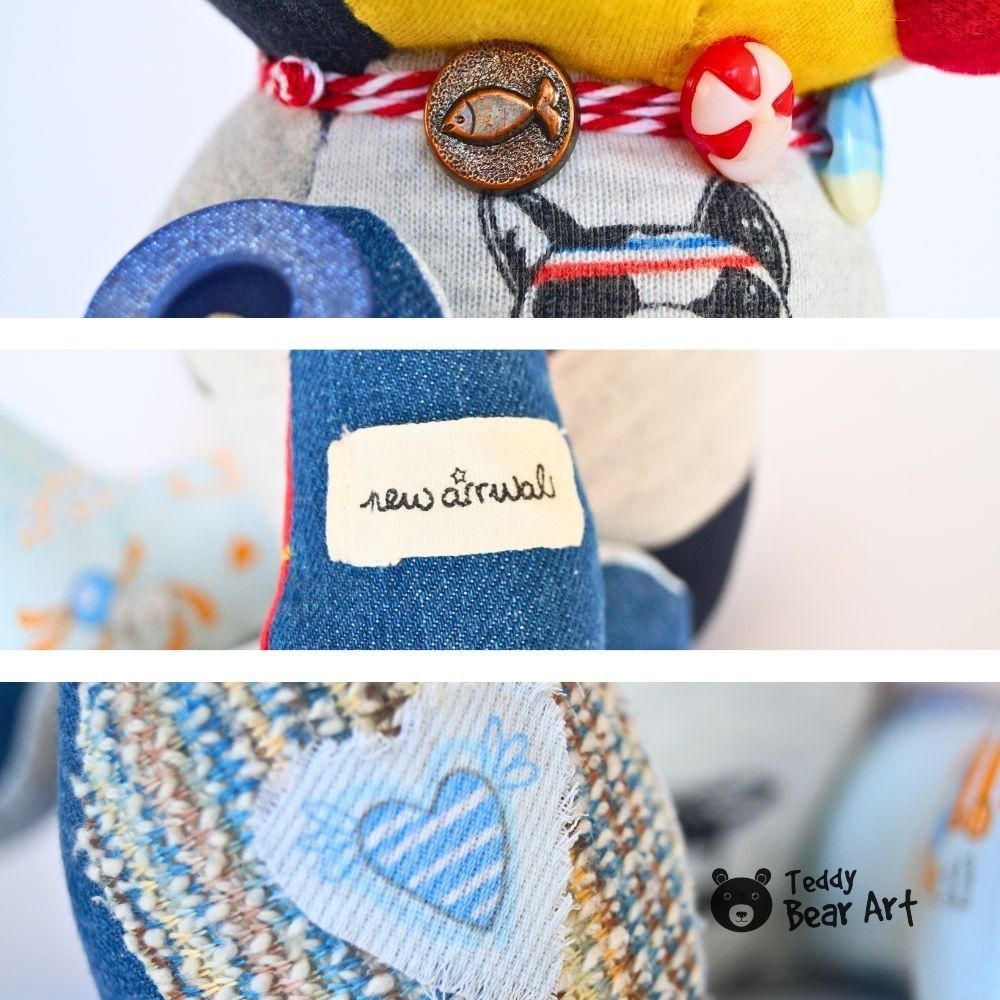
Small details like prints, labels, or buttons can also become decorative elements on the bear.
Choosing Fabrics
If you want to make a memory bear out of baby clothes, it helps to understand which fabrics work best.
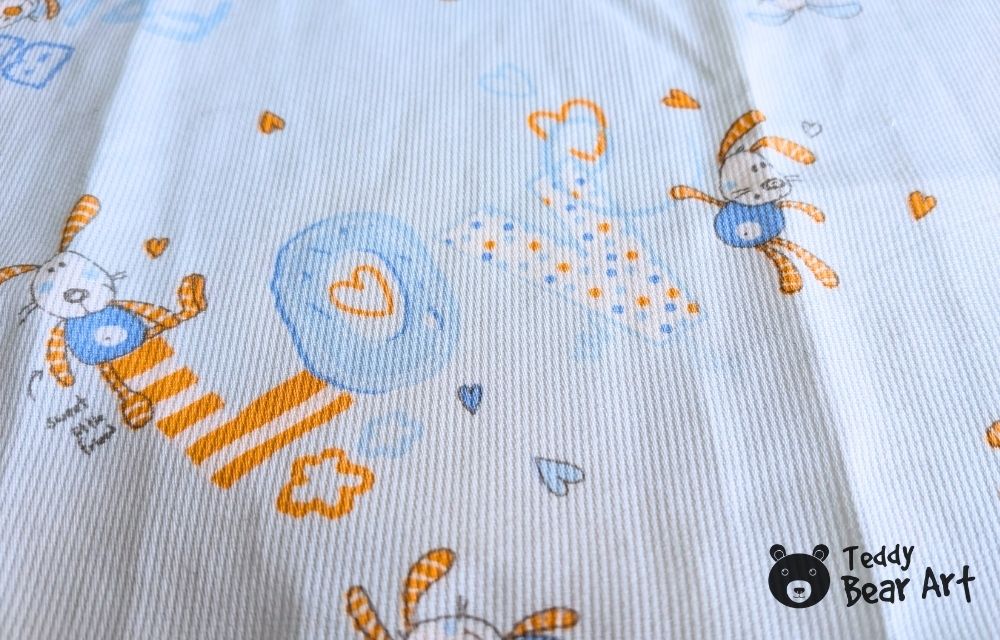
Most baby clothing uses slightly stretchy knit fabrics, which work well when sewing a memory bear.
Good fabric options include:
• cotton jersey (t-shirts)
• medium weight knit fabrics
• french terry or light sweatshirt fabric
Stretch fabrics help create a softer, more natural shape for the bear’s head and body.
However, mixing fabrics can improve stability and make the finished bear look more balanced.
For example:
• legs often work better in non-stretch cotton or light denim
• paw pads can be sewn from dense stretchy fabric
• arms can combine knit fabric with cotton or denim accents
This mix keeps the bear soft while helping it hold its shape.
Tips for Sewing Stretchy Baby Clothes
Many beginners worry about sewing with stretchy fabrics, but a few simple tips make it much easier:
- Sew slowly and carefully – take your time to maintain even stitches and avoid puckering.
- Use a needle designed for knit fabrics when sewing by machine – a ballpoint or stretch needle helps prevent skipped stitches and fabric damage.
- Avoid pulling the fabric while sewing – let the machine feed the fabric naturally to keep seams smooth.
- Reinforce seams if the fabric stretches too much – here are detailed methods:
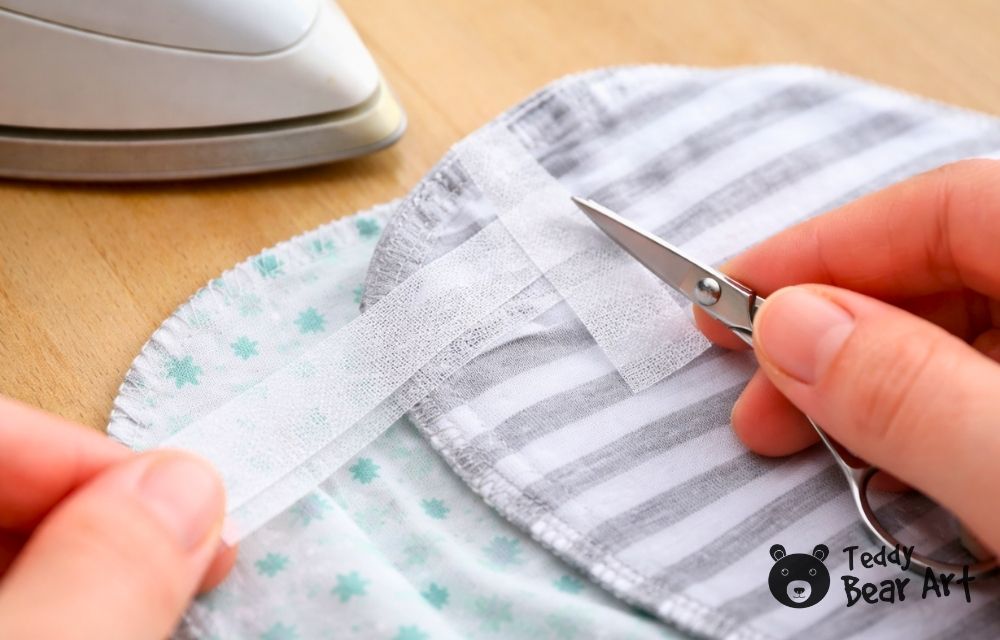
- Use fusible interfacing: Apply a lightweight fusible interfacing (also called “stay tape”) to the seam allowance to stabilize areas like shoulders, necklines, or armholes. This prevents stretching and keeps the shape.
- Stay stitching: Sew a line of straight stitches just inside the seam allowance before assembling pieces. This acts as a guide and limits stretching.
- Zigzag or stretch stitches: Use a narrow zigzag stitch or a stretch stitch for seams that need flexibility. Combine with interfacing if extra support is needed.
- Double stitching: For high-stress areas, sew two parallel rows of stitches to reinforce seams.
- Hand-basting: Temporarily hand-baste seams before machine sewing to control stretch.
Stretch fabrics, when stabilized properly, help create a very natural teddy bear shape, especially around the head and muzzle. Proper reinforcement keeps the bear soft but ensures it holds a defined form.
How Memory Bears Are Usually Assembled
Most memory bears are sewn from several pattern pieces that form the head, body, arms, and legs.
The head is usually constructed from:
• side head pieces
• a head gusset
• a muzzle section
• a back head piece
After sewing the parts together, the bear is stuffed and assembled.
Attaching eyes is one of the small details that gives a teddy bear its personality.
There are different ways to add eyes depending on the materials you prefer.
In this short video, you can see a method for attaching glass eyes to a keepsake bear.
This technique works well for memory bears made from baby clothes and other soft fabrics.
Arms and legs are often attached using button-thread joints, which allow them to move gently.
If you want to learn this method, you can see a full explanation here:
This traditional joint technique works especially well for memory bears made from soft fabrics.
Memory Bear Pattern Idea
If you would like to make your own keepsake bear, I created a Memory Bear Sewing Pattern Out of Baby Clothes, designed specifically for combining fabrics from children’s garments.
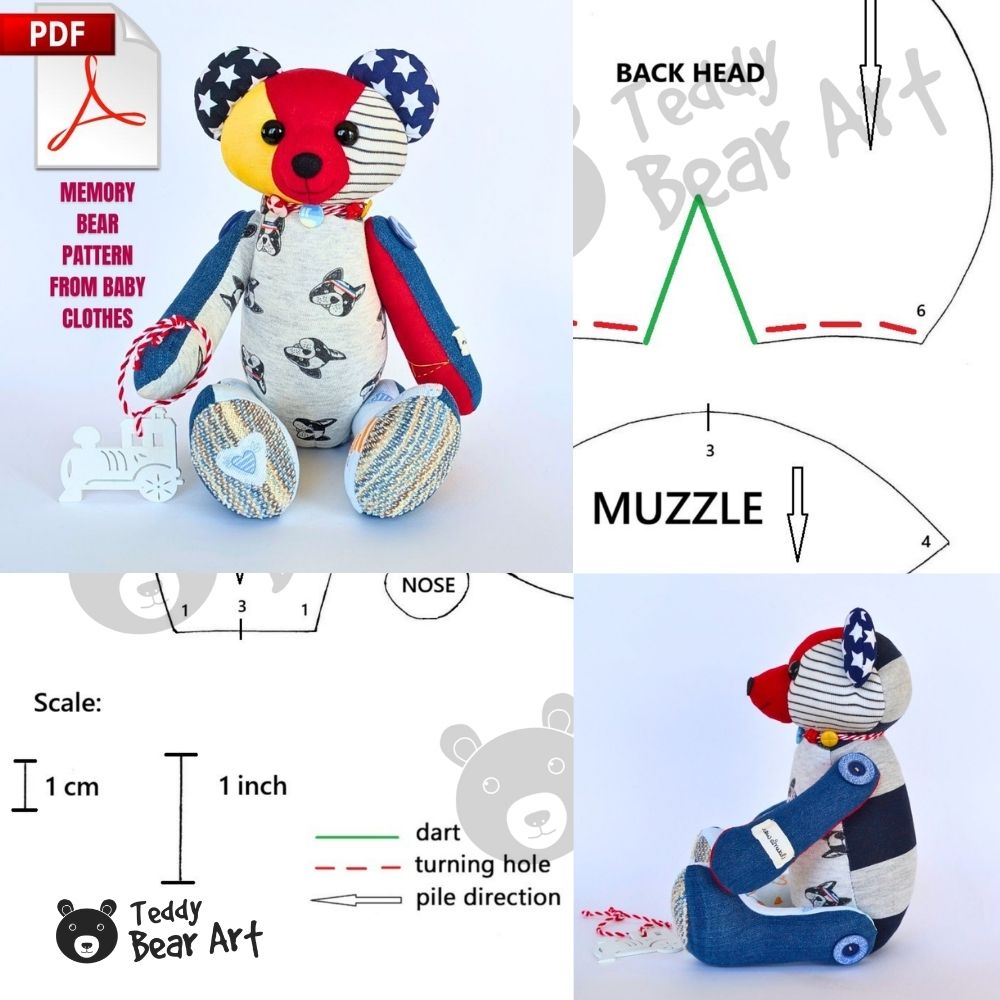
The finished bear measures approximately:
25 cm sitting (10 inches)
35 cm standing (14 inches)
The pattern works well with slightly stretchy fabrics such as t-shirts and baby clothing while still allowing you to combine them with cotton or denim accents.
It is designed to create a soft, mixed-fabric memory bear, similar to the one shown in the example.
What You Get in the PDF Pattern
• Full-size printable teddy bear pattern pieces
• Fabric recommendations
• Step-by-step head construction guide
• Stuffing tips for a beautiful shape
Skill level: confident beginner / intermediate
(Some experience with stretchy fabrics is helpful.)
Personalizing Your Memory Bear
One of the most beautiful parts of making a memory bear is adding small personal details.
You can include:
• buttons from the original clothing
• labels or tags from baby garments
• small embroidered initials
• decorative fabric patches
These tiny elements make the bear even more meaningful and turn it into a true keepsake.
Some makers even create small button necklaces or bracelets using buttons from the original clothes.
Before You Go
Learning to make a memory bear out of baby clothes is a wonderful way to preserve memories while creating something handmade and meaningful.
Each bear becomes a one-of-a-kind keepsake that carries the story of the clothing it was made from.
Whether you use one special garment or combine many pieces of baby clothes, the result is always personal, soft, and full of memories.
Get Free Patterns & Be the First to Know!
Want free teddy bear patterns, exclusive tutorials, and a chance to win craft supplies?
Sign up for our newsletter using the subscribe form in the middle of this article to receive new patterns, insider tips, and the latest news on teddy bear art. You’ll also automatically be entered into our annual giveaway for a chance to win teddy bear crafting materials.
Bonus entry: Save one of our pins on Pinterest to increase your chances of winning!
Let’s create, inspire, and craft beautiful teddy bears together!
Hello,
I have a question that’s a bit off-topic from the article, but I hope you don’t mind me asking. Do you create custom memory bears? I’m really curious because I always love seeing unique bears with personalized details, like special embroidery, clothing, or little accessories that make each bear one-of-a-kind. I imagine it must be such a rewarding process to work on something so personal for someone else.
I don’t make memory bears on order myself, but I’ve been designing patterns and instructions for many years for people who specialize in creating their own unique bears. Over time, I’ve learned a lot about what makes a memory bear feel special and how to adapt designs to different ideas and preferences. So, while I can’t take custom orders personally, I love sharing my experience, tips, and ideas on creating beautiful, detailed, and truly unique bears.
Hi Hanna,
I have a question. I’ve been thinking about memory bears and I’m curious how people usually find someone who can make one. Are there specific places or communities where makers offer this kind of work? I’d love to understand where to start looking.
I really appreciate any help you can provide.
Hi! A good place to start is in specialized Facebook groups where teddy bear makers and handmade artists share their work. You can often find experienced makers there or even ask for recommendations. It’s a great way to connect directly and see different styles before choosing someone.