
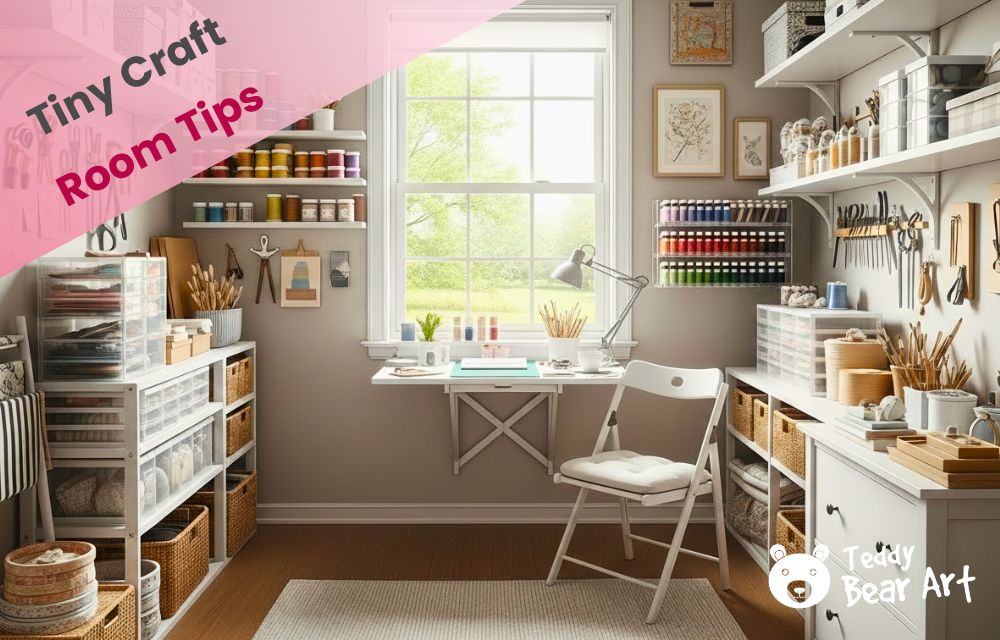

A small craft room can become cluttered faster than any other space in the home. Supplies multiply, tools migrate, and suddenly, creativity feels harder, not easier. How to organize a small craft room is a question many crafters ask when space is limited and ideas seem to overflow every surface. With smart planning and intentional storage, tiny craft rooms can be just as functional, inspiring, and enjoyable as large studios. The key is not more space, but better use of the space already available.

Understanding Your Space
Before organizing begins, the space itself needs attention. A small craft room might be a dedicated room, a shared office, a closet, or a simple corner. Each option comes with its own limits and advantages. Measuring walls, doors, and vertical areas helps reveal opportunities that often get overlooked. Once the physical boundaries are clear, priorities should follow. We need to decide which crafts deserve prime real estate and which supplies can live in secondary storage.
Decluttering plays a major role at this stage. Keeping supplies that support current projects makes the room easier to manage and more enjoyable to use. Grouping materials by craft type helps reveal duplicates and unused items. A small craft room works best when it supports creativity instead of storing forgotten supplies.
Smart Storage Systems
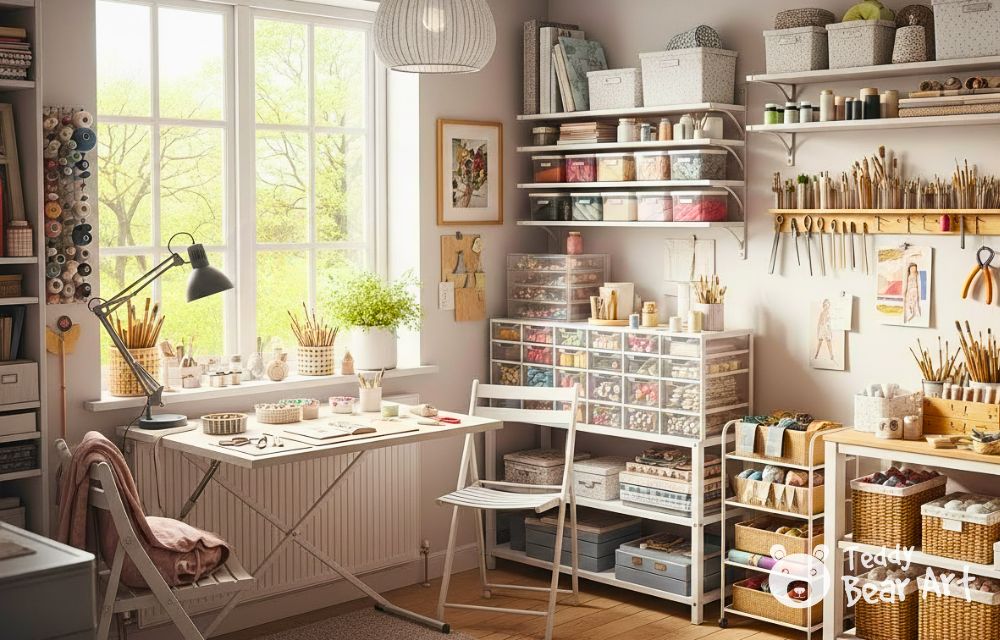
How to organize a small craft room effectively always comes back to systems. Random containers create visual noise, while intentional systems create calm. Storage should match how supplies are used. Frequently used tools belong within arm’s reach. Seasonal or occasional items can live higher up or in deeper storage.
Clear containers make it easy to see what is inside and prevent buying duplicates. Drawer dividers keep small tools from becoming tangled. Stackable bins allow storage to grow upward instead of spreading outward. Rolling carts add flexibility and can move between zones as needed.

Storage Solutions for Teddy Bear Makers
For teddy bear makers, organizing tiny materials like fabric scraps, threads, buttons, and small accessories can be particularly challenging. Clear compartment boxes and small stackable bins work wonders for keeping tiny pieces visible and accessible. Grouping items by type, such as stuffing, joints, ribbons, and miniature clothes, ensures that every material has its own home and saves time when crafting.
Rolling carts and small drawer units are perfect for moving projects around or storing tools close to your worktable. Labeling containers not only keeps supplies organized but also makes it easier to track specialized items like safety eyes, tiny buttons, or embroidery floss. By creating a dedicated “bear-making corner” with vertical storage and clearly defined zones, crafters can maximize small spaces while maintaining a tidy, inspiring workshop.

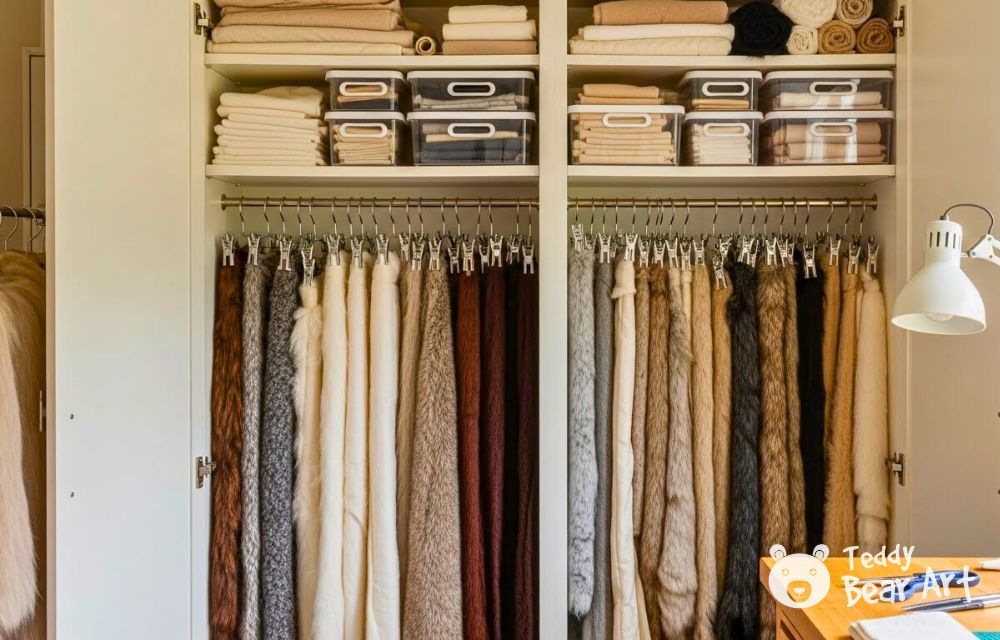
When it comes to specialty materials like mohair, plush, or fur for teddy bears, proper storage makes a huge difference. Long pieces of fabric can either be stored flat in boxes, bins, or drawers to keep them clean and dust-free, or they can be hung vertically to avoid creases and make each piece visible. Using hangers designed for pants or skirts with wide clips works perfectly — they hold the fabric gently without leaving marks, allowing crafters to quickly see and select what they need.
For smaller scraps, clear compartment boxes or zip bags are ideal to keep pieces sorted by color or type. Rolling storage carts with bins are also handy for moving materials close to the worktable during projects. Combining flat storage for delicate or folded pieces with hanging solutions for long or bulky fabrics ensures that all materials are both accessible and preserved in excellent condition.
Vertical Space & Zones
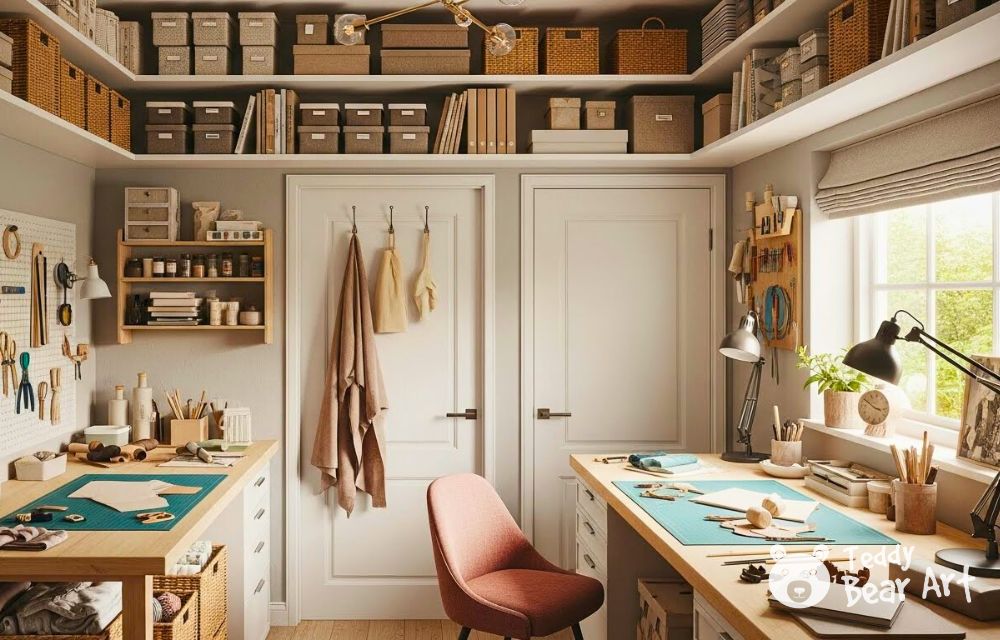
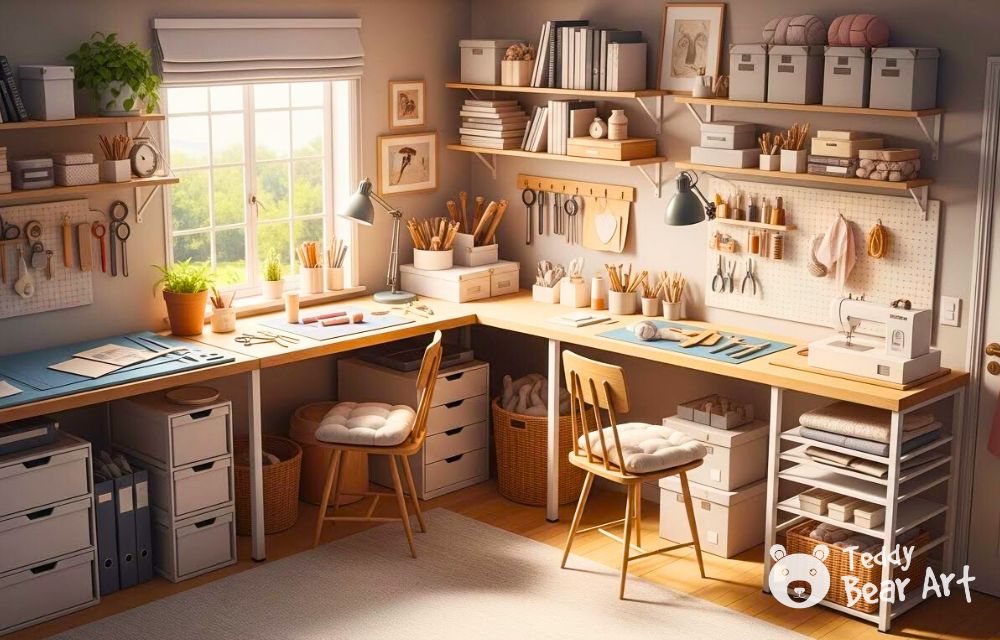
Vertical space is often the most underused asset in a small craft room. Walls, doors, and even the backs of cabinets can store tools and supplies without sacrificing floor space. Pegboards are ideal for scissors, rulers, and frequently used tools. Floating shelves hold baskets, jars, and bins while keeping the room open. Over-the-door organizers work well for ribbons, paper, or lightweight supplies.
Creating zones brings order to small spaces. Even the tiniest craft room benefits from defined areas for cutting, sewing, assembling, or drawing. Zones do not require extra furniture. Trays, containers, and carts can define work areas while staying flexible. When each activity has a clear place, cleanup becomes faster, and the room feels more spacious.
Budget & Shared Spaces
A functional craft room does not require expensive furniture or custom cabinetry. Budget-friendly solutions often work better in small spaces. Dollar store bins, recycled jars, magazine holders, and kitchen organizers can be repurposed for craft storage. IKEA products are popular because they are modular and adapt easily to changing needs.
Many crafters work without a separate room. A craft corner in a living room or bedroom can function well with vertical shelving and mobile storage. A craft closet becomes efficient with wall-mounted storage and pull-out bins. In shared spaces, everything should pack away neatly so the room can return to its main purpose quickly and easily.
Maintenance & Tips
An organization only works when it is easy to maintain. Small routines prevent clutter from building up. A quick reset at the end of each crafting session keeps supplies from spreading. The one-in-one-out rule helps control overflow as new materials arrive. Seasonal reviews allow the space to evolve with current interests and projects.
A small craft room does not need perfection, it needs consistency. When systems match real habits, organization becomes natural instead of forced.

Frequently Asked Questions
How do you organize a small craft room on a budget?
A small craft room can be organized affordably by using clear bins, recycled containers, drawer dividers, and wall storage. Repurposing household items and choosing modular solutions helps save both money and space.
What is the best storage for a tiny craft room?
The best storage options for a tiny craft room include pegboards, wall shelves, stackable bins, and multipurpose carts. These solutions maximize vertical space and reduce floor clutter.
How can you maximize space in a small craft room?
Space can be maximized by using walls, doors, and corners for storage, creating clear activity zones, and avoiding unnecessary furniture. A strong organizational system makes a small craft room feel larger and easier to use.
Before You Go
Organizing a small craft room is about building systems that support creativity instead of competing with it. When priorities are clear, vertical space is used wisely, and storage matches real habits, even the tiniest craft room can feel calm and inspiring. With thoughtful planning and space-saving ideas, small craft rooms can stay organized long term and continue to support creative work with ease.
Check out more clever storage ideas for craft materials:
Get Free Patterns & Be the First to Know!
Want free teddy bear patterns, exclusive tutorials, and a chance to win craft supplies?
Sign up for our newsletter using the subscribe form in the middle of this article to receive new patterns, insider tips, and the latest news on teddy bear art. You’ll also automatically be entered into our annual giveaway for a chance to win teddy bear crafting materials.
Bonus entry: Save one of our pins on Pinterest to increase your chances of winning!
Let’s create, inspire, and craft beautiful teddy bears together!
My daughter wasn’t really into crafts when she was younger, but she completely fell in love with it in her teens. I know it may sound a bit funny, but I’m actually glad it happened this way, now every craft supply she keeps has a purpose and a little story behind it. 🙂
Since many of her materials are different shapes and sizes, do you think the over-the-door transparent pocket organizers you mentioned would work well for organizing craft supplies, or do they tend to look cluttered once filled?
Thank you so much for sharing this. I love how you described your daughter’s creative journey 🙂
Over-the-door transparent pocket organizers can work really well for craft supplies, especially in small spaces. They’re great for lightweight items like ribbons, threads, paints, tools, and smaller materials because everything stays visible and easy to reach.
To keep them from looking cluttered, I usually recommend grouping similar supplies together and not overfilling the pockets. When used this way, they stay practical and still look neat, even in a tiny craft room.
This is such a helpful guide!
I love how the article focuses on systems instead of just “storage.” Indeed, craft supplies multiply so fast, and without a good plan, even a small space can become overwhelming.
The idea of using vertical space is a game-changer. Pegboards, wall shelves, and over-the-door organizers are perfect for keeping everything visible and easy to grab. I especially liked the part about creating zones (cutting, sewing, assembling). That makes the room feel more organized without needing more furniture.
Also, the tips for teddy bear makers are really practical. Those tiny pieces, like buttons, threads, and eyes, can get lost so quickly. Clear bins and labeled compartments make such a difference. Thank you for sharing these ideas!
You’re welcome! After many years of bear making, I’ve realized how much the process depends on preparation and order. This way, everything stays in good condition, and I can fully enjoy the creative part without distractions. It’s a small habit, but it makes a big difference in my daily work.