

How to set up a plush toy sewing business is a question many creative makers ask when a hobby starts to feel like something more. Sewing plush toys at home can grow into a real small business if it is built with the right foundation, clear planning, and an understanding of both creativity and practical details. This guide walks step by step through the process, focusing on handmade production, realistic expectations, and smart decisions that work for home-based artists.
Is This Business Right for You?
A plush toy sewing business from home is very different from factory production. It relies on manual skills, patience, and consistency. We are not talking about thousands of identical toys but small batches, unique designs, and personal quality control. This type of business suits people who enjoy sewing regularly, solving small design problems, and working independently.
Time management is essential. Sewing plush toys involves pattern cutting, stitching, stuffing, finishing, and often hand-sewing small details. It is important to enjoy the process, not just the idea of selling the final product. Many beginners underestimate how long one toy actually takes to make, which later affects pricing and motivation.
Choosing Your Plush Toy Niche
Before sewing the first product for sale, a clear niche helps avoid confusion and burnout. Plush toys can include classic teddy bears, simple animal plushies, art dolls, nursery decor toys, or collectible pieces for adults. Each direction attracts a different audience and price range.

Style, size, materials, or purpose can define a niche. Some makers focus on eco-friendly toys, others on heirloom-quality teddy bears, and some on playful modern characters. A focused niche makes branding easier and helps customers instantly recognize the work.
Designing Plush Toys and Creating Patterns
Design is the heart of a plush toy sewing business. Every successful product starts with a clear idea and a well-tested pattern. Sketching concepts helps visualize proportions and personality before touching fabric. From there, patterns are drafted, sewn, adjusted, and tested again.
Good plush toy patterns balance cuteness with construction logic. Seams should be strong, shapes should be consistent, and assembly should not feel overly complicated. Testing prototypes with different fabrics often reveals issues that are invisible on paper. This stage takes time but saves frustration later.
Tools and Materials You Need to Start
A home plush toy business does not require industrial equipment. A reliable sewing machine, sharp fabric scissors, pins or clips, hand sewing needles, and basic measuring tools are enough to begin. Quality matters more than quantity when choosing tools.
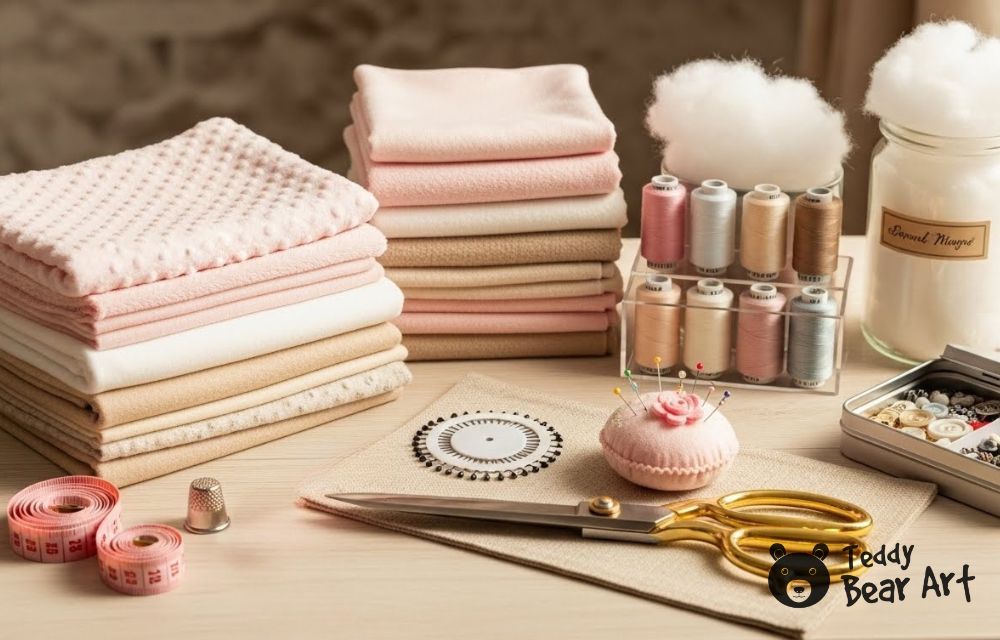
Materials influence both safety and appearance. Common plush fabrics include cotton, fleece, minky, mohair, and felt. Stuffing should be durable and washable. For toys intended for children, safety eyes or embroidered details are essential. Clear labeling and safe construction build trust with buyers.
For crafters looking for more detailed guidance on safe materials, check out this quick worldwide guide to fabric safety standards for toys to ensure every plush is safe for children.
Setting Up Your Home Sewing Workspace
A dedicated workspace improves efficiency and enjoyment. Even a small table in a quiet corner can work if it stays organized. Fabrics should be stored cleanly, tools should be easy to reach, and unfinished toys kept separate from completed ones.

Good lighting is often overlooked but makes a big difference, especially for detailed sewing. Working from home also means setting boundaries, and regular sewing hours help turn creative time into productive business time.
Set Up a Plush Toy Sewing Business Step by Step
To understand how to set up a plush toy sewing business from home in a practical way, it helps to break the process into clear, manageable steps. Start by defining a focused product line and creating a small collection instead of many designs at once. Next, calculate material costs and sewing time realistically, then prepare simple packaging and basic branding elements such as tags or labels.
Once the foundation is ready, the focus shifts to choosing where to sell. Many makers begin with platforms like Etsy or local craft markets and expand later. Clear photos, accurate descriptions, and transparent pricing help create a professional impression from the very beginning.
Calculating Costs and Pricing Your Plush Toys
Pricing handmade plush toys is one of the hardest parts for beginners. Costs include materials, tool wear, packaging, platform fees, and time. Time should always be valued, even in a home-based business.
Underpricing leads to burnout and resentment. A sustainable price reflects skill, uniqueness, and quality. Comparing prices within the same niche helps, but copying low prices rarely leads to long-term success.
Legal and Safety Basics for Plush Toy Businesses
Selling plush toys involves basic legal responsibilities. Depending on the location, registration as a small business may be required. Toys intended for children often need safety labels and compliance with toy safety standards.
A helpful resource for understanding handmade toy safety in the United States is the Consumer Product Safety Commission guide for small manufacturers, which explains labeling and testing requirements in clear language. This information can be found through the official CPSC website and is essential reading for anyone selling toys.
Where and How to Sell
Online platforms offer easy entry for home-based sellers. Etsy remains popular for handmade plush toys, while local markets allow direct customer feedback. Some makers later create their own websites to build a stronger brand presence.
Each sales channel requires a slightly different presentation. Online shops rely heavily on photos and descriptions, while in-person sales benefit from storytelling and display. Testing different channels helps find the best fit.
Branding and Marketing
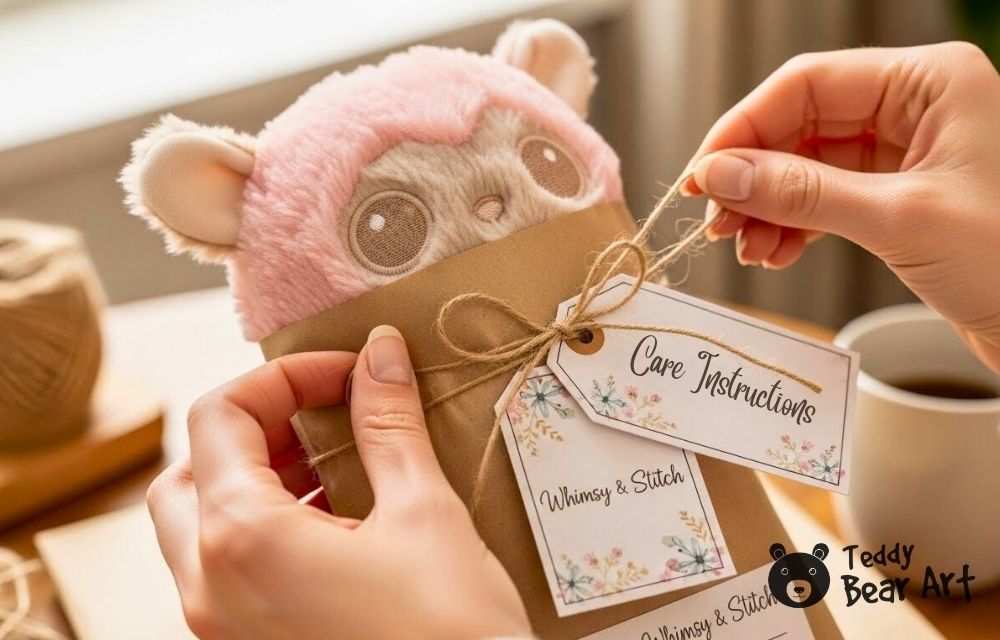
Branding is more than a logo. It includes style, tone, packaging, and the story behind the toys. Consistent colors, materials, and photography help create recognition.
Social media works well for plush toys because they are visual and emotional products. Showing work in progress, finished toys, and small details builds connection and trust. Marketing does not need to be loud, it needs to be honest and consistent.
Scaling Your Plush Toy Business
Growth should be gradual. Increasing production too quickly can remove the joy from sewing and lower the quality. Scaling can mean raising prices, improving efficiency, or offering limited collections instead of mass output.
Some makers outsource small tasks like cutting fabric or packaging, while keeping sewing and design in house. Growth looks different for every business and should match personal goals.
Common Mistakes
Many beginners try to do too much at once. Too many designs, too many platforms, or too many materials can slow progress. Another common mistake is ignoring safety details or rushing patterns without enough testing.
Learning from mistakes is part of the process. A slow, thoughtful start often leads to a more stable and enjoyable business.
Frequently Asked Questions
Is a plush toy sewing business profitable?
A plush toy sewing business can be profitable when pricing reflects both materials and time. Handmade plush toys are valued for uniqueness, quality, and craftsmanship. Profit grows as processes become more efficient and a clear niche attracts the right audience.
How much does it cost to start a plush toy sewing business from home?
Startup costs are usually low compared to many other businesses. Basic expenses include fabric, stuffing, tools, packaging, and small branding materials. Many makers start with supplies they already own and reinvest profits gradually.
How much time does it take to make one plush toy?
Time depends on design complexity and experience. Simple plush toys may take a few hours, while detailed teddy bears or art dolls can take much longer. Tracking time helps with accurate pricing and planning production schedules.
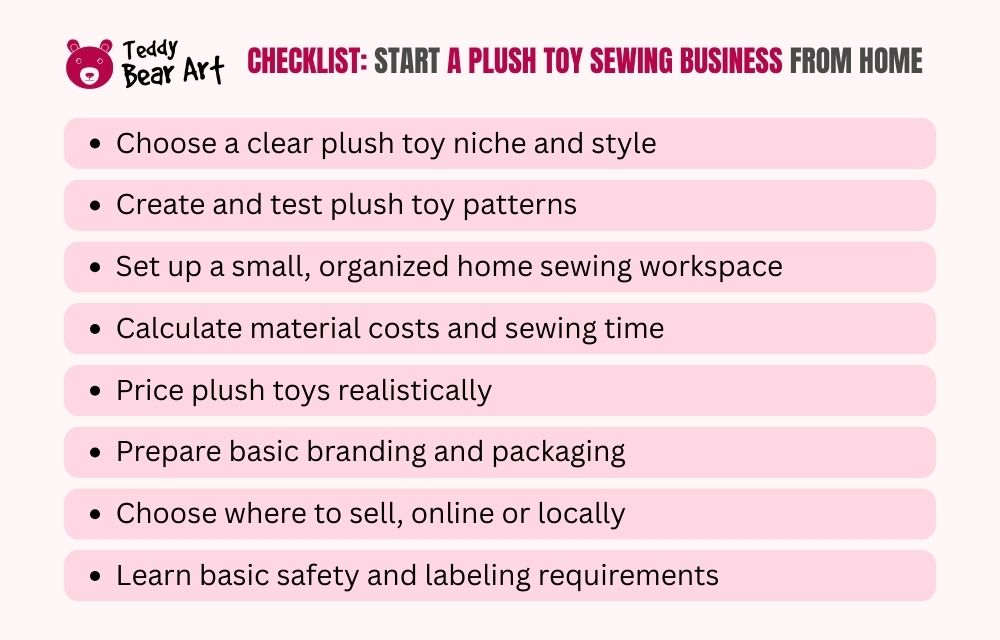
Checklist: Start a Plush Toy Sewing Business from Home
Download or save this checklist to keep all the key steps in one place.
Before You Go
Starting a plush toy sewing business from home is not about doing everything perfectly from day one. It is about building skills, understanding costs, and creating products that feel thoughtful and well-made. With a clear niche, realistic planning, and a comfortable home workspace, this type of business can grow at a steady and enjoyable pace.
Focus on quality, safety, and consistency, and allow the business to develop step by step. Small improvements in design, workflow, and presentation can make a noticeable difference over time. With patience and creativity, a home-based plush toy sewing business can become both a fulfilling creative project and a reliable source of income.
Get Free Patterns & Be the First to Know!
Want free teddy bear patterns, exclusive tutorials, and a chance to win craft supplies?
Sign up for our newsletter using the subscribe form in the middle of this article to receive new patterns, insider tips, and the latest news on teddy bear art. You’ll also automatically be entered into our annual giveaway for a chance to win teddy bear crafting materials.
Bonus entry: Save one of our pins on Pinterest to increase your chances of winning!
Let’s create, inspire, and craft beautiful teddy bears together!
Hello Hanna!
I really enjoyed this article, thank you for making the idea of starting a plush toy sewing business feel real instead of just a dream! I’ve always loved handmade toys but never knew where to begin turning that into something sustainable, so your step-by-step tips and honest insights about time, pricing, and finding your audience were super helpful.
Do you find there’s one part of the process (like social media, craft shows, or your website) that tends to make the biggest difference early on? And for someone balancing creative ideas with everything else at home, which part do you think is most important to focus on first? This definitely gave me a clearer sense of direction!
Angela M 🙂
Hi Angela
Thank you so much for your kind words. It really makes me happy to hear the article helped you see that starting a plush toy business can actually be doable
From my experience, the biggest difference usually comes from having a small, clear home base, such as your website or an online shop, where people can actually see and buy your work. Social media is great for sharing your journey and building connections, but having that central place to showcase your bears and take orders makes things feel real and manageable.
If you are balancing creative ideas with everything else at home, I would focus first on creating a few finished pieces you are proud of and getting them photographed nicely for your site or shop. Once that is in place, promoting them through social media or craft shows becomes much easier and less overwhelming
You are already thinking about this so thoughtfully, and that is half the battle. Can’t wait to hear how your bears come to life
Hanna
This is such a thorough and inspiring guide, Hanna! I love how you break down the process step by step, from choosing a niche to pricing, branding, and even scaling. The emphasis on realistic expectations and enjoying the process is so important for anyone starting a home-based creative business. Your tips on workspace setup, safety, and social media marketing make it feel very actionable. Thanks for sharing such a practical resource for makers who want to turn their hobby into a successful plush toy business!
Thank you so much! I’m really glad you found the guide helpful and inspiring.