
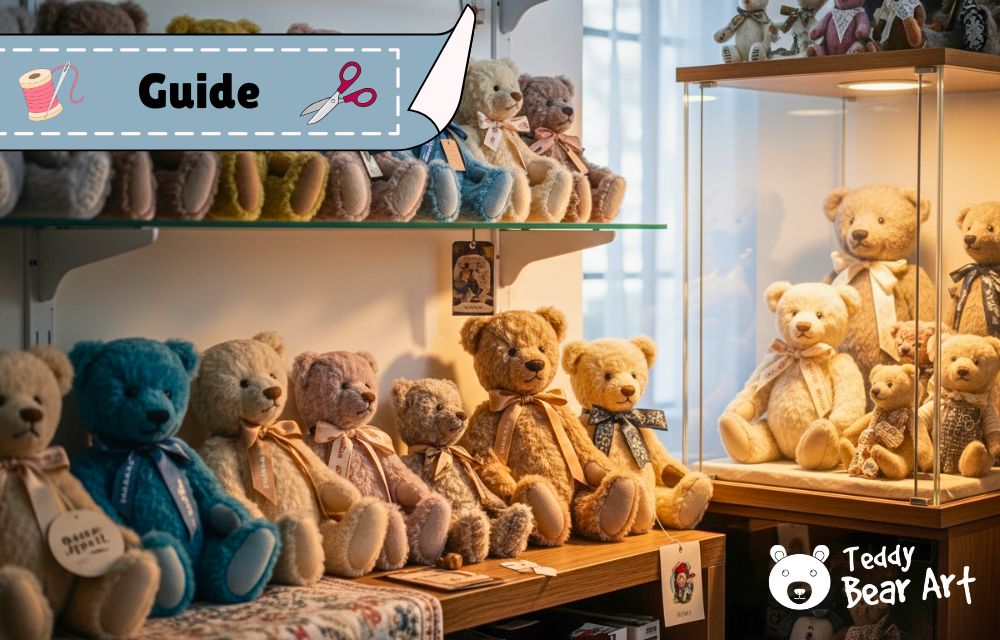

Plush display is not just about placing toys on a shelf, it is about honoring the craftsmanship, materials, and story behind handmade and collectible pieces. When plush toys are thoughtfully displayed, they become part of the interior, not clutter. In this guide, we explore plush display ideas that protect delicate materials, enhance visual appeal, and help collectible toys truly shine in a home, studio, or creative space.
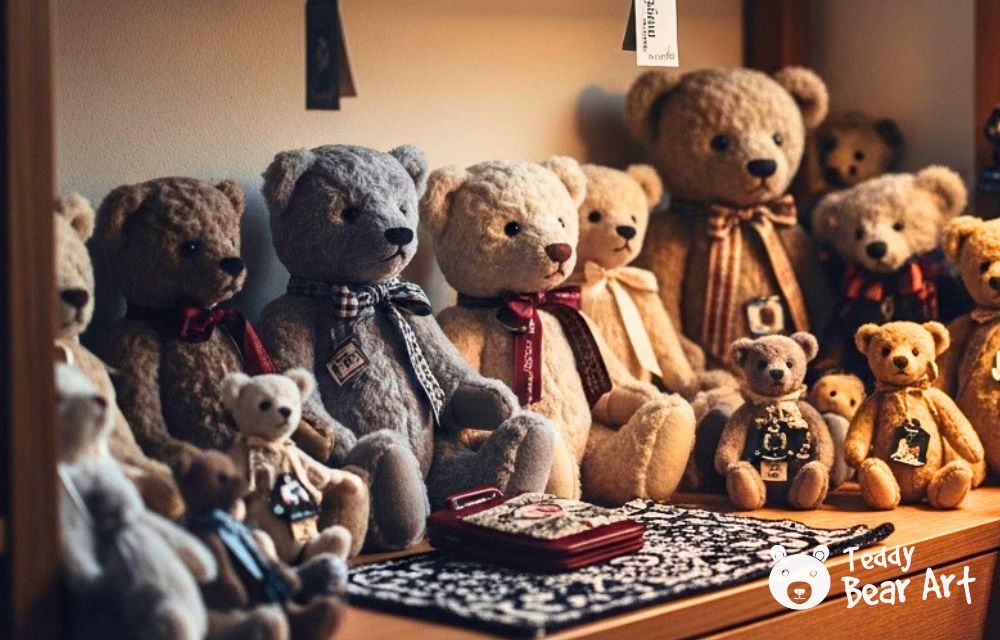
Handmade plush toys and collectible bears are often created to be admired, not hidden away. With the right display approach, they can add warmth, character, and personality to a room while staying safe from dust, sunlight, and accidental damage.
Why Thoughtful Plush Display Matters
Collectible plush toys are often made from mohair, alpaca, viscose, or specialty fabrics that react to light, humidity, and pressure. Poor display choices can lead to fading, fabric stress, or distortion over time. A well-planned plush display balances beauty and preservation.
Display choices also shape how a collection is perceived. A single handmade bear displayed intentionally can feel like a piece of art, while an overcrowded shelf can diminish even the most beautiful work. When we display plush toys with care, we communicate value and respect for the craft.
Plush Display for Protection
Open Shelving
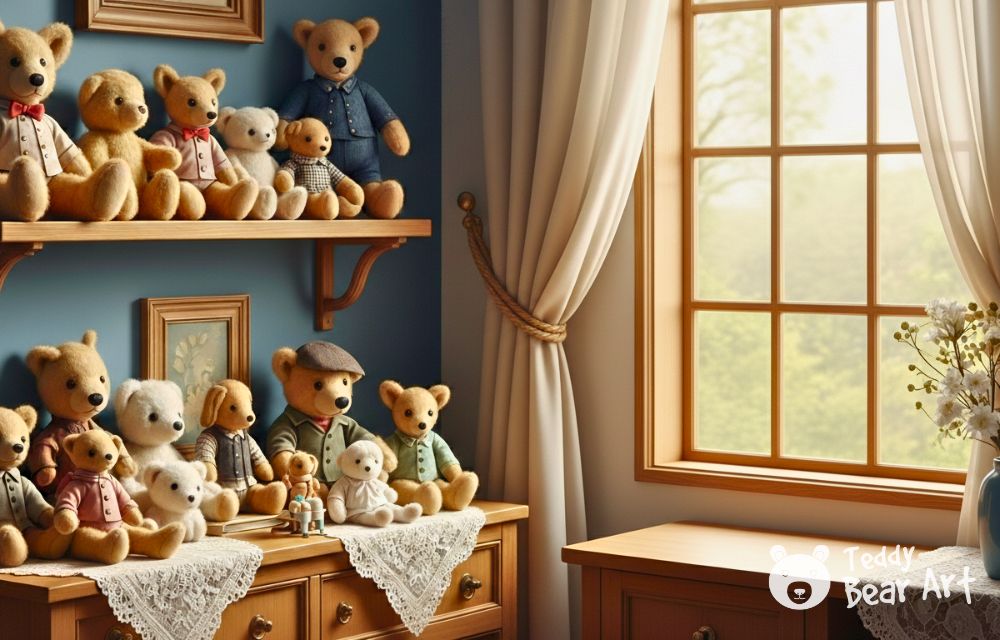
Open shelves are one of the most flexible plush display options, especially for collectors who rotate pieces seasonally. The key is spacing. Each plush toy should have enough room to sit naturally without being pressed against others.
Wood shelves in light or natural tones work especially well for handmade plush. They add warmth and contrast without overpowering the toys. Avoid deep shelves that encourage stacking, as pressure can flatten fur and distort limbs over time.
For added safety, shelves should be mounted securely and positioned away from direct sunlight or heat sources.
Glass Cabinets
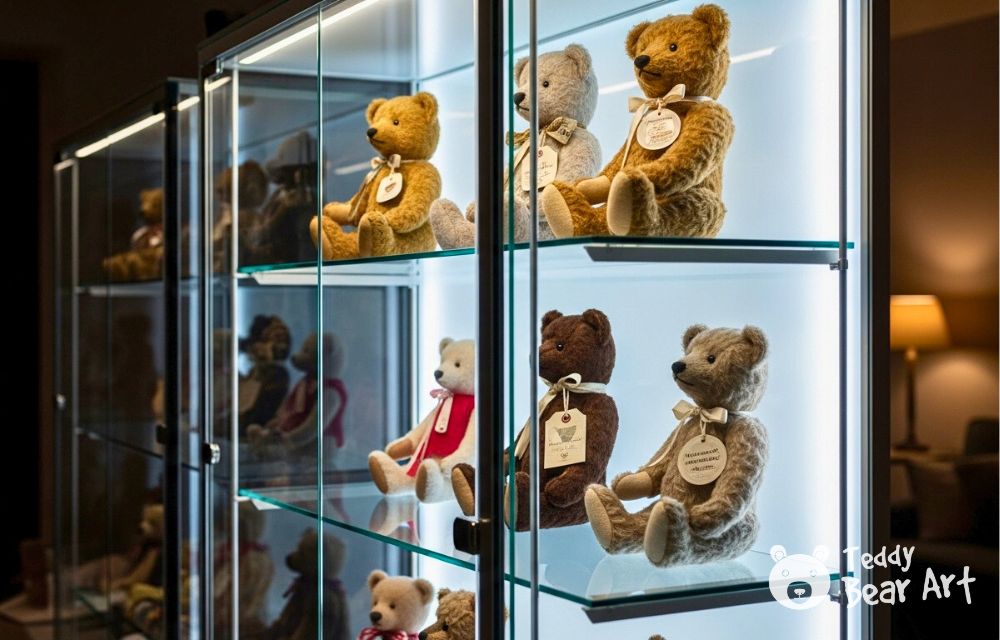
For high-value or antique plush toys, glass front cabinets offer excellent protection while keeping the collection visible. These are ideal for mohair bears, limited editions, and artist pieces meant for long-term preservation.
Choose cabinets with adjustable shelves so each plush can be displayed at its natural height. Interior lighting should be soft and cool-toned, never hot. If lighting is included, make sure it is optional and not constantly on.
Glass cabinets also reduce dust buildup, which is especially important for textured fur that is difficult to clean without damage.
Wall Displays
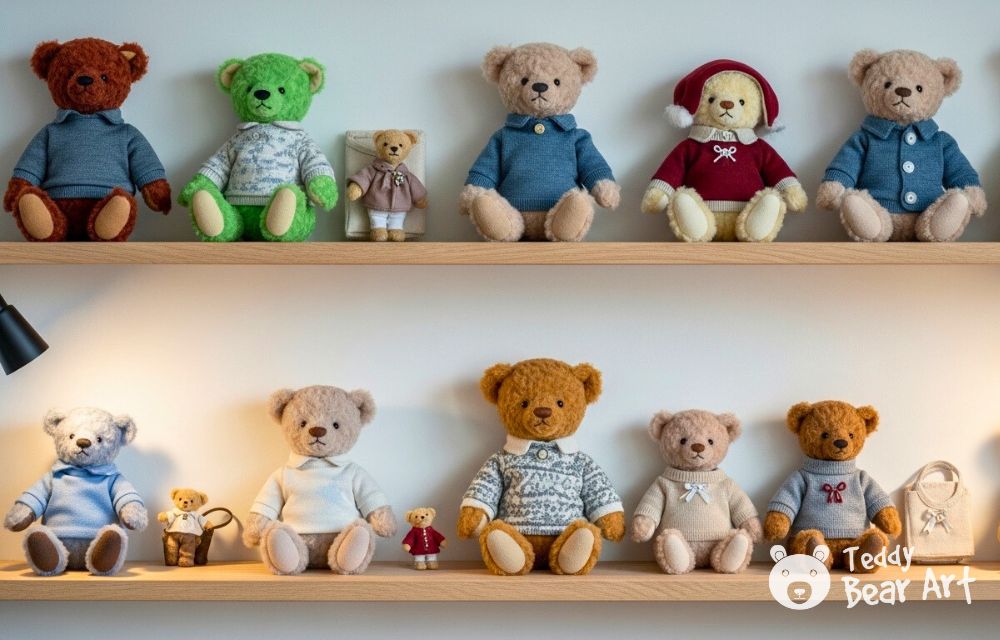
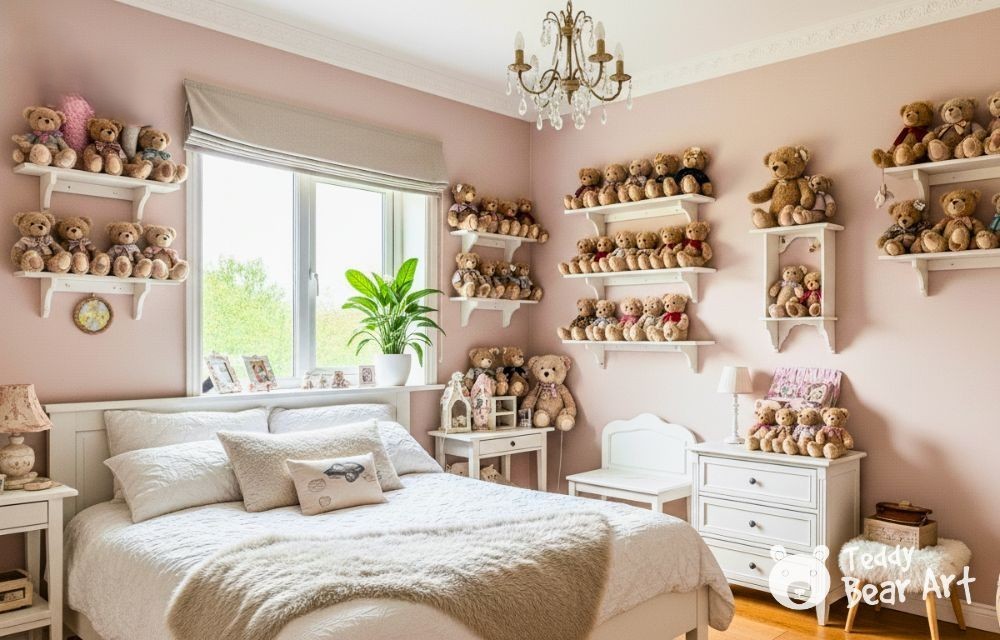
When floor space is limited, a vertical plush display can be both practical and visually striking. Wall-mounted shelves or shallow display ledges allow plush toys to be showcased without crowding the room.
This approach works well in craft rooms and studios, where plush toys can serve as inspiration. Keep displays at eye level or slightly below, and avoid high placement where toys may be exposed to rising heat.
Wall display is especially effective for themed collections, such as miniature bears or color-coordinated plush groups.
Creative Plush Display
Display Niches
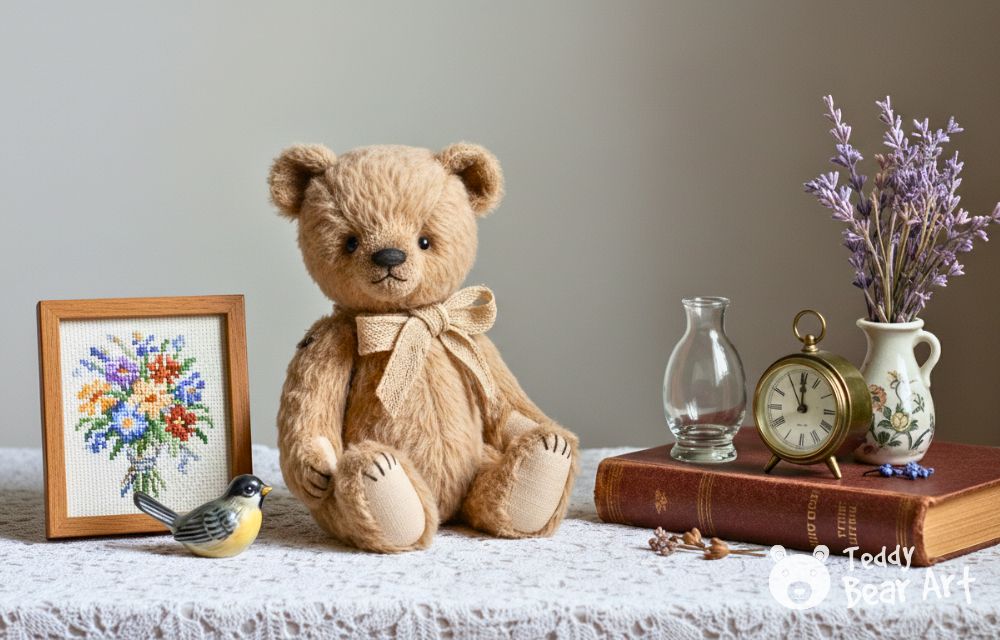
A styled corner can transform a single plush toy into a focal point. This might include a small side table, a neutral backdrop, and a complementary object like a vintage book or textile.
This type of plush display works beautifully for artist bears and one-of-a-kind pieces. The goal is not quantity but presence. One carefully displayed toy can have more impact than ten crowded together.
Using niches or corners also allows for easy rotation, keeping the space fresh without changing the entire collection.
Soft Seating
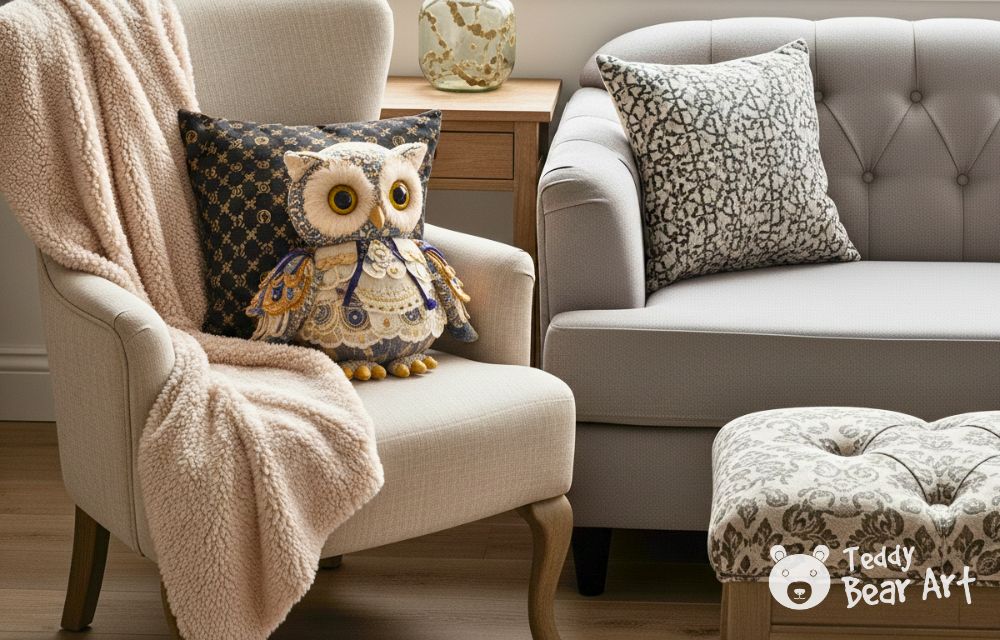
In lifestyle interiors, plush toys can be displayed on benches, armchairs, or window seats as long as the environment is controlled. The surface should be clean, dry, and not exposed to strong light.
This method is best for modern handmade plush or decorative pieces rather than fragile antiques. It creates a lived-in, cozy feeling that appeals strongly to Pinterest audiences and collectors who value atmosphere as much as order.
Plush toys displayed this way should be rotated regularly to avoid fabric stress from prolonged pressure.
Plush Care
Light & Humidity
Light exposure is one of the most common causes of plush deterioration. Even indirect sunlight can fade fur and fabrics over time. Plush display areas should be chosen with light direction in mind.
Humidity control is equally important. Plush toys should never be displayed near kitchens, bathrooms, or uninsulated windows. Stable indoor humidity helps preserve fibers and stuffing.
Safe Positioning
Plush toys should always be displayed in natural, relaxed positions. Forcing limbs or compressing bodies can cause permanent creasing. For standing plush, discreet supports can be used behind or beneath clothing.
Avoid hanging plush toys by their limbs or ears, even for a decorative effect. Over time, gravity can weaken seams and joints.
If clothing is part of the design, make sure it is not pulling tightly across joints or fur areas.
Display & Storytelling
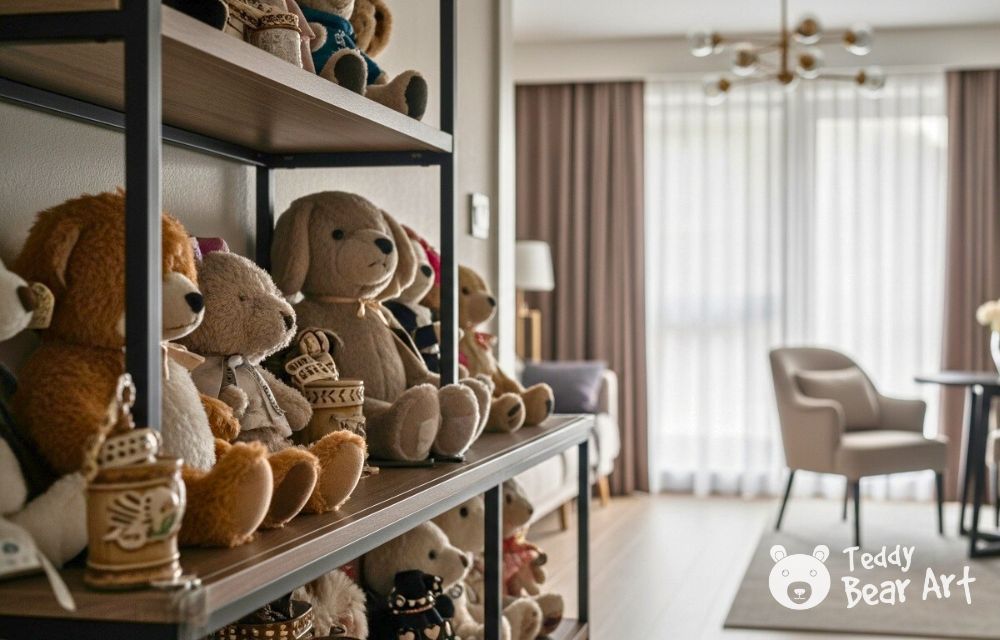
A well-curated plush display does more than organize toys; it tells a story. Grouping plush by theme, size, or material helps viewers understand the collection at a glance.
Collectors often find that thoughtful display increases emotional connection to their pieces. It also enhances perceived value, which matters for artist branding, exhibitions, and eventual resale.
For handmade plush artists, display choices can reflect style and professionalism. Displaying finished work with care signals quality and attention to detail, reinforcing trust with collectors.
Rotating Displays
Rotation is an often-overlooked part of plush display strategy. Not every plush needs to be visible all the time. Rotating pieces reduces light exposure and allows each toy its moment.
Seasonal rotation works especially well, with lighter colors in spring and summer, and deeper tones in autumn and winter. This approach keeps the display visually interesting without constant rearranging.
Storage between rotations should be clean, dry, and breathable, never sealed in plastic for long periods.
Before You Go
Plush display is a blend of care, creativity, and respect for craftsmanship. By choosing the right display methods, we protect delicate materials while showcasing the beauty and personality of handmade and collectible toys.
From open shelving to glass cabinets and styled corners, there is no single correct solution. The best plush display ideas are those that fit the space, the collection, and the story behind each piece.
When plush toys are displayed with intention, they become more than objects. They become art, memory, and inspiration woven into everyday life.
Get Free Patterns & Be the First to Know!
Want free teddy bear patterns, exclusive tutorials, and a chance to win craft supplies?
Sign up for our newsletter using the subscribe form in the middle of this article to receive new patterns, insider tips, and the latest news on teddy bear art. You’ll also automatically be entered into our annual giveaway for a chance to win teddy bear crafting materials.
Bonus entry: Save one of our pins on Pinterest to increase your chances of winning!
Let’s create, inspire, and craft beautiful teddy bears together!