

Creating soft toys is a joyful craft, yet safety stays at the center of the process, especially when materials may travel across borders. Fabric safety standards for toys help protect children from harmful chemicals, weak seams, loose fibers, and other risks that can appear in soft toy making. This guide gathers the essentials in a clear, practical way so crafters can confidently choose safe fabrics and build durable, child-friendly toys.
What Fabric Safety Standards for Toys Actually Mean
Many crafters imagine safety regulations as something complicated or buried in technical language, but the main idea is simple. These standards define which fabrics, fillings, and components are suitable for toys intended for children. They help ensure that materials do not release toxic dyes, do not tear easily, and do not shed fibers that could be inhaled or swallowed.
A safe fabric should handle daily play, stretching, hugging, and washing. Soft toys go through a lot, so the material needs to stay strong instead of losing color or falling apart. Natural materials like cotton, fleece, twill, and high-quality plush are usually reliable choices. Some suppliers even state that their fabrics are toy safe, which makes the selection process easier.
Overall, these standards exist so handmade toys remain comfortable, sturdy, and safe. For crafters, this means peace of mind and happy customers who trust the quality of the finished item.
Key Requirements Every Crafter Should Know
Official documents can be long, but the practical requirements boil down to a few essentials that every maker can keep in mind.
The first priority is chemical safety. Fabrics must not contain harsh dyes, heavy metals, or toxic finishes. Choosing materials from reputable manufacturers reduces this risk, because they usually follow strict production rules.
Next is durability. Children pull, squeeze, drag, and throw their toys, so fabrics must handle constant strain. Thin materials may look adorable in the store, but they can tear as soon as the toy is stuffed. Crafters should always run a quick check before starting a project.
Fire resistance is also part of many national standards. The fabric should not ignite instantly and should burn slowly while releasing as few fumes as possible. This does not mean a material must be fireproof, only that it should perform reasonably well in basic flame tests.
Hygiene matters too. Toy fabrics should stay clean, hold their shape after washing, and avoid trapping strong odors. These qualities ensure that the toy stays pleasant to touch even after months of use.
Fabric Safety Standards and Practical Table
Many crafters sell toys internationally, so it helps to understand how major regions approach safety.
European Union
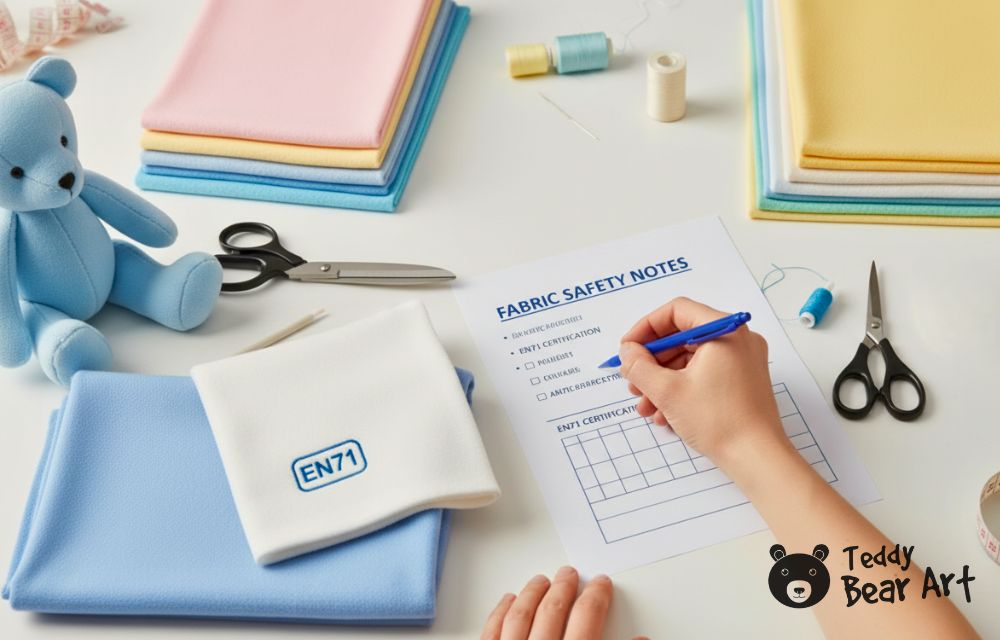
In the European Union, toy safety is governed by the Toy Safety Directive 2009/48/EC, which sets the legal framework for all toys sold in the EU. To meet these requirements, manufacturers often follow the EN71 standards, which provide detailed rules on mechanical and physical safety, fire behavior, and chemical content. EN71-1 covers mechanical strength, EN71-2 covers flammability, and EN71-3 covers chemical migration and toxicity.
These standards are especially strict for toys intended for children under three. Anyone producing or selling toys within the EU should be familiar with both the directive and the EN71 standards. A helpful resource is the official Toy Safety Directive 2009/48/EC guidance, which explains the basics clearly.
United States
In the United States, toy safety is primarily regulated by ASTM F963, which sets requirements for labeling, mechanical hazards, safe dyes, and small detachable parts. Manufacturers and crafters must ensure that toys include proper warning labels, clear instructions, and meet consistent quality standards. Official guidance is available on the ASTM F963 standard page, and additional compliance information can be found on theU.S. Consumer Product Safety Commission (CPSC) Toy Safety Guidance page.
United Kingdom
The United Kingdom uses UKCA marking, which closely mirrors the EN71 standards of the EU. For crafters who already meet EU rules, adapting to UKCA usually requires minimal changes. Detailed official guidance can be found at the UK Government’s Toy Safety Regulations page.
Canada
Canada has its own toy safety regulations under Health Canada’s Hazardous Products Act and the Toys Regulations, which focus on chemical limits, durability, and age-appropriate construction. Official guidance and compliance information are available on the Health Canada toy safety page.
Australia
Australia regulates toys according to AS/NZS ISO 8124, which is based on international standards including EN71 and ASTM. It emphasizes chemical safety, mechanical safety, and labeling. Detailed official information and standards for children up to 36 months can be found on the Australian Competition & Consumer Commission (ACCC) toy safety page.
Below is a practical comparison for everyday use.
| Region | Main Standards | Key Focus Areas | Keep in Mind |
|---|---|---|---|
| European Union | EN71 parts 1, 2, 3 | Seam strength, chemical limits, fire resistance | For selling in the EU, toys must follow EN71, especially the chemical rules |
| United Kingdom | UKCA based on EN71 | Almost identical to EU rules | If selling on Etsy UK or to UK customers, UKCA labeling is required |
| United States | ASTM F963 | Labeling, safe dyes, small parts, and mechanical strength | Buyers expect clear warnings and proper labeling on handmade toys |
| Canada and Australia | Own versions inspired by EN71 and ASTM | Toxicity checks, durability, and small parts | Similar to EU and US rules, but labeling details can different |
How to Choose the Right Fabric
Choosing toy-safe materials becomes much easier when we look for suppliers that specialize in fabrics for children, bedding, or soft toys. These sellers often provide information on certifications, dye types, and the origin of materials.
Organic cotton, certified plush, and durable fleece are common favorites among toymakers. They feel soft, handle stretching well, and maintain their shape over time.
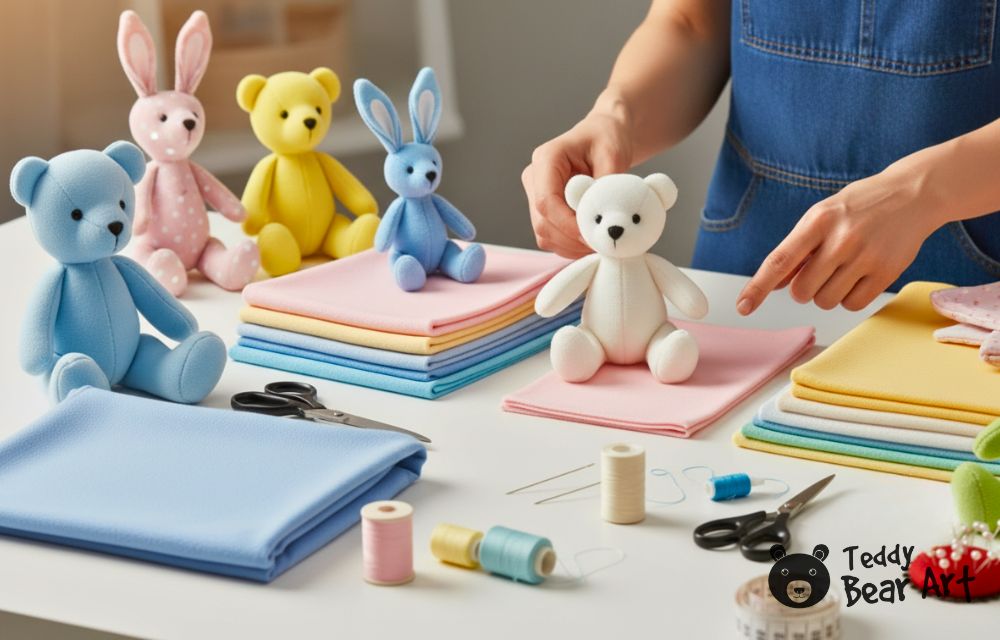
Several quick tests can be done at home. For example, checking colorfastness by dampening a scrap of fabric and rubbing it against a white cloth. If the cloth becomes heavily stained, it is better to avoid that material. Another simple test is gently pulling the fabric on the diagonal. If it distorts or tears too easily, it may not survive long-term use. For faux fur or plush, shaking or brushing the fabric helps detect loose fibers.
These small steps do not replace professional testing, yet they help filter out unsuitable materials early in the process.
Common Mistakes and a Safety Checklist for Crafters
Even experienced makers occasionally choose a thin fabric that tears during stuffing or stretch plush that sheds too much. Low-quality synthetic fur is another common problem, since loose fibers can easily enter the nose or mouth of a young child. Small decorations like tiny buttons can also pose a risk, especially for toddlers. In these cases, embroidery is a safer option.
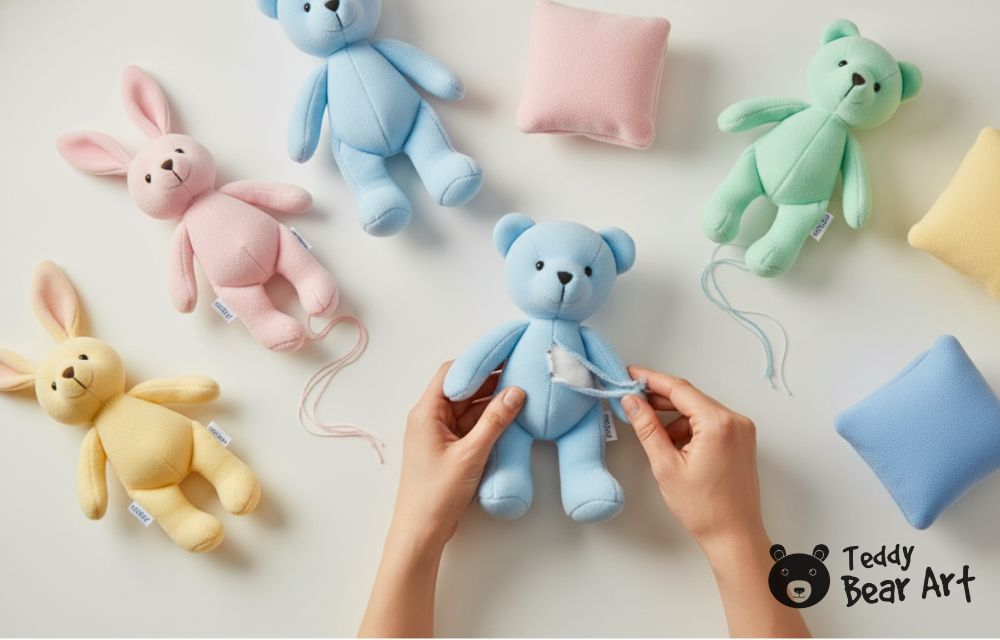
To simplify the process, here is a short and reliable checklist.
Quick Safety Checklist for Crafters
- Make sure the fabric does not bleed color when damp.
- Check that the material handles stretching and stuffing without tearing.
- Avoid fabrics with strong chemical smells.
- Test faux fur and plush for shedding by rubbing or shaking a small sample.
- Replace tiny decorative elements with embroidery for toys intended for young children.
- Prefer fabrics from reputable suppliers who list certifications and composition.
- Keep in mind the safety rules of the country where the toy will be sold.
- Reinforce all seams, especially around joints and stress points.
- Choose high-quality synthetic fabrics that do not lose fibers.
- For sellers, keep notes on fabric origins, certifications, and properties.
This approach helps maintain consistent quality and ensures that every finished toy is strong, pleasant to touch, and safe for children. When we combine the right materials with thoughtful construction, handmade toys become trusted companions that bring comfort and joy for many years.
Get Free Patterns & Be the First to Know!
Want free teddy bear patterns, exclusive tutorials, and a chance to win craft supplies?
Sign up for our newsletter using the subscribe form in the middle of this article to receive new patterns, insider tips, and the latest news on teddy bear art. You’ll also automatically be entered into our annual giveaway for a chance to win teddy bear crafting materials.
Bonus entry: Save one of our pins on Pinterest to increase your chances of winning!
Let’s create, inspire, and craft beautiful teddy bears together!
Super useful guide for makers who sell globally! I really loved the detailed rundown of EN71, ASTM F963, CPSIA, and REACH, as well as the clear explanations of what each standard means for different markets. The reminders on age grading, proper labelling, and the risks associated with small parts were especially helpful, as these are easy to overlook but so important for keeping little ones safe. This guide is such a valuable resource for anyone who wants to ensure their handmade products meet safety requirements worldwide. Thank you so much for sharing this information. I’ll definitely be referring back to it as I plan my own creations and expand my sales internationally!
Thank you for your kind and detailed comment! I’m glad you found the information helpful.
Really appreciate how clearly you explained these safety standards. A lot of information out there is overwhelming or buried in technical language, but this guide makes it easy for everyday crafters to understand what actually matters when choosing fabrics.
I especially liked the practical tips, like checking for color bleeding and testing for shedding, simple things that make a big difference in keeping handmade toys safe. This is such a helpful resource for anyone sewing toys for kids or selling internationally. Thanks for breaking it all down so well!
You’re welcome! So happy you found it helpful!