
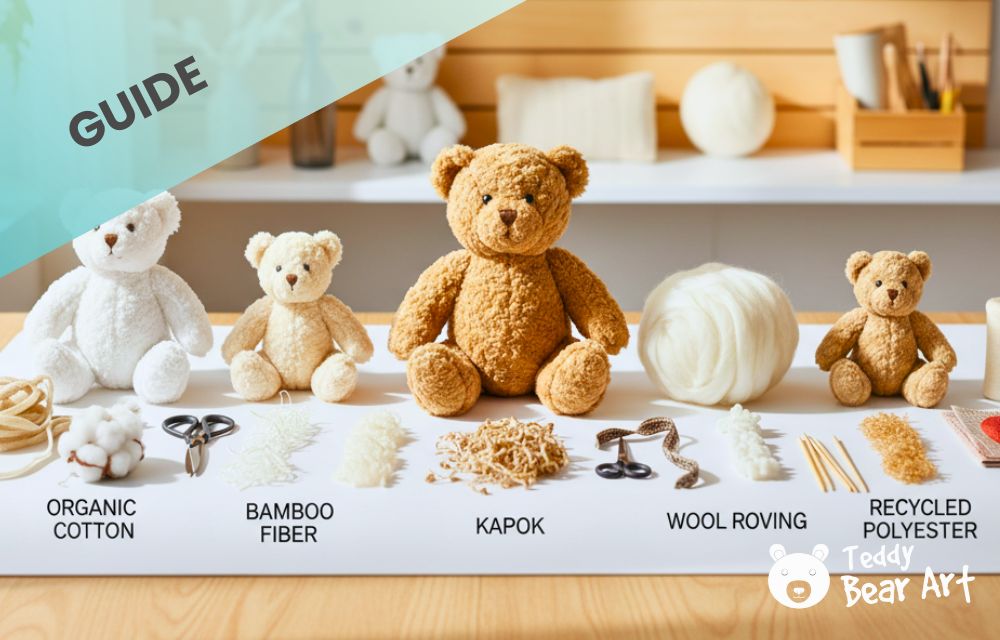

Eco-friendly stuffing for teddy bears is becoming a top choice for crafters who care about the environment and the safety of the toys they make. Creating a teddy bear is a delicate balance between design, comfort, and sustainability, which is why choosing the right filling is essential.
Unlike traditional synthetic materials, these sustainable options offer softness, durability, and a reduced environmental footprint, making each bear a little kinder to the planet. In this guide, we explore five of the best eco-friendly stuffing options that will make your teddy bears plush, safe, and environmentally responsible.
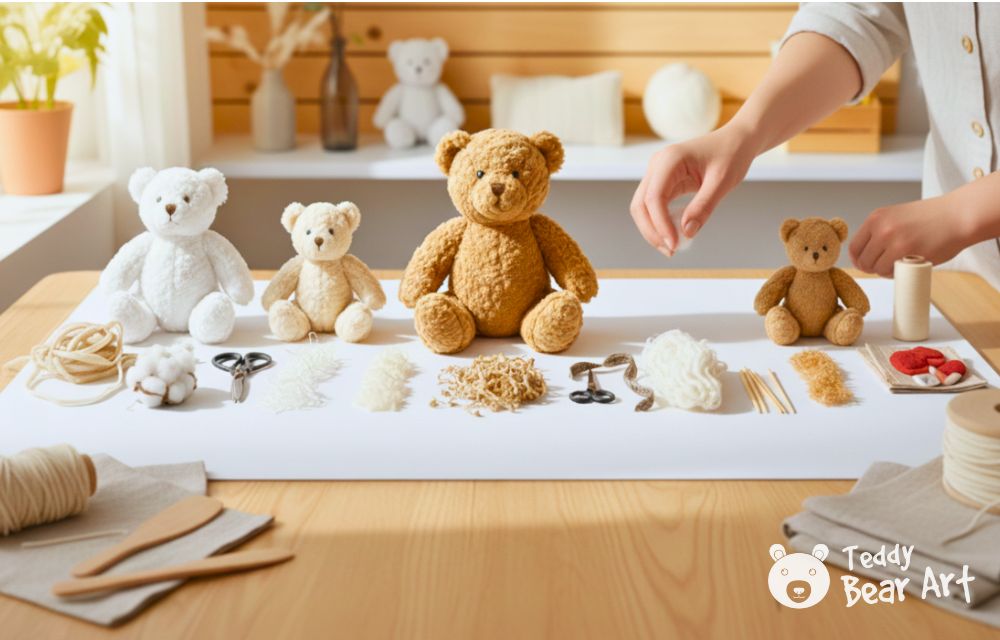
An eco-friendly stuffing is defined not just by its natural origin, but also by how it is sourced, processed, and disposed of. Materials like organic cotton, wool, and bamboo are renewable, biodegradable, and often grown without harmful pesticides.
Recycled fibers, such as rPET made from post-consumer plastics, help reduce landfill waste while providing a soft and resilient texture for toys. These stuffing options also avoid the chemical treatments found in many synthetic fills, ensuring a healthier play experience.
By selecting eco-friendly stuffing for teddy bears, we combine craftsmanship with environmental responsibility, supporting a more sustainable approach to toy making.
1. Organic Cotton Fiber
Organic cotton is a classic choice for those seeking a natural, soft, and breathable filling. Grown without synthetic fertilizers or pesticides, it provides a safe and hypoallergenic option for children’s toys.

Organic cotton fiber has a light and airy texture, making it easy to shape and mold, especially in traditional or vintage-style bears. It holds stuffing well, keeping the bear cuddly yet firm. A small drawback is that it may compress over time with heavy use, so occasional fluffing helps maintain its shape.
This natural fiber is widely available in craft stores and online, making it a convenient and environmentally conscious choice.
2. Bamboo Fiber Filling
Bamboo fiber is a renewable resource that grows quickly without the need for fertilizers or pesticides. Its silky softness makes it ideal for creating ultra-smooth plush toys. Bamboo fiber is naturally hypoallergenic and odor-resistant, making it a great option for children’s teddy bears.
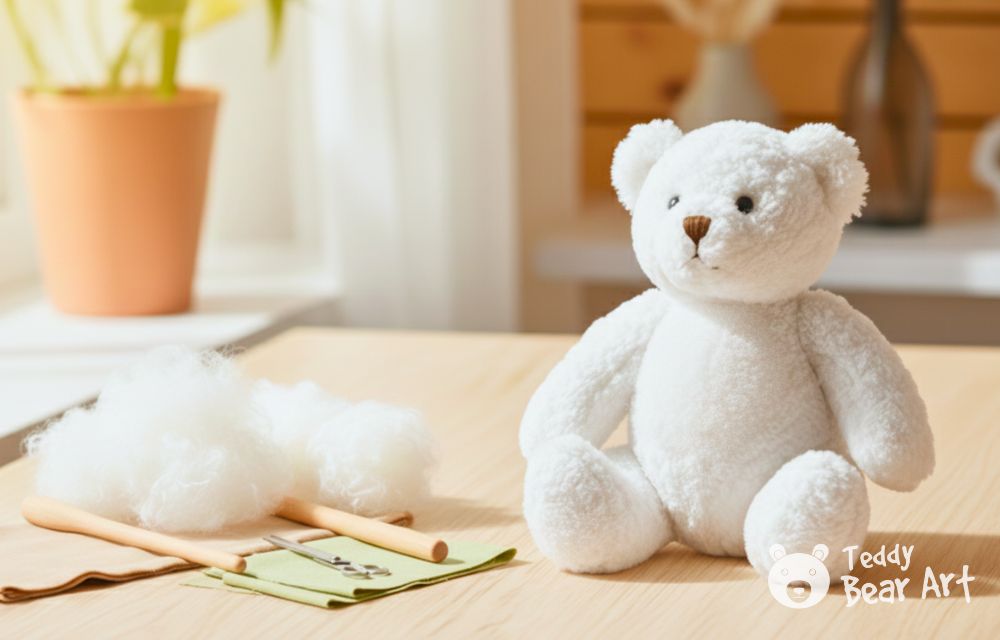
It is lightweight but strong, giving bears a fluffy, huggable feel while retaining structure. Crafters often blend bamboo with other natural fibers to enhance softness and resilience. Bamboo filling not only creates a luxurious texture but also supports sustainable forestry practices.
3. Kapok Fiber
Kapok is a silky, tree-harvested fiber known for its extraordinary lightness and loft. It has a downy texture that gives teddy bears a cloud-like softness without adding weight. Kapok is naturally hypoallergenic and resistant to mold, making it a perfect eco-conscious choice for both stuffed animals and decorative cushions.
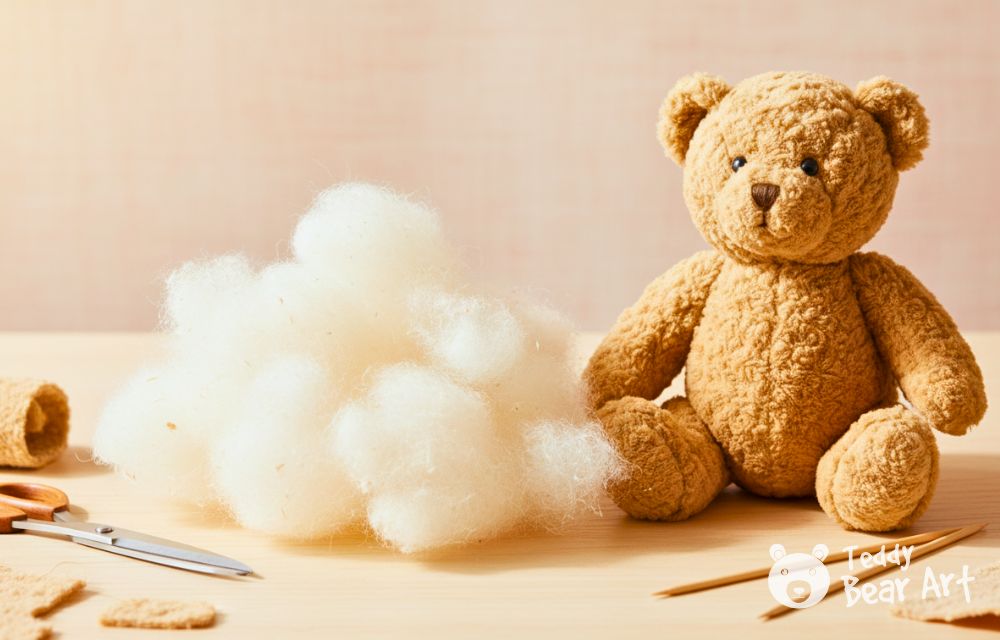
One thing to keep in mind is that kapok can be slippery to work with, so stuffing evenly requires a bit of patience. Its natural buoyancy helps teddy bears maintain a soft, squeezable feel while staying lightweight, making them ideal for travel or little hands.
4. Recycled Polyester (rPET) Fiberfill
Recycled polyester fiberfill is created from post-consumer plastic bottles and textiles, transforming waste into fluffy, durable stuffing. It offers the resilience and loft of traditional polyfill but with a much smaller environmental impact.
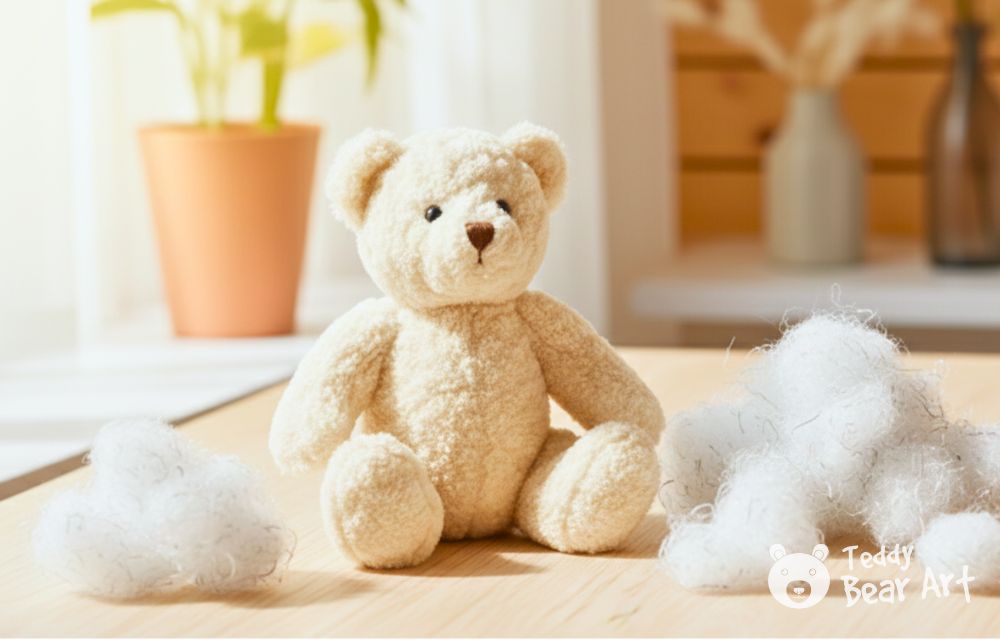
rPET is washable, long-lasting, and maintains its shape over time, making it a practical option for teddy bears that are played with frequently. While it is not biodegradable, it reduces landfill waste and avoids the production of new petroleum-based fibers.
This option works well for larger bears or those that require firm support, providing versatility without compromising eco-conscious values.
5. Wool Roving
Wool roving is a natural, renewable filling that offers a warm and slightly denser texture compared to cotton or kapok. Its fibers interlock naturally, giving the bear a firm, sculptable form that is excellent for artist bears or collectible toys.
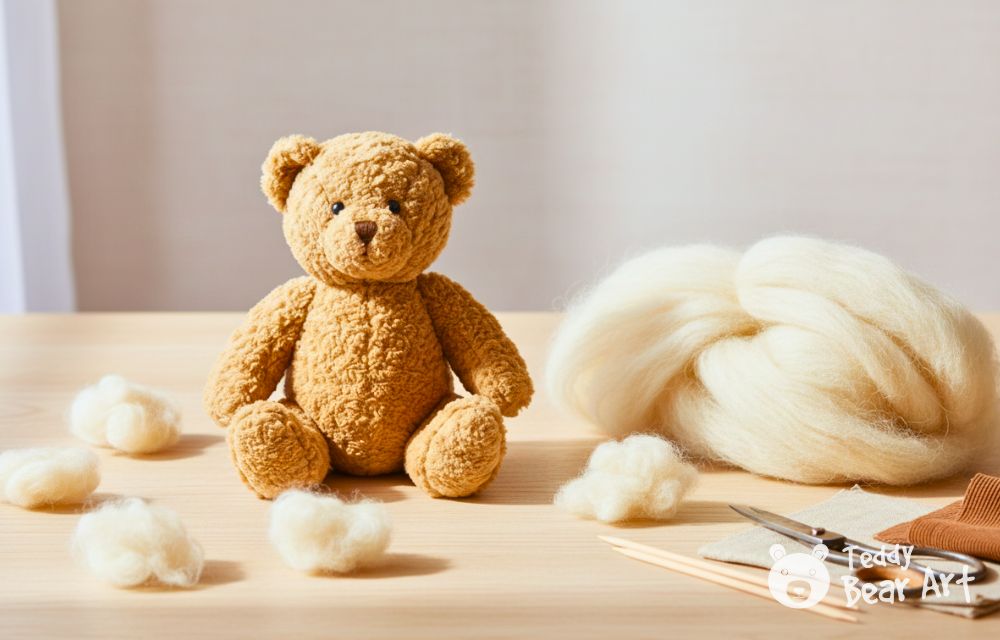
Wool is breathable, retains warmth, and can be needle-felted to shape specific body parts or features. It does require care, as it can shrink if washed improperly, but its longevity and natural feel make it a worthwhile investment.
Using wool also supports sustainable farming practices, as many suppliers prioritize ethically sourced fibers from small-scale farms.
Tips for Using Eco-Friendly Stuffing Effectively
Selecting the best stuffing depends on the type of teddy bear being made, the desired softness, and the intended user. Lightweight bears for children may benefit from kapok or bamboo for a soft, cuddly feel, while collectible bears benefit from the firmness of wool roving or the resilience of recycled polyester.
Some crafters mix fibers to combine softness with shape retention, creating bears that are both plush and structured. Availability and cost may also influence the choice, but each of these five options ensures that teddy bears can be made responsibly, with minimal impact on the environment.
Even the best eco-friendly stuffing requires thoughtful handling. Lightly fluff fibers before stuffing to avoid clumps, and stuff in small layers to shape the bear evenly. Store natural fibers in a dry, cool environment to prevent moisture or pests.
Combining different fibers can enhance both softness and support, giving bears a professional and lasting finish. By taking these steps, the end result is a teddy bear that is not only beautiful and huggable but also environmentally conscious.
Before You Go
Eco-friendly stuffing for teddy bears is more than a trend; it’s a commitment to crafting with care for both the end user and the planet. By using organic cotton, bamboo, kapok, recycled polyester, or wool roving, we create toys that are soft, safe, and sustainable.
Each bear becomes a little ambassador for conscious crafting, showing that plush comfort and environmental responsibility can go hand in hand.
Get Free Patterns & Be the First to Know!
Want free teddy bear patterns, exclusive tutorials, and a chance to win craft supplies?
Sign up for our newsletter using the subscribe form in the middle of this article to receive new patterns, insider tips, and the latest news on teddy bear art. You’ll also automatically be entered into our annual giveaway for a chance to win teddy bear crafting materials.
Bonus entry: Save one of our pins on Pinterest to increase your chances of winning!
Let’s create, inspire, and craft beautiful teddy bears together!
What a thoughtful and practical post, I’d never considered the environmental impact of teddy bear stuffing before. Your breakdown of natural materials like kapok, organic cotton, wool, and bamboo fiber is so helpful, especially for crafters, parents, and eco-conscious gift-givers.
I love how you included pros and cons for each option, making it easy to choose based on preference, budget, and sustainability goals. The tip about looking for GOTS certification is a great takeaway, too.
Thanks for sharing such a unique and useful guide. It’s inspiring me to rethink how even the smallest handmade items can be more planet-friendly.
Thank you so much! I’m really glad the guide was helpful and inspiring. Messages like yours truly motivate me to keep sharing more eco-friendly tips!
Hi again Hanna! I really enjoyed learning about these different stuffing options, and it made me realize how much the filling can change a teddy bear’s feel and personality. I’ve only worked with traditional polyfill before, so I’m curious whether beginners find natural fibers like kapok or wool easier or harder to shape as they get comfortable with crafting techniques. It also makes me wonder if mixing a couple of these eco-friendly materials is common among experienced makers who want both softness and long-lasting structure.
Hi!
So nice to see you again in the comments!
You noticed it perfectly; the stuffing can completely change a teddy bear’s character. It’s one of those details you only start paying attention to after making a couple of bears.
For beginners, natural fillers can feel a bit more “temperamental.”
Kapok is very light and springy, but it tends to “escape” and takes a little more patience to pack evenly.
Wool is very malleable and holds its shape beautifully, but beginners sometimes think it feels too firm, though that firmness is exactly what gives such a lovely, “alive” volume.
So the difficulty is more about getting used to the feel rather than the actual technique. After a few projects, it becomes intuitive.
And mixing different fillings is definitely a favorite trick among experienced makers. For example, they’ll use wool for a soft, natural body and add a bit of pellets or a denser fiber in the limbs to help the bear sit nicely. Or they’ll combine wool with kapok to get both springiness and a gentle softness.
So give different options a try, it’s really fun, and the results are always unique!