
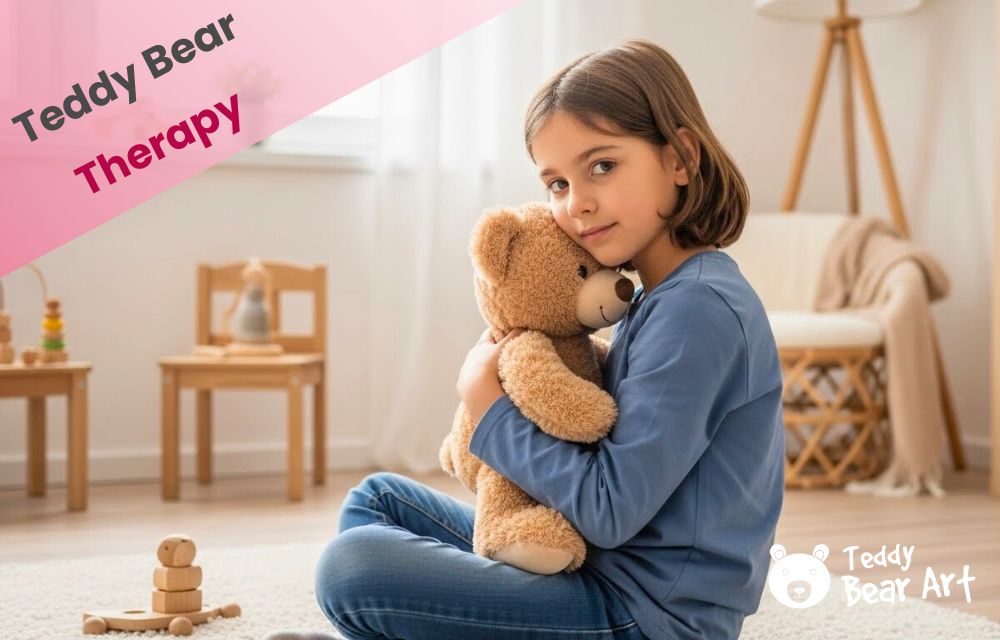

Teddy bears in therapy for children create a calming and familiar bridge into emotional work. Many kids feel safer sharing feelings through a soft toy, since the world of plush companions feels gentle and predictable. When a child holds a teddy bear, muscles relax, breathing slows, and thoughts become easier to name. That simple moment can open the door to healing, especially for children who struggle to express themselves directly.
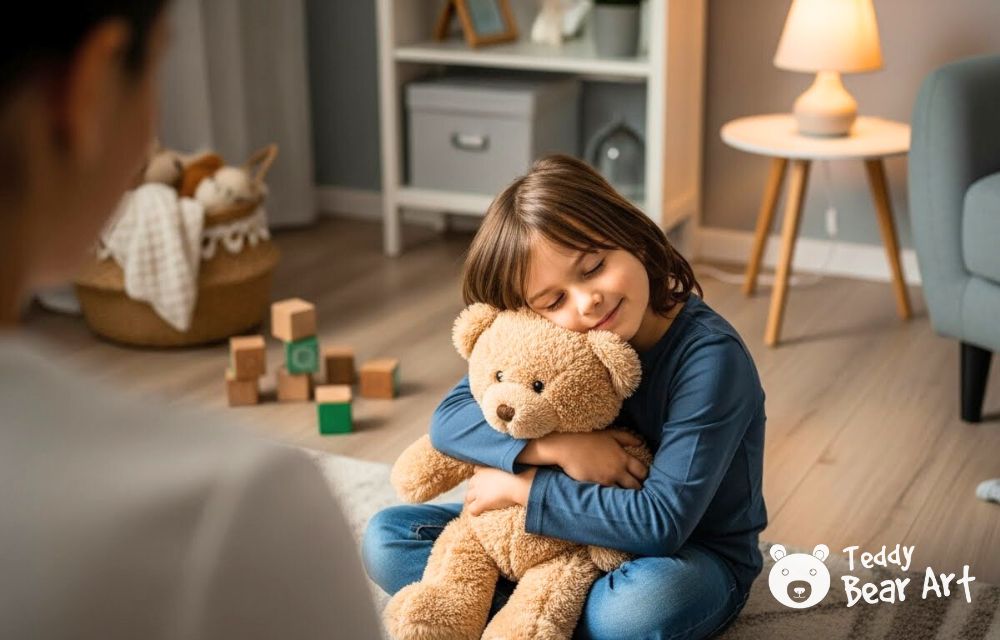
Why Teddy Bears Work So Well in Therapy for Children
Teddy bears carry a soothing quality that feels natural to most kids. Soft textures, round shapes, and friendly faces help reduce stress and bring a sense of comfort. For anxious children, a plush companion can help organize big emotions and make overwhelming moments more manageable.
When a child speaks to a teddy bear, emotions often come out more freely because it feels like talking into a safe space. Many therapists, teachers, and parents notice that children show more openness when the toy becomes part of the interaction.
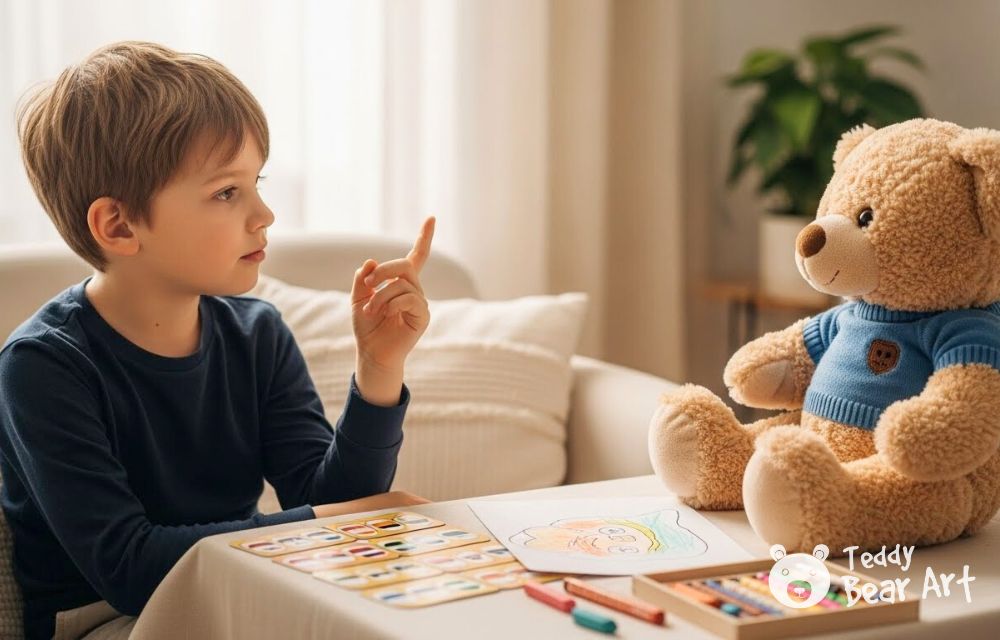
Teddy bears also play an important role in symbolic play. Children use stories, small gestures, and pretend scenarios to express frustration, fear, happiness, and curiosity.
This kind of expression makes therapy feel less intimidating and more playful. Plush toys help children practice social skills, learn coping strategies, and explore their own thoughts with less internal pressure. For kids who struggle with transitions or separation, holding a teddy bear can reduce discomfort during sessions.
Choosing the Right Teddy Bear
A well-chosen teddy bear can support therapy goals in many ways. Softness should feel pleasant on the skin and easy to hug. A medium size usually works best since it fits a child’s arms without feeling too heavy or too tiny.
Many children respond better to bears with neutral faces, because they can imagine different emotions on a simple design. A calm-looking bear gives children space to project their own feelings during play.

Safety matters too. Stitching must be secure, eyes and nose should not detach, and materials need to be safe for sensitive skin. Clothing can enrich therapeutic work because kids love dressing their bears and changing roles. Costumes such as a doctor coat, a small backpack, or cozy pajamas can spark conversation and help children describe feelings through stories.
How to Use Teddy Bears
Teddy bears can support many types of therapeutic activities. The most common approach is emotional identification. We can invite the child to show how the bear feels today and describe why. This simple activity helps kids recognize emotions without feeling judged. Children often reveal their own experiences by assigning them to the bear, such as saying the bear feels lonely or nervous.
Role play is another effective method. We can ask the child to help the bear solve a small problem, talk to a friend, or face something that feels challenging. Through these scenes, children practice communication, empathy, and confidence. They try out new responses in a playful way, which makes learning feel safe.
Breathing exercises become more engaging when the teddy bear participates. A child can place the bear on their tummy and watch it rise and fall with each breath. This visual cue helps slow breathing and bring attention back to the body. Children enjoy repeating the exercise because it feels like helping the bear relax, too.
Storytelling also works beautifully. We can encourage children to create short stories about the bear’s day, including moments of frustration, joy, or confusion. Through these narratives, children learn to organize emotions and interpret their own reactions. Stories can also highlight strengths, such as bravery, kindness, or patience.
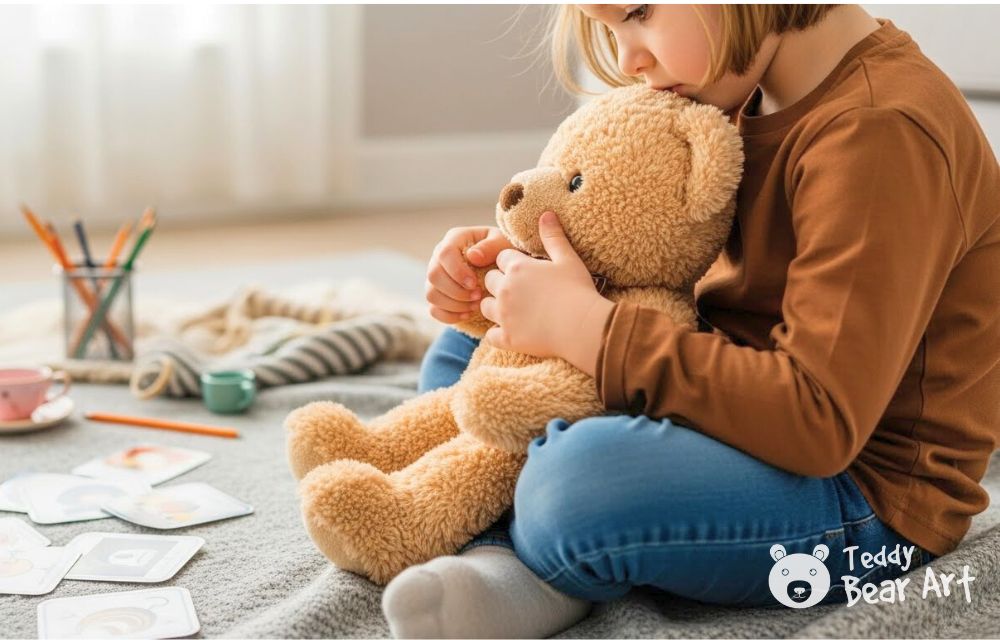
Comfort rituals are another useful technique. Some children relax by wrapping their bear in a small blanket or giving it a gentle hug. These quiet moments help kids regulate emotions and stay grounded during difficult conversations. The bear becomes a familiar companion that supports the child through each step of therapy.
How Families Can Support Teddy Bear Therapy at Home
Families play a big part in extending the benefits of teddy bear therapy. A simple daily routine can help children feel stable and safe. For example, a family can create a bedtime ritual where the child tells the bear about their day or picks one emotion the bear experienced. These gentle conversations turn reflection into a warm habit.
Parents can encourage role play at home too. When the child reenacts scenes with the bear, it reveals what they are processing emotionally. Families can ask soft questions that invite the child to explore, such as What is the bear worried about today or What made the bear smile. These prompts spark discussion and give the child control over the direction of the story.

Teddy bears can also help during transitions. Bringing the bear along to car rides, appointments, or new environments can reduce nervous feelings. Children feel supported by the familiar texture and shape of the toy. The bear earns a role as a steady companion during exciting or uncertain moments.
Families can also use clothing and small accessories to explore routines, fears, and curiosities. Dressing the bear for school, for rest, or for adventure turns everyday activities into playful coping strategies. Creative touches help children feel more connected to their bear and more willing to express themselves openly.
Final Thoughts
Teddy bears in therapy for children brighten the healing process with simplicity and warmth. Through hugs, stories, and small rituals, plush companions help children find language for their emotions. These gentle toys make therapy feel personal and less frightening, allowing kids to explore their feelings with trust and openness.
With thoughtful guidance, teddy bears can spark new strengths, deepen emotional understanding, and support children on their path toward resilience.
Get Free Patterns & Be the First to Know!
Want free teddy bear patterns, exclusive tutorials, and a chance to win craft supplies?
Sign up for our newsletter using the subscribe form in the middle of this article to receive new patterns, insider tips, and the latest news on teddy bear art. You’ll also automatically be entered into our annual giveaway for a chance to win teddy bear crafting materials.
Bonus entry: Save one of our pins on Pinterest to increase your chances of winning!
Let’s create, inspire, and craft beautiful teddy bears together!
Specifically for a therapist utilizing Teddy Bear Therapy (TBT), how do you manage the delicate balance between allowing the child to form a strong therapeutic attachment to the teddy bear (as a substitute self or safe space) and ensuring the child is not too reliant on the object, thereby inhibiting the development of independent, internal coping mechanisms?
Great question! In most cases, the teddy bear is used as a temporary bridge that helps the child feel safer while expressing emotions or practicing new skills. As the child becomes more confident, the therapist gradually shifts the focus from the teddy bear to the child’s own inner strengths.
The goal isn’t to remove the teddy bear suddenly, but to help the child notice that the feelings of safety and comfort they experience with the bear can also exist inside themselves. Step by step, the bear becomes a supportive tool rather than something the child depends on.
That way, the attachment works for the child’s development, not against it.
As a grandparent of an autistic grandchild, this really touched me. We honestly thought that getting him a Black Lab might help with some of his harder moments, and while he absolutely loves our family dog, it’s the teddy bears that have become his real treasure. There’s something about the softness, the predictability, and the way he can hold them close that gives him comfort in a way even the dog can’t always reach.
Teddy bears have helped him express feelings he struggles to put into words. He’ll talk through the bear when he can’t talk directly, and that little shift makes such a difference. The breathing exercises, the quiet hugs, even dressing the bear for different moods, it all helps him settle and feel understood.
Your guide describes this beautifully. It’s amazing how something so simple can become such a powerful emotional bridge. Thank you for putting this together with so much care.
Thank you for sharing this; it truly means a lot. I’m touched to hear how teddy bears have become such a source of comfort and connection for your grandson. The way you support him is beautiful, and I’m grateful my guide could resonate with your experience. Sending warm hugs to you both.