
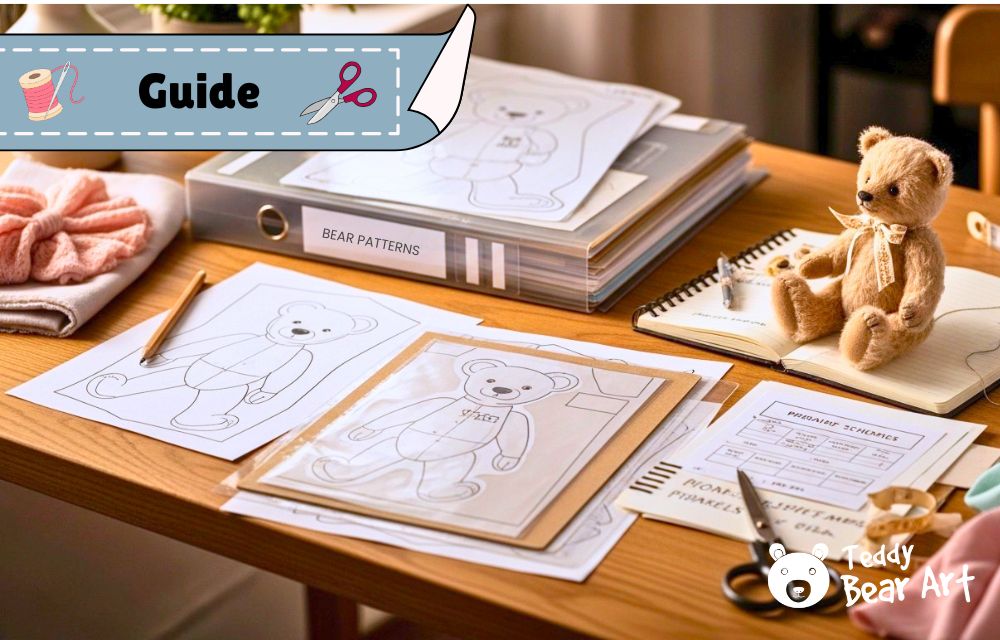

I still remember one afternoon when I was deep into making a small mohair teddy bear and suddenly realized I could not find the body pattern anywhere. It was printed on thin paper, slightly folded, and somehow got mixed with fabric scraps. That moment pushed me to seriously rethink my whole workflow and build a proper system for teddy bear pattern organization tips that actually protects every single design long term.
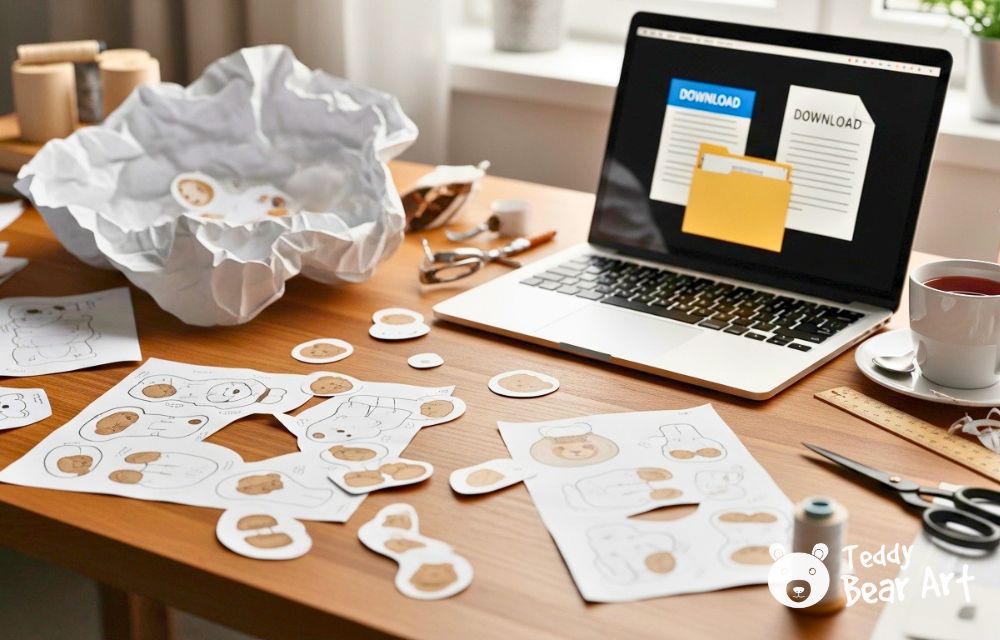
Over time, I tested different storage methods, from simple folders to digital archives and even reinforced templates. What I learned is simple. If your patterns are not organized, you lose time, repeat work, and risk damaging designs that took hours to develop.
Why This Matters
Teddy bear patterns are not just paper. Losing one can mean losing hours of work or even a whole design.
It usually starts small. A file gets buried, a sheet gets folded, a piece disappears.
Good organization protects your time, materials, and creativity.
Tip 1: Build a Digital Library That Actually Works in Real Life
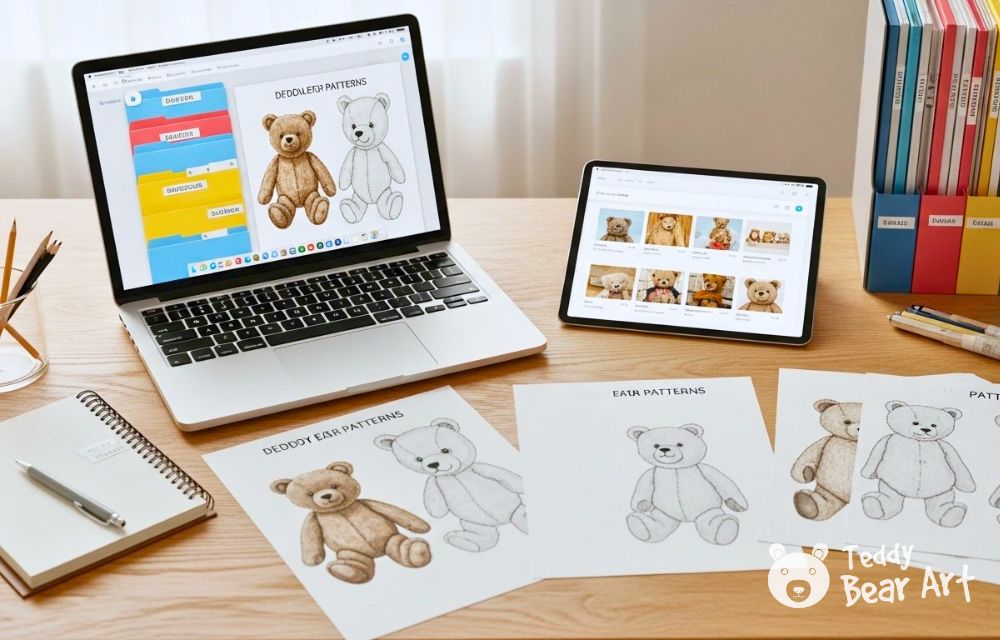
The first step in organizing teddy bear patterns is to build a clean digital system. This is where most people either stay organized or fall into chaos.
Start by renaming every file clearly and consistently. Instead of random names like “scan001”, use something structured like BearSize_Name_Style.pdf. This makes searching much faster and removes guesswork.
Then create folders that reflect how you actually think while working, not just generic storage. A practical structure looks like this:
- Teddy Bear Body Patterns
- Clothing Patterns
- Accessories and Add-ons
- Experimental or Draft Designs
Cloud storage, such as Google Drive or Dropbox, adds another layer of security. It allows you to check patterns while shopping for fabric or planning a new project, which reduces mistakes and duplicate purchases.
Another powerful habit is scanning your paper patterns. Once digitized, they are safe from damage and can be printed again anytime. This is especially useful for older or fragile templates that you use often.
Tip 2: Turn Paper Patterns Into Durable Working Tools
Physical patterns are where most damage happens. Thin paper tears easily, especially when reused or traced multiple times.
A simple but very effective solution is using a three-ring binder with clear plastic sleeves. Each pattern stays flat, clean, and protected from moisture, glue, and fabric fibers. This alone can extend the life of your patterns significantly.
Inside each sleeve, add a small information sheet. This is something many experienced makers use. It can include:
- Photo of the finished teddy bear
- Fabric type used
- Eye and joint sizes
- Any adjustments or notes from testing
This turns a simple pattern into a full reference card.
For frequently used designs, upgrading is worth it. Trace the pattern onto thick cardstock or template plastic. These materials do not bend easily and can be used hundreds of times without losing shape. This is especially important for body shapes where even small distortions can affect the final bear.
Another useful method is the working envelope system. After cutting a pattern, store all pieces in a labeled envelope. You can also attach a small fabric sample to the outside so you immediately remember the material and look of that specific project.

Tip 3: Create a Personal Pattern Index for Fast Access
Even the best storage system becomes useless if you cannot find what you need quickly. That is where a pattern index comes in.
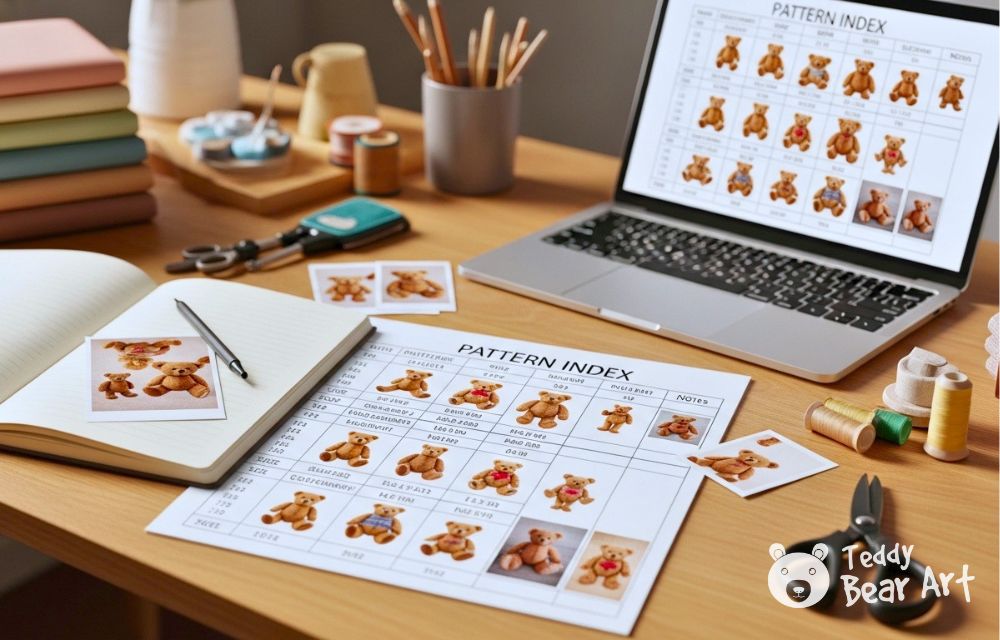
Think of it as your personal teddy bear library catalog. It can be a notebook, spreadsheet, or printed log sheet. The format is not important. Consistency is.
Each entry should include:
- Pattern name
- Size or scale
- Material recommendations
- Date created or purchased
- Notes about difficulty or modifications
- Photo of the finished result
Over time, this index becomes more valuable than you expect. It helps you track your progress, reuse successful designs, and avoid repeating mistakes.
Many makers also use visual indexing. Small printed thumbnails or photos make it easier to recognize patterns instantly without reading details. This is especially useful when your collection grows large.
Bonus Habit Weekly Reset for Long-Term Stability
Even the best system breaks without maintenance. A simple weekly routine keeps everything under control.
Spend 10 to 15 minutes organizing new downloads, filing printed sheets, and labeling anything new. This prevents small messes from turning into overwhelming chaos later.
It is also a good moment to remove duplicates or merge multiple versions of the same pattern into one clean file.
This habit is small but powerful. It keeps your entire creative system stable without feeling like extra work.
FAQ
How do I stop losing my teddy bear patterns?
Use a combination of digital folders, physical binders, and a simple index. The key is not relying on just one system.
Should I scan all my paper patterns?
Yes, especially your most used or fragile ones. Scanning protects them from damage and gives you unlimited copies.
What is the best way to store printed teddy bear patterns?
A binder with plastic sleeves works best. It keeps patterns flat, clean, and easy to access.
How do I organize PDF teddy bear patterns?
Use clear file names and structured folders like body, clothing, and accessories. Add cloud storage for extra safety.
Why should I create a pattern index?
It helps you quickly find designs, track your work, and avoid repeating mistakes. It becomes your personal creative library.
Before You Go
If you want to keep your collection safe long term, save this system somewhere easy to return to, because once your teddy bear patterns start growing, organization becomes part of your creative success.
And if you want to take your workspace even further and build a full storage system not just for patterns but for all your materials, fabrics, tools, and supplies, you might like this guide on creative storage ideas for teddy bear makers:
It will help you turn even a small corner of your room into a clean, practical, and inspiring workspace where everything has its place.
Get Free Patterns & Be the First to Know!
Want free teddy bear patterns, exclusive tutorials, and a chance to win craft supplies?
Sign up for our newsletter using the subscribe form in the middle of this article to receive new patterns, insider tips, and the latest news on teddy bear art. You’ll also automatically be entered into our annual giveaway for a chance to win teddy bear crafting materials.
Bonus entry: Save one of our pins on Pinterest to increase your chances of winning!
Let’s create, inspire, and craft beautiful teddy bears together!
Turning paper patterns into something more durable like cardstock actually makes a lot of sense long term. The idea of adding notes and fabric samples with each pattern feels like something that saves time later, not just now. I also like how the digital system is built around how you actually work, not just random folders. The weekly reset habit stands out because small clutter builds up fast without noticing. The index idea seems simple but probably becomes the most useful over time. Do you think most people skip organizing until they lose something important first?
I think that’s very true for most people. We usually don’t realize how useful proper organization is until something gets lost or takes too long to find again. After that moment, it suddenly feels worth setting up a simple system that actually matches how we work.
I used to lose my teddy bear patterns all the time, especially the printed ones. They would end up folded, mixed with fabric scraps, or even damaged by accident.
What really helped me was creating a pattern binder system. I print each pattern and put it into a plastic sleeve, then organize everything in a big ring binder by categories like bears, clothes, and accessories. Inside each sleeve, I also add a small note with fabric ideas or changes I made last time.
For digital patterns, I keep the same structure on my computer, with folders using exactly the same names as in my binder. It may sound a bit obsessive, but now I always know exactly where everything is, and nothing gets lost or wrinkled anymore.
One extra trick I love is keeping a second printed copy of the patterns I use most often in a simple folder near my sewing table, so I do not have to take them out of the binder every time.
Your tips really reminded me how much easier sewing becomes when patterns are actually organized!
Thank you so much for sharing your system. This is incredibly helpful to read! I love how you organized both your printed and digital patterns in the same way; that makes so much sense.
And that idea of keeping a second printed copy of your most-used patterns near your sewing table is such a smart little life hack. Honestly, that alone can save so much time and keep everything in better condition too.
Really appreciate you taking the time to share your experience, this is exactly the kind of practical tip that helps other makers so much.