
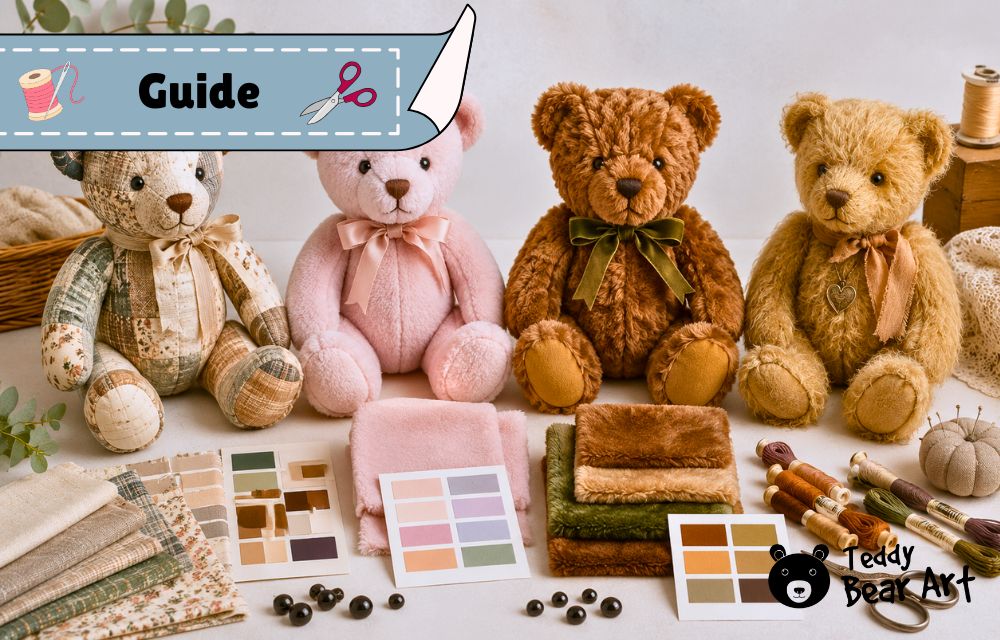

Choosing teddy bear colors for modern sewing is one of the most enjoyable parts of planning a new bear. A beautiful palette can make a simple shape feel calm, playful, elegant, nostalgic, or completely unexpected. It also helps all the small details, from the paw pads to the nose thread, look connected instead of randomly added.

Color behaves differently on every fabric. A muted sage cotton looks clean and graphic, while the same shade in long faux fur may appear darker in the shadows and much lighter at the tips. Mohair can make a soft neutral look rich and collectible. Fleece keeps colors bright, friendly, and easy to read.
The 15 palettes below are not strict recipes. Think of them as starting points that you can adjust to the fabric already in your cupboard, the eyes you want to use, or the personality you imagine for your bear.
How Fabric Changes the Final Color
Before choosing a palette, place the actual fabrics together in daylight. Looking at color swatches on a screen is helpful, but texture changes everything.
Cotton and linen show color clearly because their surfaces are relatively flat. They are excellent for patchwork bears, memory bears, nursery keepsakes, and simple modern designs. Printed cotton also introduces several colors at once, so the surrounding fabrics need to be chosen with care.
Fleece has a soft, even surface and usually keeps a color looking cheerful and uncomplicated. It is especially suitable for beginners because the contrast is easy to see while sewing the face, ears, paws, and muzzle.
Faux fur creates more variation. Long pile catches light at the tips and produces a shadow close to the backing. A medium brown fur may look golden from one direction and almost chocolate from another. Always brush the pile before deciding which accent fabric works best.
Mohair often has subtle changes in tone, especially when it is hand-dyed or distressed. Warm neutrals, smoky colors, and slightly faded shades suit it beautifully. Small differences between the fur, paw pads, and embroidery thread can create a refined result without making the bear look busy.
Cotton and Linen Teddy Bear Color Palettes
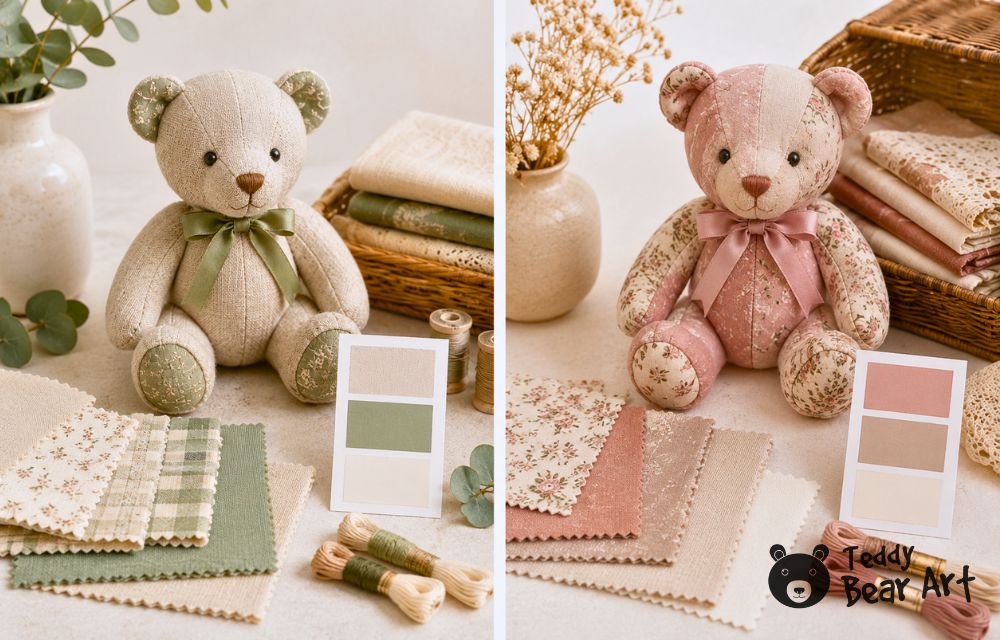
Oatmeal, Sage Green, and Cream
This is a quiet, natural palette that works beautifully for linen bears and plain cotton designs. Use oatmeal for the main body, cream for the muzzle and inner ears, and sage green for small accents such as paw pads, patches, or a tiny fabric tag.
The colors feel modern without looking cold. Dark brown eyes and a softly embroidered brown nose keep the face gentle. Avoid adding pure black unless you want a stronger, more graphic expression.
Dusty Rose, Warm Beige, and Ivory
Dusty rose can look elegant rather than overly sweet when it is paired with warm beige. Ivory adds a clean highlight and prevents the palette from becoming too muted.
This combination suits keepsake bears, memory bears, and small decorative teddies. If the rose fabric is printed, choose a beige that appears somewhere inside the print. That small connection makes mixed fabrics look intentional.
Terracotta, Mustard, and Natural Linen
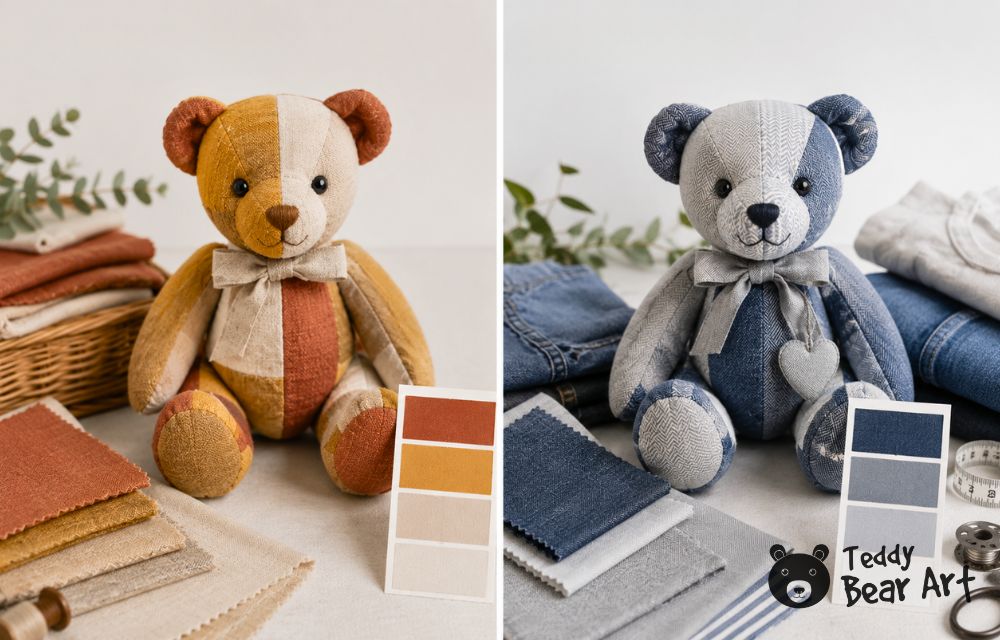
Terracotta and mustard bring warmth to a modern handmade bear. Natural linen acts as the resting color between them.
Use terracotta for the body, linen for the muzzle and paw pads, and mustard only in small areas. Too much mustard can overpower the face, but a little gives the bear energy. Dark chocolate embroidery thread works better than stark black with this earthy group.
Denim Blue, Soft Grey, and White
This palette is ideal for recycled shirts, jeans, chambray, and memory bear projects. Denim blue provides structure, soft grey reduces the contrast, and white adds freshness.
Try placing the darkest denim on the body and the lighter fabric on the muzzle. If several denim pieces are used, repeat each shade at least twice so the bear looks balanced rather than patched together by accident.
Fleece Teddy Bear Color Palettes
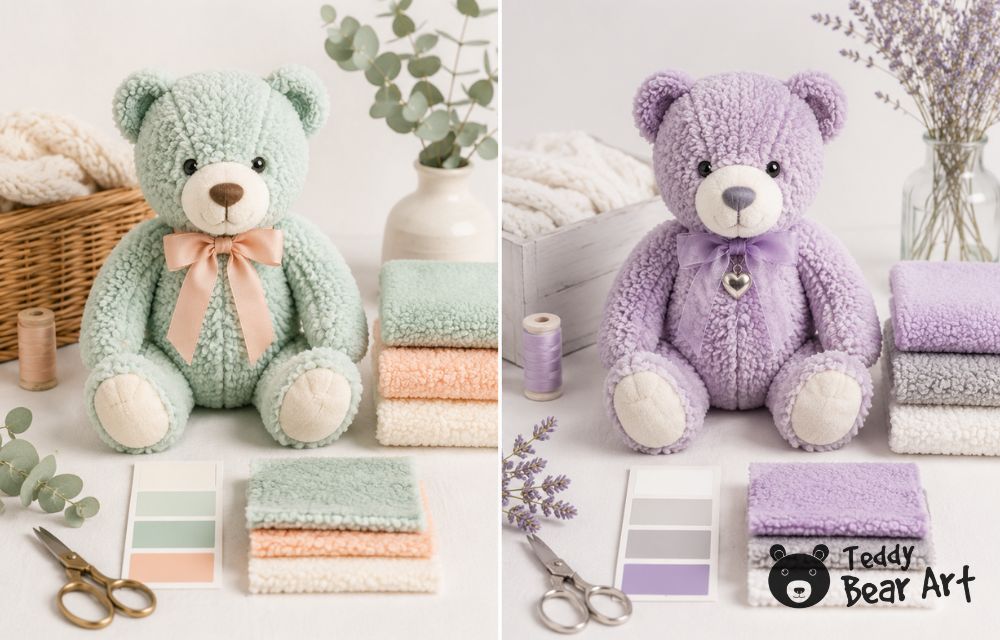
Mint, Peach, and Cream
Mint and peach create a soft but lively combination for fleece bears. Cream should be the connecting shade, especially around the face.
A mint body with a cream muzzle and small peach paw pads feels light and playful. Brown eyes soften the pastel colors, while black eyes create a more kawaii expression. Keep the nose simple so the palette remains the main feature.
Lavender, Soft Grey, and White
Lavender becomes much more sophisticated beside grey. White can be added to the muzzle, ear centers, or a small belly patch.
This is a lovely choice for sleepy, dreamy, or whimsical bears. Choose a grey with a slight blue undertone instead of a brownish grey. It will sit more naturally beside lavender.
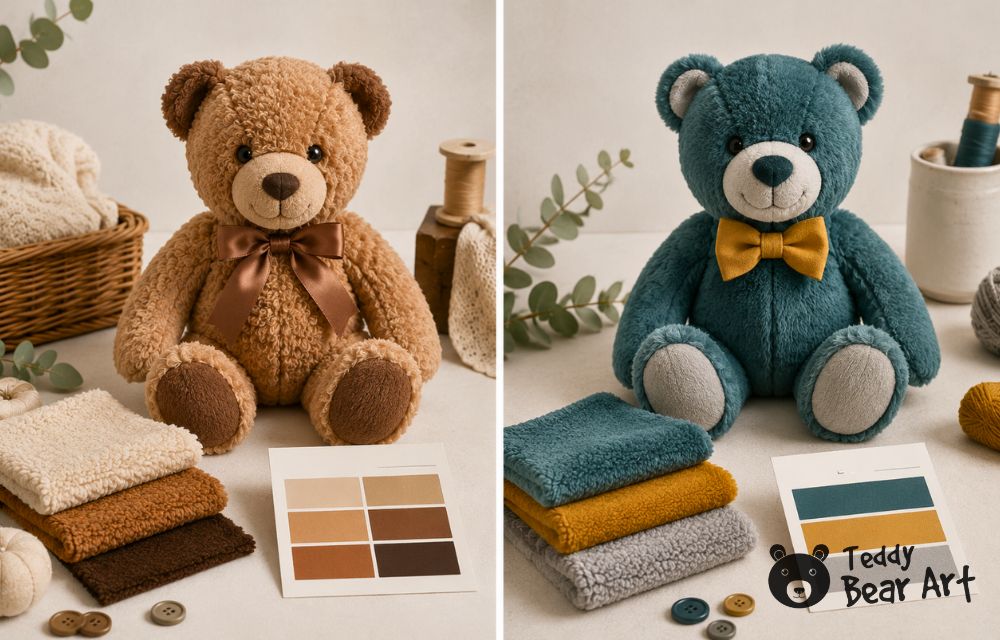
Caramel, Beige, and Chocolate Brown
This is a modern update of the traditional brown teddy bear. Caramel provides warmth, beige opens up the face, and chocolate brown adds definition.
It is also one of the easiest palettes for beginners because the colors are forgiving and facial features remain visible. Use the darkest brown sparingly for the nose, eye corners, or a narrow accent patch.
Teal, Mustard, and Light Grey
Teal and mustard create a stronger contemporary look. Light grey keeps them from competing.
Use teal as the main color, grey for the muzzle and inner ears, and mustard only for small details. This palette works best on simple bear shapes with clean seams. Too many patches or decorative elements can make the result feel crowded.
Faux Fur and Mohair Teddy Bear Color Palettes
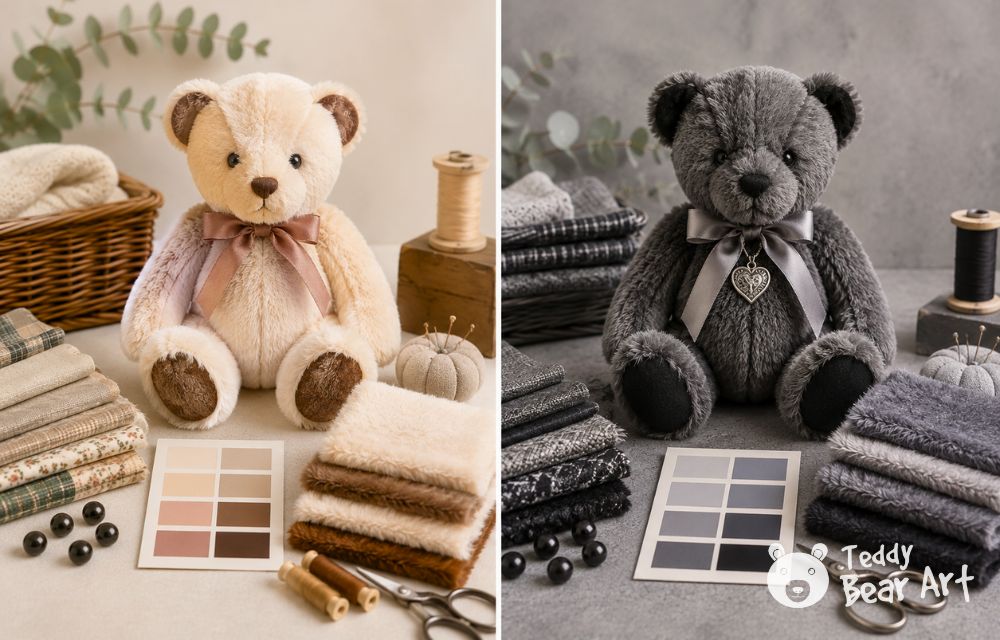
Cream Faux Fur, Cocoa, and Blush
Cream faux fur can sometimes look flat on its own. Cocoa paw pads and a small blush accent give it warmth and depth.
Blush works nicely inside the ears or as a lightly shaded detail around the cheeks. For a calm face, use warm brown glass eyes and a cocoa nose instead of black.
Charcoal Grey, Silver, and Black
A monochromatic palette can make a teddy bear feel modern and sculptural. Charcoal faux fur forms the main body, silver creates soft contrast, and black defines the features.
The important detail is texture. Pair long charcoal fur with short silver plush or smooth wool felt. The difference in surface helps the separate areas remain visible even when the colors are close.
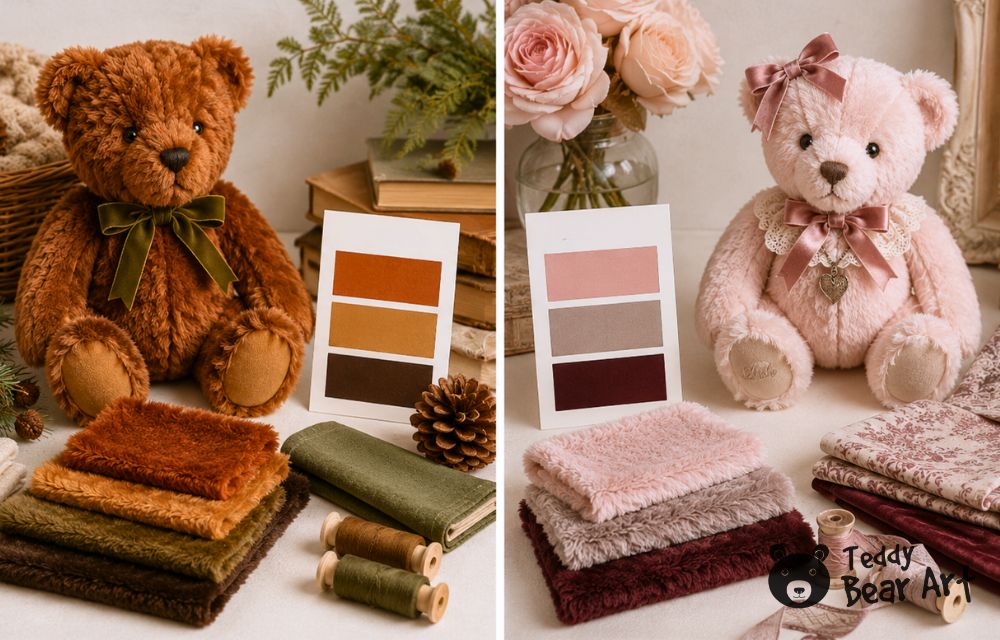
Rust, Golden Brown, and Dark Chocolate
These colors are rich, warm, and slightly woodland-inspired. Rust faux fur looks especially beautiful when the pile has lighter tips.
Golden brown can be used on the muzzle and inner ears, while dark chocolate grounds the nose and paws. Antique copper or amber colored eyes can make this palette feel even more cohesive.
Blush Pink, Taupe, and Burgundy
This palette is unusual but still grown-up. Blush pink gives softness, taupe adds restraint, and burgundy provides one broad accent.
It suits decorative and collectible teddy bears better than very simple children’s toys. Burgundy should appear in tiny amounts, perhaps in the paw embroidery, ear lining, or a small stitched detail.
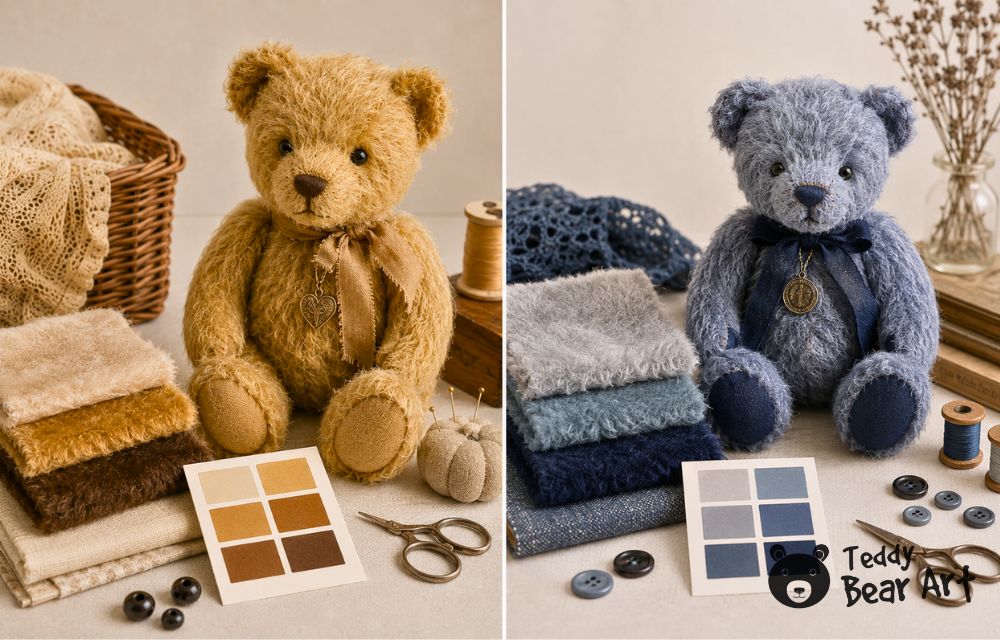
Antique Gold Mohair, Beige, and Dark Brown
Antique gold mohair is a classic choice, but the supporting colors can make it feel fresh. Pair it with a pale beige muzzle and dark brown features rather than using several similar golden shades.
The result is traditional at first glance, yet cleaner and more modern when the details are kept simple. This palette also photographs beautifully in natural light.
Smoky Blue Mohair, Grey, and Deep Navy
Smoky blue is a wonderful alternative to ordinary brown. Grey paw pads keep it subtle, while a deep navy nose creates definition without the sharpness of black.
This palette works especially well for a thoughtful or slightly serious character. Dark glass eyes, placed carefully, will not disappear against the blue fur.
Olive Green Mohair, Warm Beige, and Cocoa
Olive green may sound unusual for a teddy bear, but muted olive can look natural, artistic, and quietly magical. Warm beige softens the face, and cocoa keeps the features earthy.
This is a strong choice for woodland, fantasy, or one-of-a-kind artist bears. Avoid bright white accents, since they can break the soft natural mood.
How to Choose Teddy Bear Colors for Modern Sewing
Start with the feeling you want the bear to have. A nursery bear may need soft contrast and calm colors. A collectible bear can carry deeper shades, unusual undertones, and more dramatic texture. A memory bear often begins with fabrics that already have emotional meaning, so the supporting colors should help them work together.
A simple three-part formula is useful:
- Choose one main color for most of the body.
- Add one supporting color for the muzzle, inner ears, or paw pads.
- Use one accent color in a very small amount.
The accent does not need to be fabric. It can come from the eye color, nose thread, shading, a tiny patch, or decorative stitching.
I usually begin with the main fabric and build the rest of the palette around it. I place possible paw pad fabrics, glass eyes, and several shades of nose thread directly on the fur. This simple test has saved me many times from combinations that looked beautiful separately but did not work together on the finished bear.
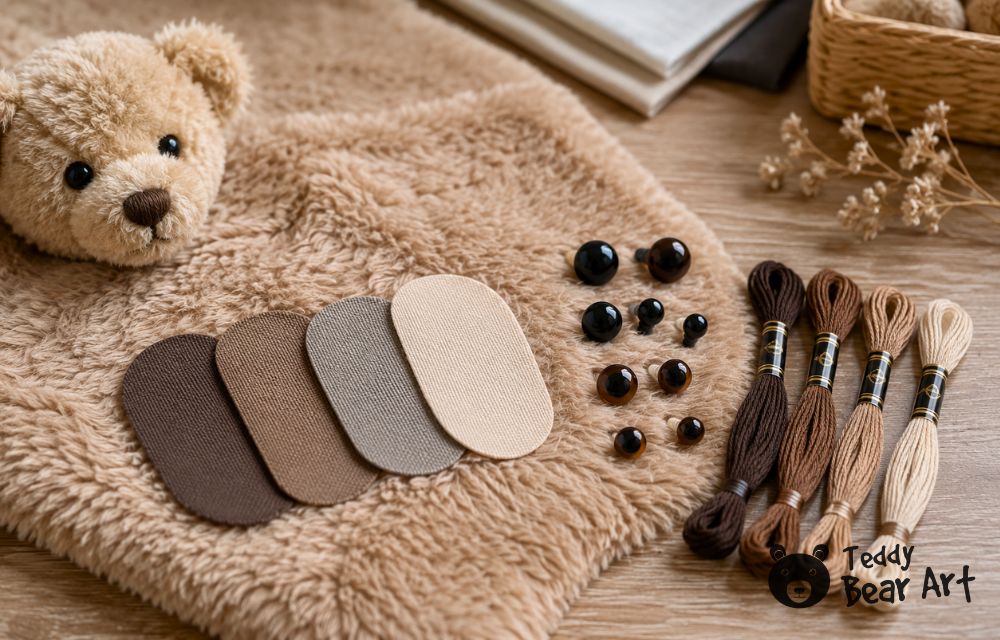
Pay attention to undertones. Cream can lean yellow, pink, grey, or beige. Brown can be orange, red, cool, or almost black. Two colors may look suitable separately, but clash when placed side by side. You can experiment with different combinations using the Adobe Color wheel before cutting your fabric.
Next, check contrast with a quick phone photo. Convert the image to black and white. If the muzzle disappears into the face, choose a lighter or darker supporting fabric. This simple check is especially helpful with long faux fur and mohair.
Finally, test the eyes and nose before sewing them permanently. A strong black nose can dominate a pastel bear, while a brown nose may vanish on dark caramel fur. Small adjustments at this stage can completely change the expression.
Frequently Asked Questions
What colors are best for a modern teddy bear?
Warm neutrals, earthy greens, dusty pinks, muted blues, terracotta, charcoal, and soft monochromatic combinations all work well. The fabric texture and the amount of contrast matter just as much as the shade itself.
Can I combine different fabrics in one teddy bear?
Yes, but try to limit the number of textures. Two main textures are usually enough. Repeat a color in both fabrics or choose materials with similar undertones to make the design feel connected.
How many colors should I use for one teddy bear?
Two main colors and one small accent are enough for most teddy bears. More colors can work for memory bears and patchwork designs, but each shade should appear more than once to keep the composition balanced.
Should the muzzle always be lighter than the body?
No. A lighter muzzle is easy to read and often creates a soft expression, but a darker muzzle can look striking. The main goal is clear contrast around the eyes, nose, and mouth.
How do I choose colors for printed cotton?
Begin with the least dominant color in the print and use it for the plain supporting fabric. This often produces a more interesting result than matching the largest or brightest color.
Before You Go
Choosing teddy bear colors for modern sewing does not need to feel complicated. Begin with one fabric you truly love, add a supporting shade that helps the face remain clear, and finish with one small accent. Texture, pile direction, eye color, and nose thread will bring the whole palette together.
The combinations in this guide are starting points, not strict rules. Lay your real materials beside one another, look at them in natural light, and trust your own creative response. The best palette is often the one that already makes you imagine the personality of the finished bear.
You may also like:
Get Free Patterns & Be the First to Know!
Want free teddy bear patterns, exclusive tutorials, and a chance to win craft supplies?
Sign up for our newsletter using the subscribe form in the middle of this article to receive new patterns, insider tips, and the latest news on teddy bear art. You’ll also automatically be entered into our annual giveaway for a chance to win teddy bear crafting materials.
Bonus entry: Save one of our pins on Pinterest to increase your chances of winning!
Let’s create, inspire, and craft beautiful teddy bears together!
The color palettes on these bears are just beautiful! These colors are warm and peaceful-which I love. I think stuffed bears in these colors look much better than dark colors- like black or deep blue. I had no idea that the colors would change so much just based on the type of material. One of my best friends designs and makes custom stuffed animals. I know she would love this content. I’m sharing this article with her for sure- thank you!
Thank you so much! I’m really glad you enjoyed the article. And how lovely that your friend makes custom stuffed animals! I hope she finds it useful and gets some new ideas from it too. Thanks for sharing it with her!
I have to say, I love your site! All the bears are so pretty. I like how you explain the materials and the feel each one creates. I love the dusty rose, and the elegant look you describe sounds so nice. I also like the ivory palettes you show. Mint and lavender sound like a great combination. I don’t sew much, but if I ever get brave enough to make a bear, I’m coming to your site! I like how you’ve broken down the steps into a simple three-part formula. It makes me feel like I could make a bear.
Thank you so much for your lovely words! I’m especially happy that the three-part formula made creating your own bear feel possible. Mint and lavender would make such a sweet combination! If you decide to give sewing a try, start with a simple pattern and take it one step at a time. I’d love to see your first bear!