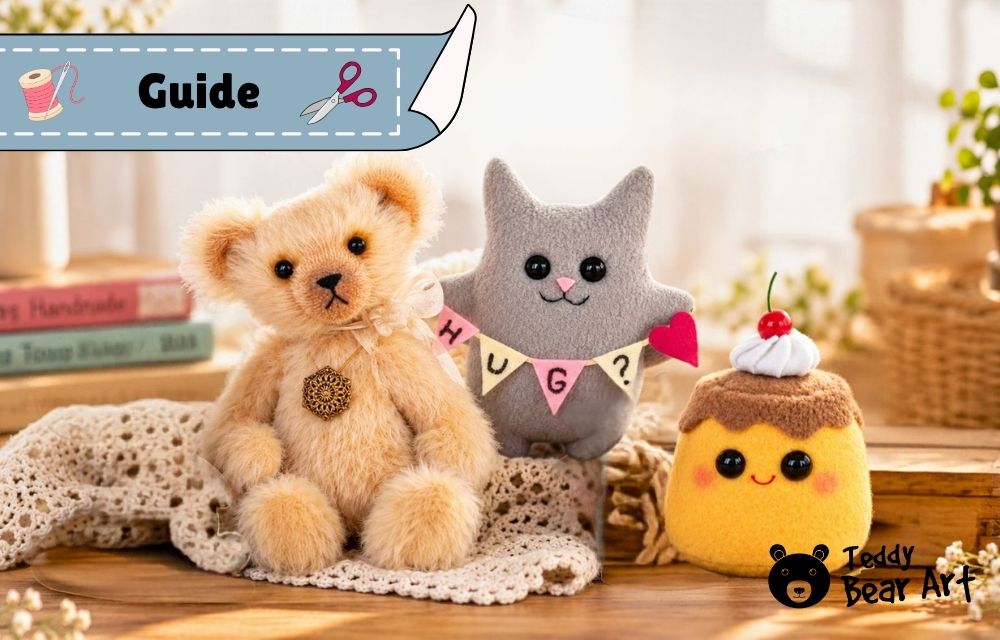

Have you ever wondered about the plushie vs stuffed animal difference? At first glance, these two names seem to describe exactly the same thing. Both can be soft, adorable, handmade, and impossible to resist hugging. Yet, when browsing toy shops, sewing patterns, or handmade collections, you might notice that some creations are called plushies while others are described as stuffed animals.
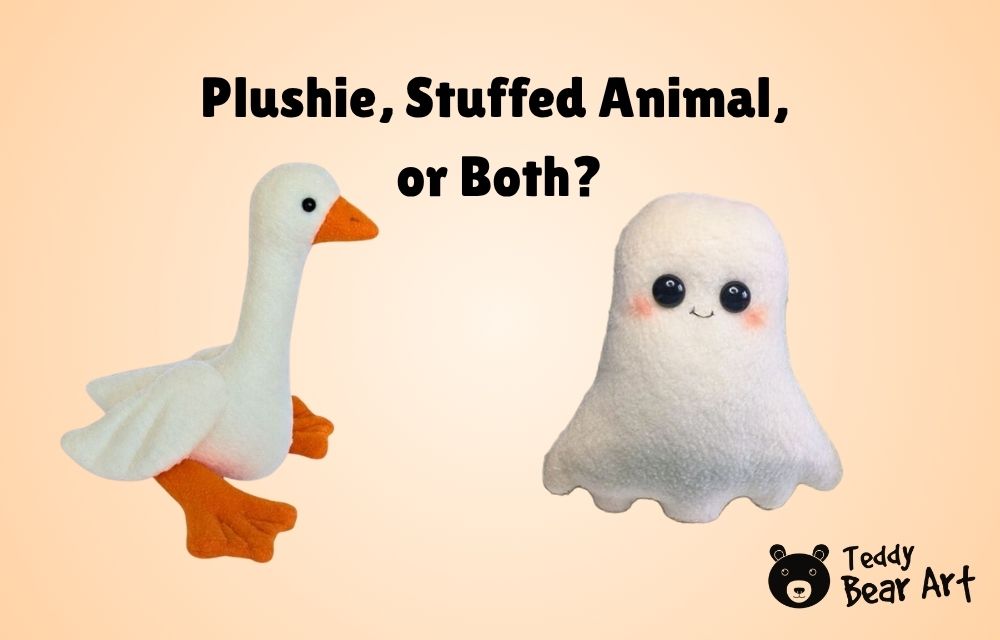
So, is there a real difference?
As a teddy bear artist who has spent years creating handmade bears and other soft animals, I find this question particularly interesting. The answer isn’t simply about fluffy fabric or how much stuffing goes inside a toy. In fact, some of the most interesting differences have nothing to do with sewing at all.
And here’s the first surprise: a teddy bear can be both a plushie and a stuffed animal at the same time.
What Is a Plushie?
A plushie is a soft, stuffed creation, usually made from fabric and designed to be pleasant to touch or hold. The word sounds playful and affectionate, which may help explain why it is so popular among people who love cute characters and unusual soft toys.
According to the Cambridge Dictionary, a plushie is a cloth toy filled with soft material, often shaped like an animal.
But here’s where things get interesting. A plushie doesn’t necessarily have to look like an animal.
It might be a smiling dessert, a cheerful cloud, a fantasy creature, or a cute animal with exaggerated proportions.
Plushies also come in countless styles. Some are realistic, while others have oversized heads, tiny bodies, or unusual expressions.
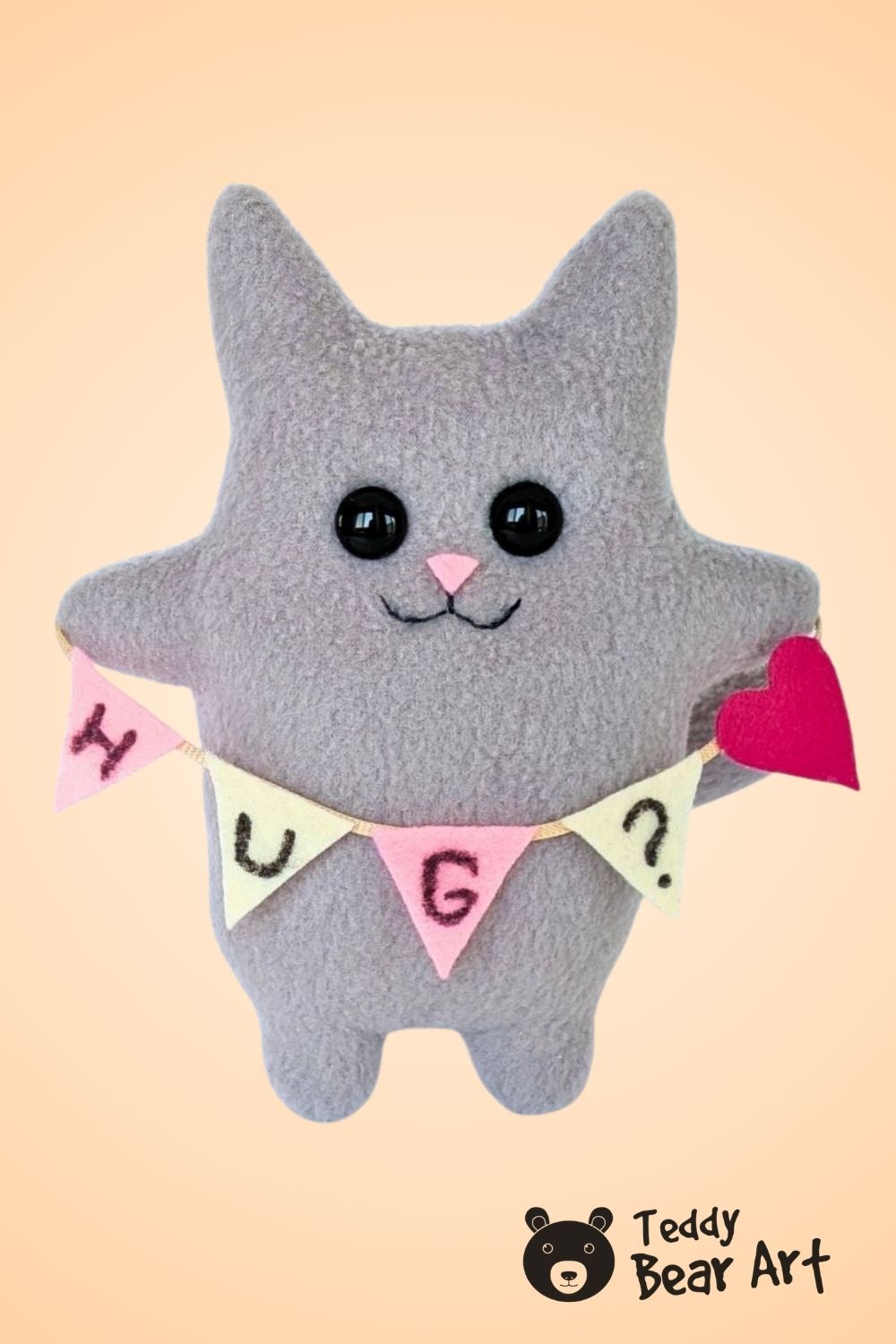
I especially enjoy working with fleece because it allows me to create soft characters with simple but expressive shapes. My little gray fleece cat, with its pointed ears, cheerful face, and tiny HUG garland, is a lovely illustration.
Despite the name, plushies aren’t always made from traditional plush fabric.
Fleece, minky, felt, and other textiles can be used to create them. The word plush originally refers to a type of fabric with a soft raised surface, but it is also used as a shorter name for a plush toy.
The word plushie, however, refers to the finished soft creation rather than a particular fabric.
What Is a Stuffed Animal?
A stuffed animal is traditionally a fabric toy shaped like an animal and filled with stuffing.
The term is especially common in American English. In British English, people often use soft toy instead.
Think of a traditional teddy bear, a floppy puppy, a stuffed elephant, or a handmade fleece mouse. These are familiar examples of stuffed animals.
Unlike the broader term plushie, the name stuffed animal emphasizes the toy’s animal shape.
However, that doesn’t mean all stuffed animals have to look realistic.
A purple elephant with enormous ears or a smiling fox wearing a little scarf is still a stuffed animal. Creative colors, funny expressions, and unusual proportions don’t change that.
One of my favorite illustrations is a little mouse I made from gray fleece. Its enormous pink ears, rounded body, and long tail give it a rather playful appearance, but it is still unmistakably an animal.
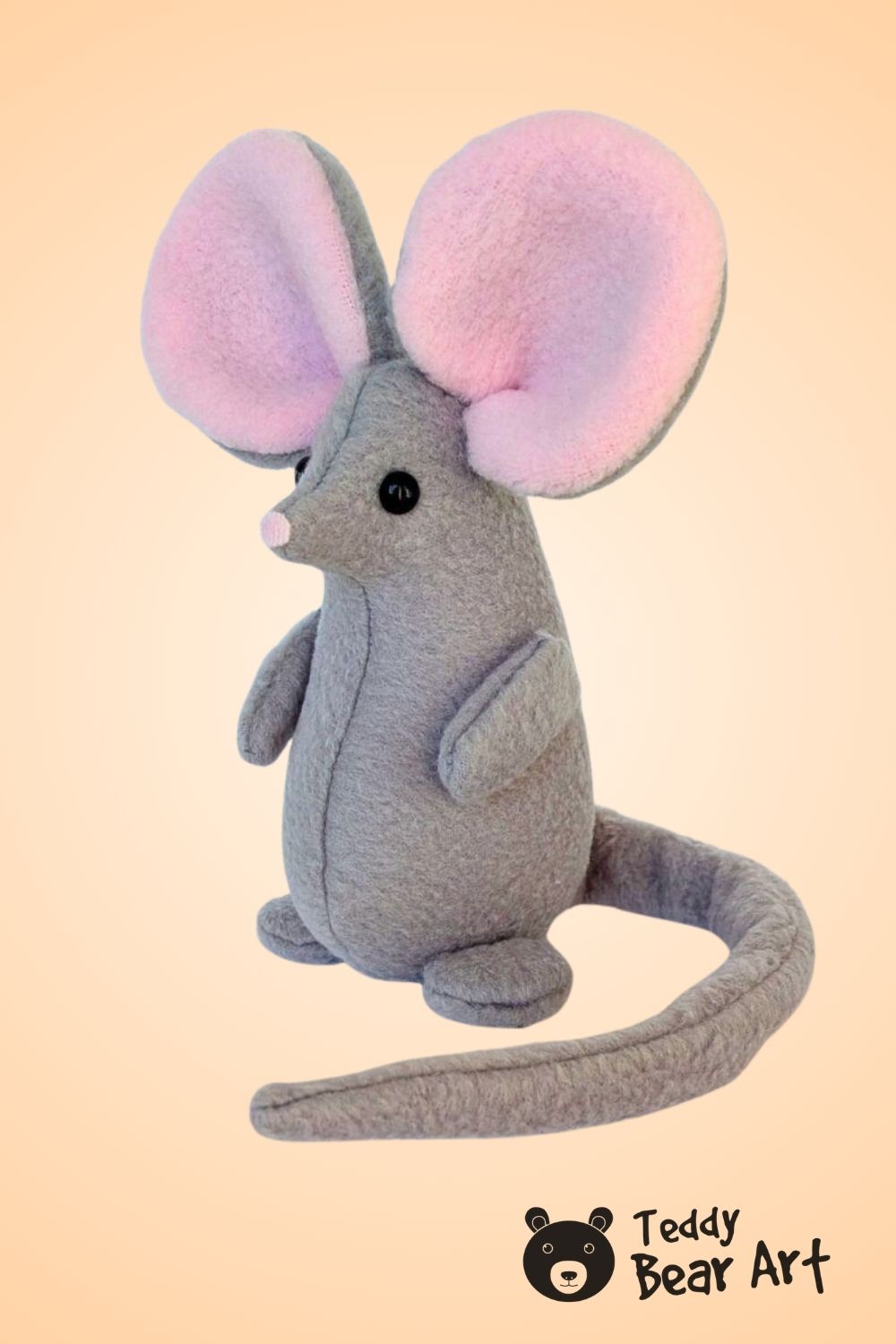
Stuffed animals can be manufactured in factories or sewn entirely by hand. They may contain polyester fiberfill, wool, or other stuffing materials.
And not every stuffed animal is intended for cuddling.
Some handmade creations are designed primarily for collectors, with special fabrics, traditional joints, glass eyes, and carefully shaped features.
This is something I particularly appreciate about teddy bear making. Two bears can share a similar silhouette while having completely different personalities, construction techniques, and purposes.
Plushie vs Stuffed Animal: What’s Actually Different?
Now comes the most interesting part.
There is no strict universal rule separating plushies from stuffed animals. In everyday language, the terms frequently overlap.
The main distinction concerns the shapes they describe and how people choose to use the words.
Here’s a simple comparison:
| Feature | Plushie | Stuffed Animal |
|---|---|---|
| Shape | Animals, characters, food, fantasy objects | Usually animals |
| Fabric | Various textiles | Various textiles |
| Stuffing | Usually soft filling | Soft or sometimes firmer filling |
| Typical use | Cuddling, decorating, collecting | Playing, cuddling, collecting |
| General impression | Playful, informal name | Traditional, descriptive name |
Notice something surprising?
Neither term guarantees better quality, softer materials, or a particular sewing technique.
A plushie isn’t automatically softer than a stuffed animal. A stuffed animal isn’t necessarily more traditional or realistic.
Even the fabric doesn’t determine which name is correct.
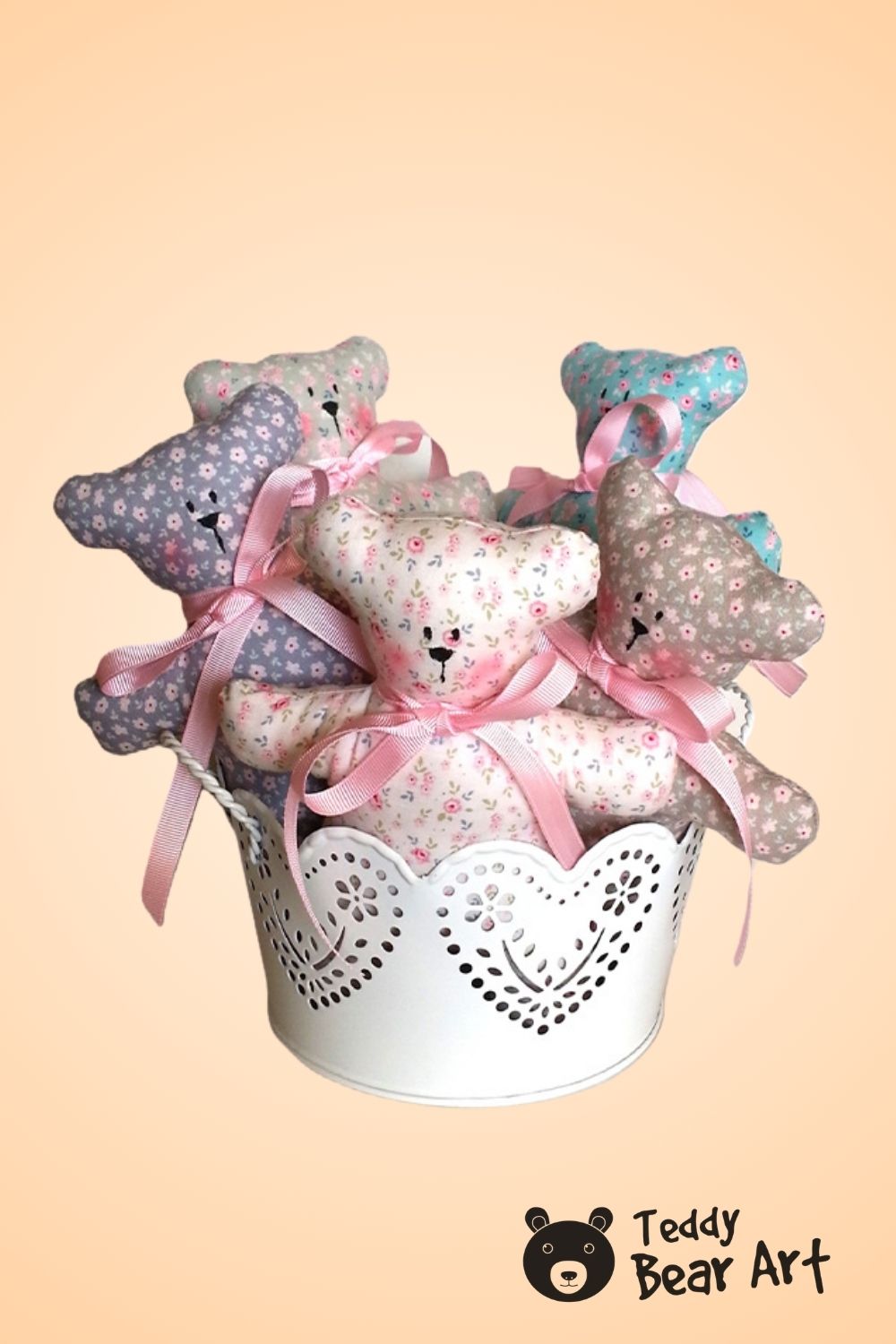
For instance, I have made little teddy bears from floral cotton fabric. Their printed bodies, sweet expressions, and ribbon bows give them a completely different appearance from traditional fluffy bears.
They are clearly stuffed animals because they represent bears. Yet, someone might also call them plushies, even though their fabric doesn’t have a soft pile.
Now think about traditional collectible teddy bears.
A jointed mohair bear with glass eyes, an embroidered nose, and firm stuffing is quite different from an ordinary cuddly toy. Its construction requires special techniques, and every detail contributes to its character.
This is the kind of work I particularly enjoy as a teddy bear artist.
I naturally call these creations artist teddy bears or collectible teddy bears. Someone unfamiliar with collectible bears might simply call them stuffed animals.
The term plushie is also possible, although it is less common in traditional teddy bear collecting.
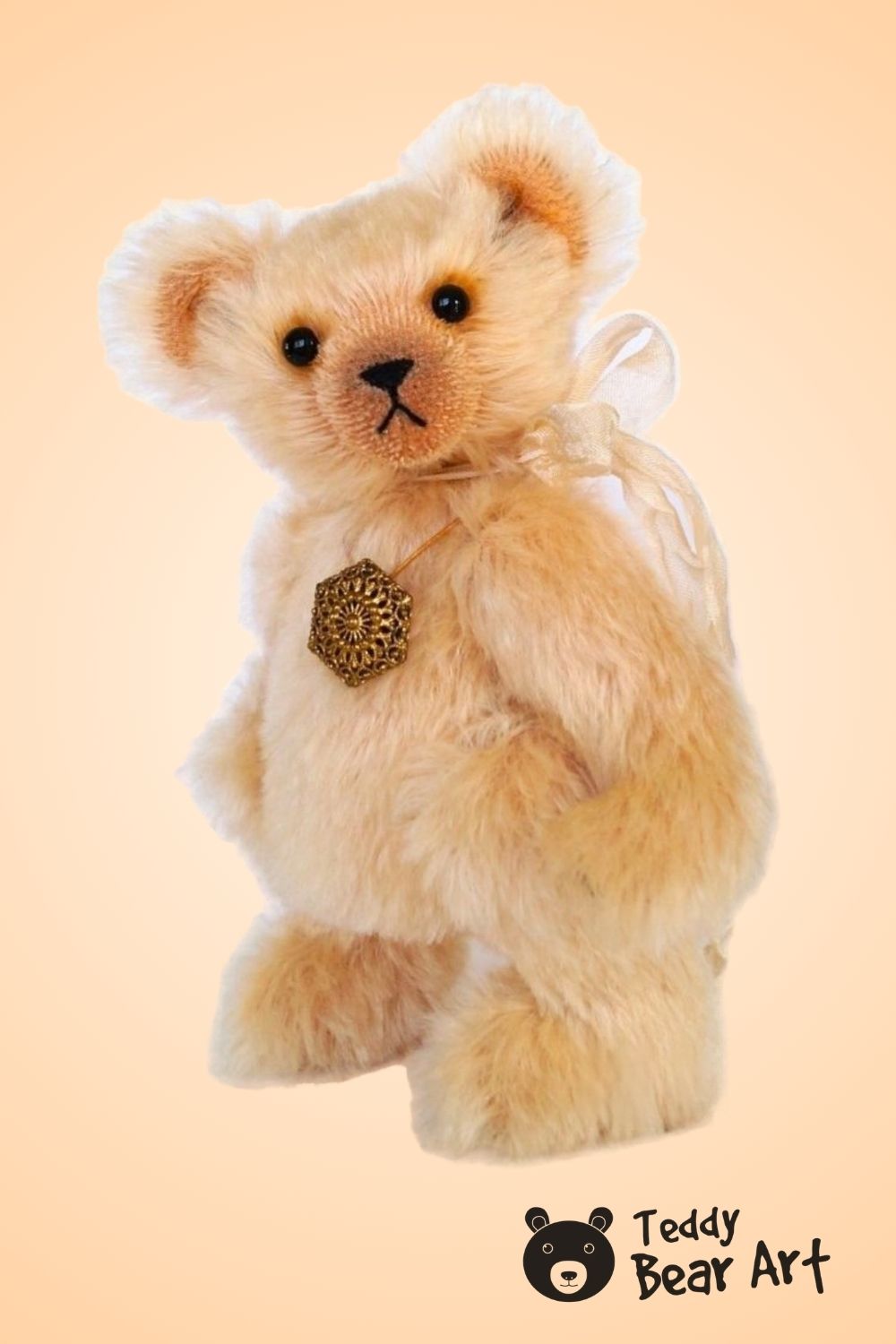
What I find fascinating is that even an elaborate mohair bear and a simple cotton bear can belong to the same broad category.
Their construction, appearance, and purpose may be completely different, but both are stuffed animals.
And the variety doesn’t end there.
Consider a handmade teddy bear made from felt. Felt has a very different surface from fluffy mohair or soft fleece. It doesn’t have the same raised pile, yet it can be used to create a charming stuffed animal.
One of my felt bears has a simple silhouette, an expressive little face, and a decorative knitted collar. Its appearance is quite different from that of a traditional mohair bear, but both represent the same familiar animal.
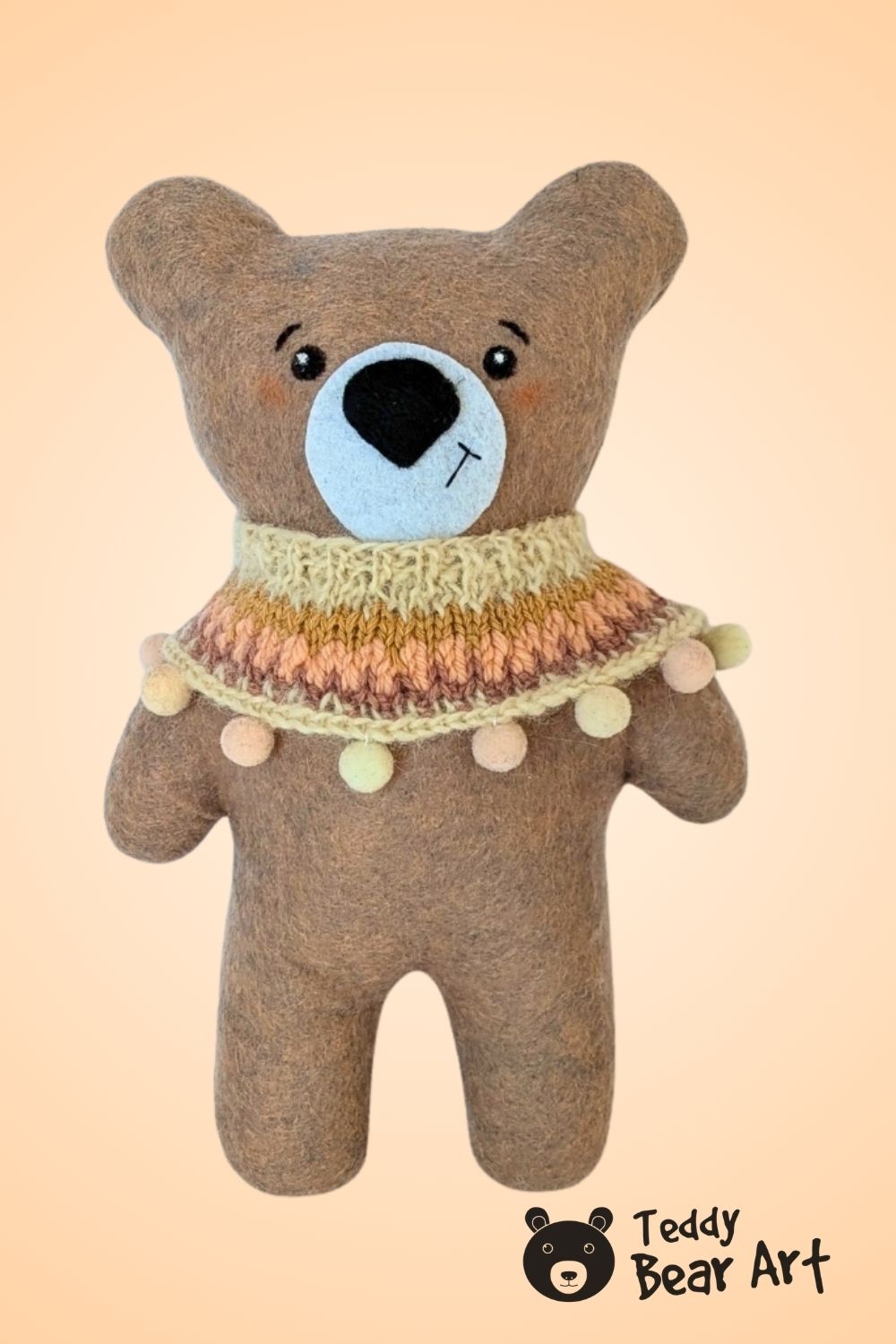
In casual conversation, someone might describe this felt creation as a plushie, too.
This is why I don’t believe fabric type alone is a useful way to separate the two terms.
But there is one distinction that becomes much clearer when the finished creation doesn’t represent an animal at all.
And I have a particularly sweet illustration of that!
I once made a cheerful little pudding from fleece, complete with a chocolate topping, whipped cream, a cherry, and a smiling face.
It’s soft, stuffed, and full of personality. The construction is similar in many ways to that of a simple plush animal.
Yet, calling it a stuffed animal would sound rather strange.
After all, a pudding isn’t an animal!

This is probably the easiest way to understand the real difference. Plushie can describe a much wider variety of soft characters, while stuffed animal generally refers to creations shaped like animals.
Does the Name Matter for Handmade Toy Makers?
Yes, especially when presenting handmade creations online.
I believe the most useful approach is to choose a name that clearly describes the toy and sounds natural to the intended audience.
For a traditional jointed mohair bear, artist teddy bear communicates its collectible character better than plushie.
For a cute fleece animal sewing project, both plushie pattern and stuffed animal pattern can be appropriate.
And for a smiling fleece dessert, plushie is usually a more natural choice.
There is also a practical consideration: the name doesn’t tell you if a toy is safe for children.
A handmade collectible bear may have glass eyes, metal joints, or small decorative parts and may not be suitable for play. The construction and materials matter far more than the label.
Ultimately, thoughtful descriptions help people understand what makes each handmade creation special.
FAQ
Is a teddy bear a plushie or a stuffed animal?
A teddy bear can be both. It is a stuffed animal because it represents a bear, and it can also be called a plushie. For traditional handmade collectible bears, the terms artist teddy bear and collectible teddy bear may be more descriptive.
Can a plushie be something other than an animal?
Absolutely! Plushies can represent fictional characters, smiling food, plants, fantasy creatures, and many other imaginative designs. Their shapes aren’t limited to animals.
Does a stuffed animal have to be made from plush fabric?
No. Stuffed animals can be sewn from fleece, felt, cotton, mohair, minky, faux fur and other suitable textiles. The term describes the stuffed animal-shaped creation, not one required type of fabric.
Before You Go
So, what is the real difference between a plushie and a stuffed animal?
It turns out that the two names describe overlapping categories rather than completely different kinds of toys. A stuffed animal is generally shaped like an animal, while a plushie can take almost any soft, imaginative form.
For me, the most fascinating part of handmade toy making has never been the label. It’s the personality that emerges from a few pieces of fabric, some stuffing, and a carefully chosen expression.
A traditional teddy bear, a tiny felt character, or a funny fleece animal can each have its own charm.
If you enjoy creating these little personalities, explore the free stuffed animal patterns and teddy bear tutorials on Teddy Bear Art. You might discover your next favorite handmade character!
Curious about another special category of stuffed animals? Read my Artist Teddy Bears: What They Are and What Makes Them Unique to discover what makes collectible handmade bears different from ordinary soft toys.
Get Free Patterns & Be the First to Know!
Want free teddy bear patterns, exclusive tutorials, and a chance to win craft supplies?
Sign up for our newsletter using the subscribe form in the middle of this article to receive new patterns, insider tips, and the latest news on teddy bear art. You’ll also automatically be entered into our annual giveaway for a chance to win teddy bear crafting materials.
Bonus entry: Save one of our pins on Pinterest to increase your chances of winning!
Let’s create, inspire, and craft beautiful teddy bears together!