


Learning how to style cottagecore plushies is less about adding as many charming details as possible and more about choosing a few details that work beautifully together. A tiny floral dress, a faded green scarf, a miniature basket, or a few embroidered leaves can completely change a handmade toy’s personality. The secret is in the balance. Cottagecore plushies should feel warm, gentle, slightly nostalgic, and handmade rather than heavily decorated.

You do not need to redesign the toy itself to create this look. A simple teddy bear, rabbit, mouse, fox, deer, lamb, or other stuffed animal can become a little cottage character through thoughtful colors, fabrics, clothing, and accessories.
This guide focuses on styling handmade plushies rather than decorating a room with stuffed animals. We will look at the details that work especially well at toy scale and how to combine them without hiding the character of the plushie underneath.
What Makes a Plushie Look Cottagecore?
Cottagecore style draws inspiration from a slower, simpler countryside life. Think flower gardens, old cottages, handmade clothes, baskets, herbs drying in the kitchen, faded fabrics, woodland walks, and well-loved objects that have been used for years.
On a plushie, that feeling often comes from small details such as:
- soft and muted colors
- tiny floral or gingham prints
- simple handmade clothing
- embroidery
- natural-looking fabric textures
- small buttons
- aprons, bonnets, scarves, and waistcoats
- flowers, leaves, berries, mushrooms, and woodland motifs
- miniature handmade accessories
The important thing is that we do not need all of these on one toy.
A cream rabbit wearing a small floral dress may already look wonderfully cottagecore. Often, a few well-chosen details create a stronger look than decorating every part of the toy.
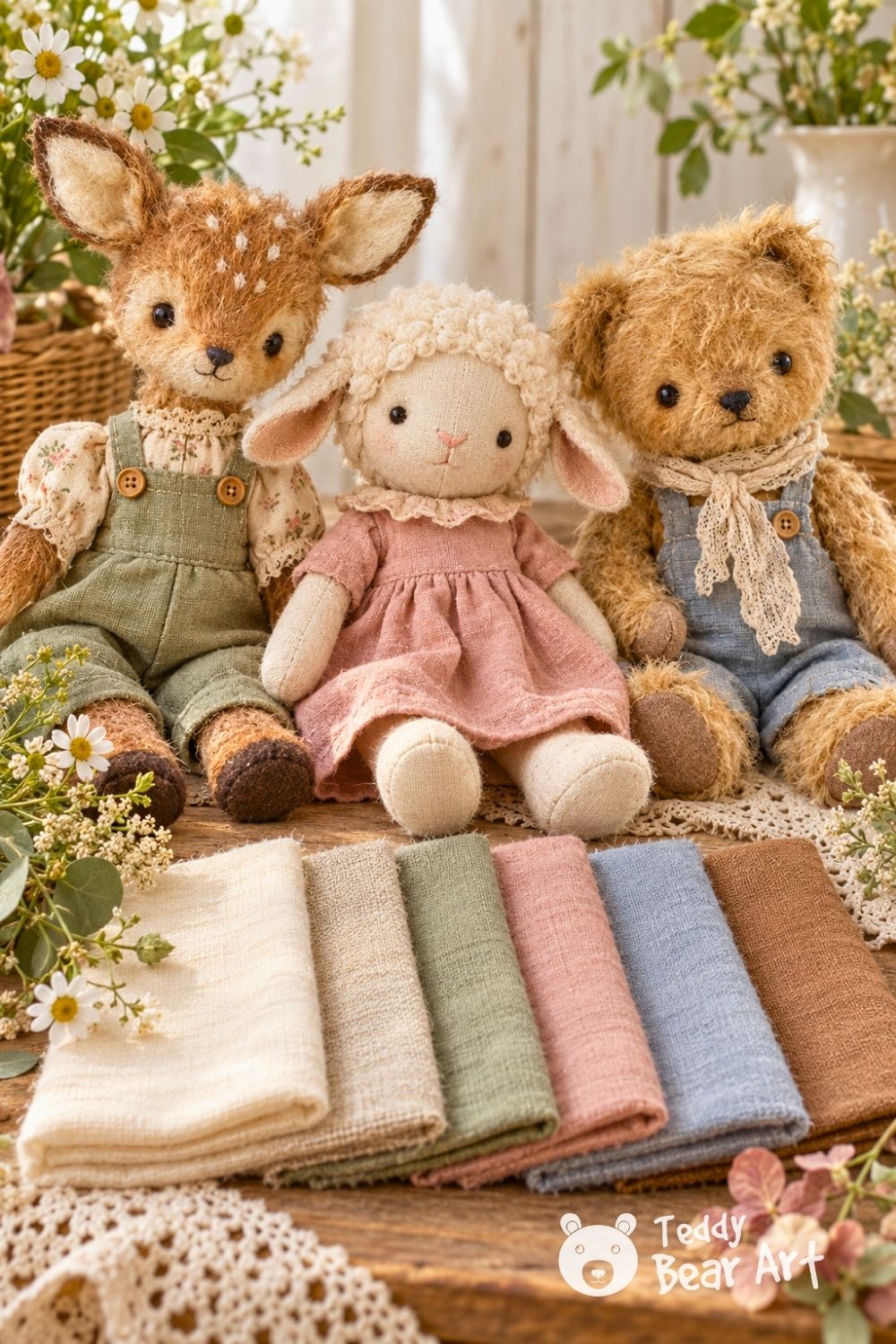
How to Style Cottagecore Plushies With a Soft Color Palette
Color is one of the easiest places to begin.
Before choosing clothing or accessories, look at the main color of the plushie and build a small palette around it.
Warm neutrals work especially well:
- cream
- oatmeal
- beige
- warm grey
- soft brown
Then add one or two muted colors inspired by nature:
- sage green
- dusty rose
- faded blue
- muted mustard
- terracotta
- soft lavender
- moss green
For example, a brown teddy bear could wear oatmeal trousers with a muted green waistcoat. A cream lamb might look lovely in dusty rose. A little deer can work beautifully with sage and faded blue.
Try limiting the palette to two, three, or four main colors. Small toys have much less visual space than people or home interiors, so too many colors can quickly compete with each other.
Choose Fabrics and Prints That Suit Small Plushies
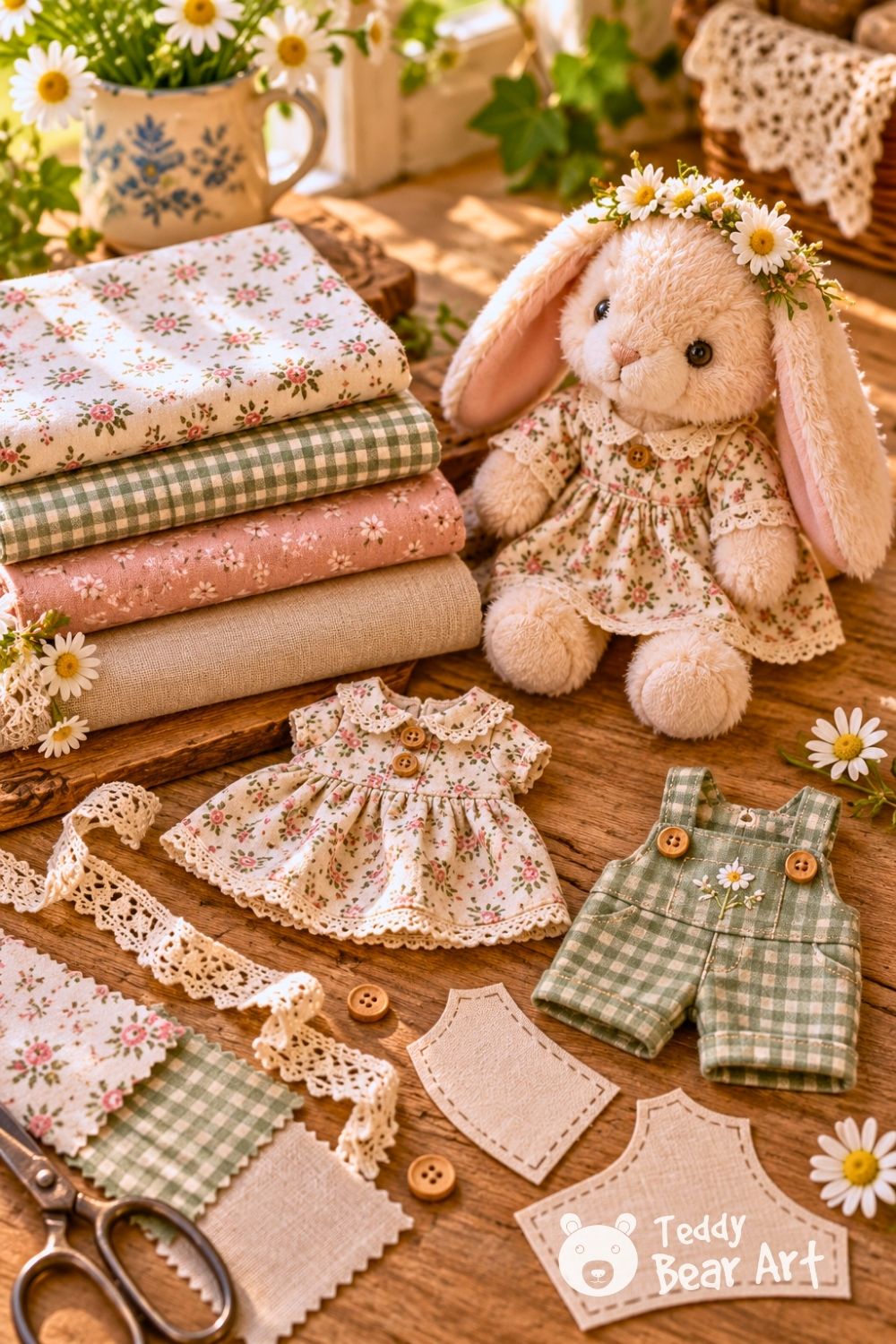
A fabric that looks delicate when we see it by the metre can look enormous once it becomes a six-centimetre dress.
Scale matters.
For plushie clothing, tiny prints usually work better than large ones. Look for small flowers, miniature checks, narrow stripes, scattered dots, or very simple botanical motifs.
Tiny Floral Prints
Small floral cottons are one of the easiest ways to create a cottagecore look.
Instead of a fabric covered with large roses, try a print with little sprigs, daisies, forget-me-nots, or tiny scattered flowers. From a normal viewing distance, the print should still read as flowers rather than as large abstract shapes.
Florals are especially charming for dresses, aprons, bonnets, skirts, and tiny fabric bags.
Gingham and Small Checks
Gingham instantly brings a simple country feeling to a plushie.
Muted red, dusty blue, beige, brown, or green checks can work beautifully for an apron, dress, shirt, bow, or kerchief.
Again, keep the scale small. A check that looks ordinary on human clothing may appear huge across a tiny teddy bear’s chest.
Natural-Looking Textures
Cotton, linen-look fabric, soft felt, wool blends, corduroy with very fine ribs, and slightly textured fabrics fit the cottagecore mood naturally.
We do not need every material to be truly vintage or natural. What matters visually is softness, texture, and harmony.
A slightly crinkled cotton often looks more charming on a cottagecore plushie than a perfectly smooth, shiny fabric.
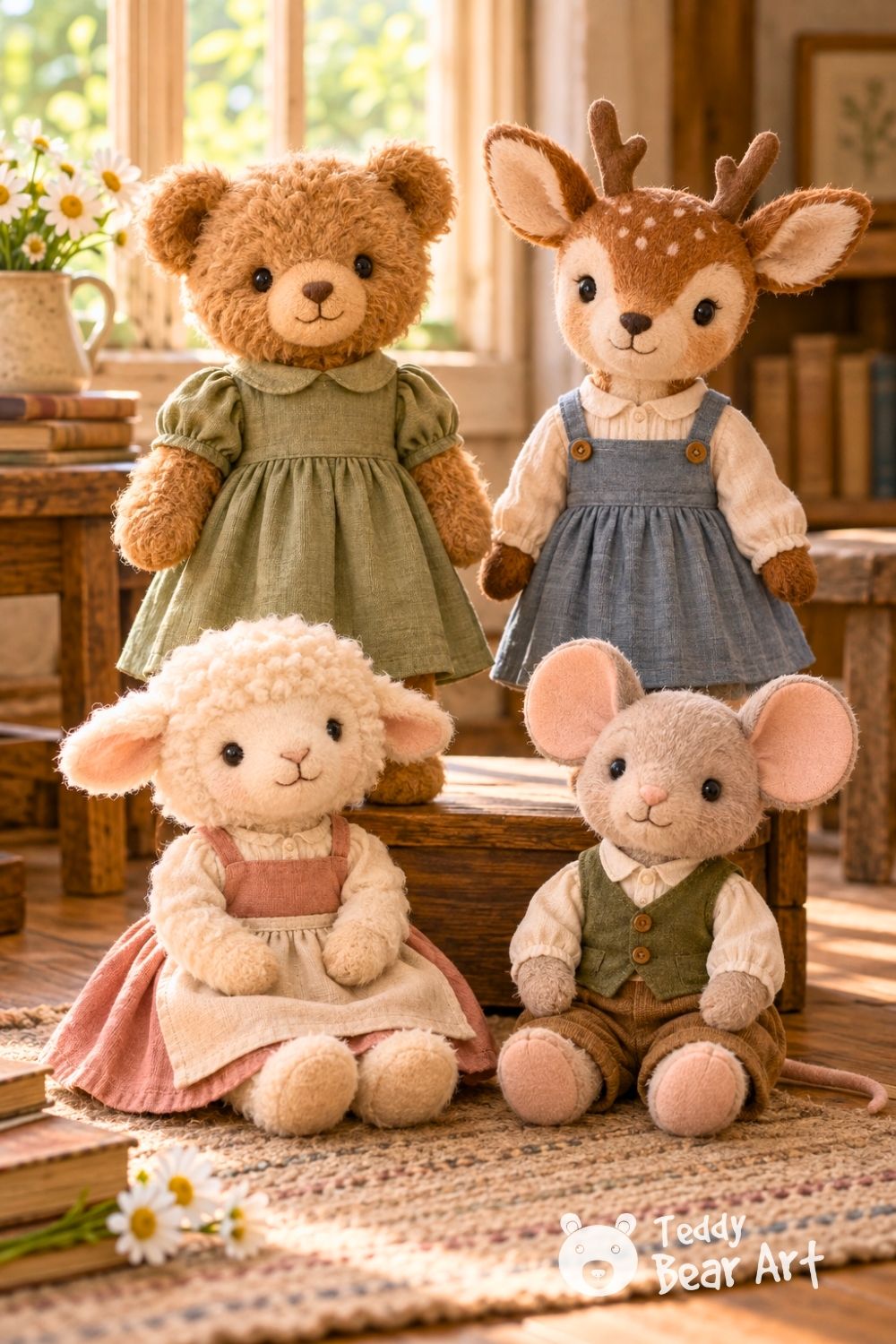
Add Simple Cottagecore Clothing
Clothing can transform the personality of a plushie faster than almost anything else.
The best cottagecore garments are usually quite simple. Their charm comes from proportion, fabric, and tiny details rather than complicated construction.
Pinafore Dresses and Aprons
A pinafore is almost made for cottagecore plushies.
It can be worn over a simple dress or used as the main clothing piece. Add a small pocket, one tiny button, or a little embroidered flower and it already feels complete.
Aprons work beautifully too, especially on rabbits, bears, lambs, and mice.
Simple Gathered Dresses
A softly gathered skirt creates a sweet handmade silhouette without needing elaborate sewing.
Try a plain bodice with a floral skirt, or reverse the idea and combine a floral bodice with a simple neutral skirt.
A little contrast collar can also add interest without overwhelming the toy.
Bloomers and Simple Trousers
Not every cottagecore plushie needs a dress.
Bloomers, cropped trousers, or simple straight trousers work very well for bears, mice, foxes, and woodland characters.
Pair them with a small shirt, scarf, waistcoat, or suspenders for a more rustic style.
Vests and Waistcoats
A tiny waistcoat can completely change a teddy bear or fox.
Brown, moss green, oatmeal, muted mustard, or checked fabric can create a warm woodland look. Add two small buttons and stop there. Tiny garments often become more convincing when we resist the temptation to keep decorating.
Bonnets and Simple Hats
Bonnets are particularly charming on rabbits and mice, but proportions matter.
If the bonnet is too large, the plushie disappears underneath it. Keep the brim small enough to frame the face rather than cover it.
Soft fabric hats, simple caps, and little kerchiefs can give the same cottage feeling with even less volume.
Use Lace, Ruffles, and Trims Carefully
Lace looks delicate in our hands, but on a small toy it can become one of the strongest visual elements.
A narrow strip of lace around a collar may be enough.
If we add lace to the sleeves, hem, bonnet, apron, and pockets at the same time, the texture can start hiding the shape of the outfit.
The same applies to ruffles.
One small gathered collar or a softly trimmed hem is usually more effective than several layers of decoration.
Before sewing a trim permanently, pin it in place and look at the plushie from normal viewing distance. If the first thing you notice is the trim rather than the toy’s face, it may be too large.

Add Embroidered Details
Embroidery is one of the easiest ways to add cottagecore character because it takes almost no physical space.
A few stitches can suggest an entire garden.
Try:
- tiny flowers
- small leaves
- simple vines
- little hearts
- berries
- simple decorative lines
- initials
- a tiny mushroom
- small botanical motifs
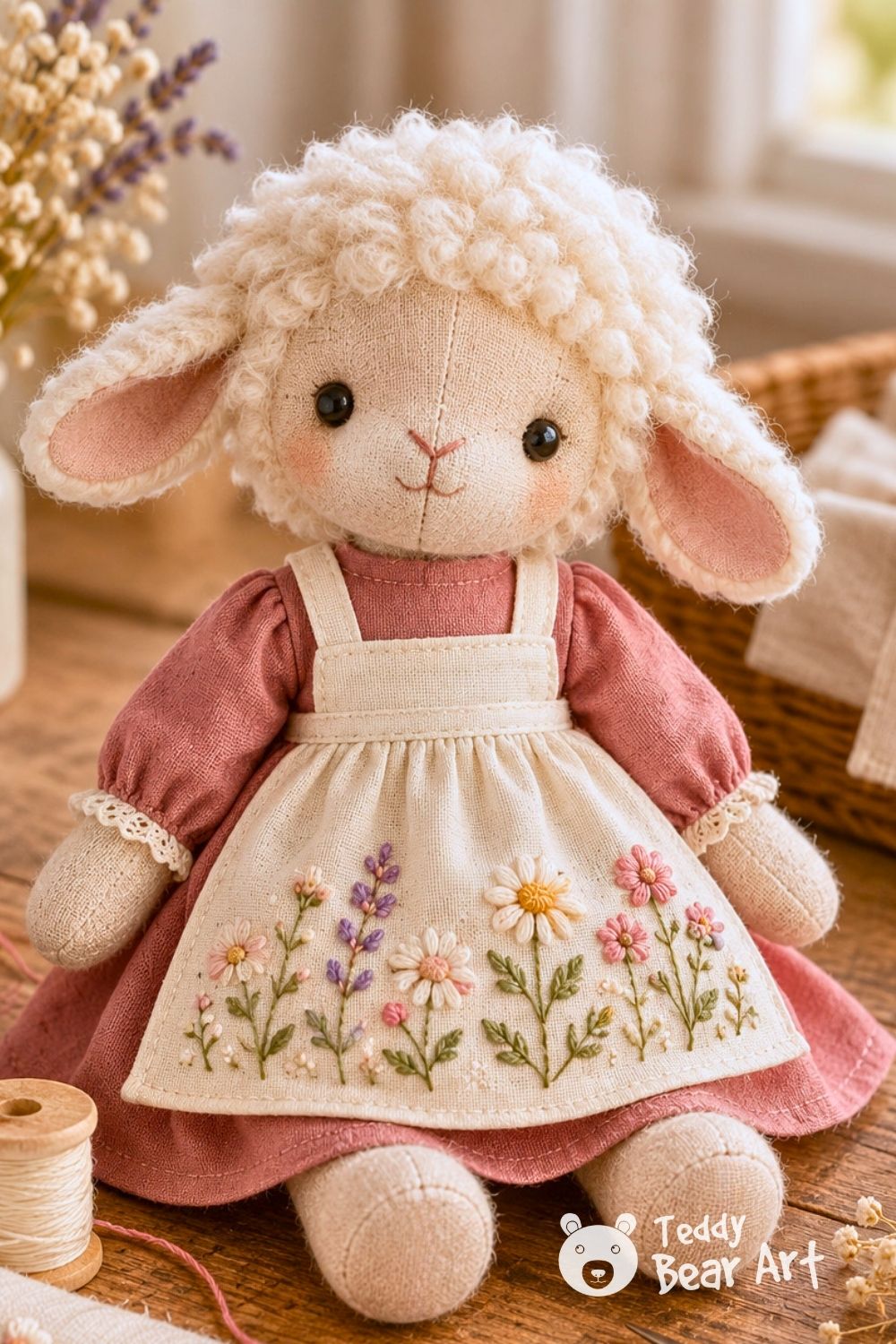
A plain apron with a few embroidered flowers can feel more special than an outfit made from several different patterned fabrics.
This is also why a solid-colored dress works so well underneath an embroidered apron. The quieter background allows the stitching to become the main detail instead of competing with another print.
Embroidery is especially useful when the plushie already has clothing and another accessory would make the design too busy.
Give Your Plushie One Tiny Cottagecore Accessory
Miniature accessories tell a story.
A teddy bear with a simple scarf feels ready for a cool country walk. A fox carrying a small satchel suddenly looks as though it has somewhere to go. A flower crown can give a lamb a soft garden mood without adding a complete outfit.
Good cottagecore accessories include:
- Mini basket, for flowers, berries, yarn, or tiny vegetables
- Fabric satchel, for a simple everyday cottage character
- Tiny book, especially charming for bears, mice, and lambs
- Flower bouquet, an easy way to add cottagecore without clothing
- Scarf or kerchief, perfect for simple woodland styling
- Flower crown, best with very small blossoms
- Mushroom, leaf, or acorn, use just one as a woodland accent

Bring Nature Into the Design
Flowers are an obvious cottagecore choice, but there are many other motifs we can borrow from gardens and woodland.
Try:
- strawberries
- blackberries
- blueberries
- leaves
- acorns
- mushrooms
- herbs
- bees
- small branches
- wildflowers
These motifs do not need to become separate accessories. A strawberry print on an apron, an embroidered bee on a pocket, or a felt leaf tucked into a basket can bring nature into the design without making the plushie feel busy.
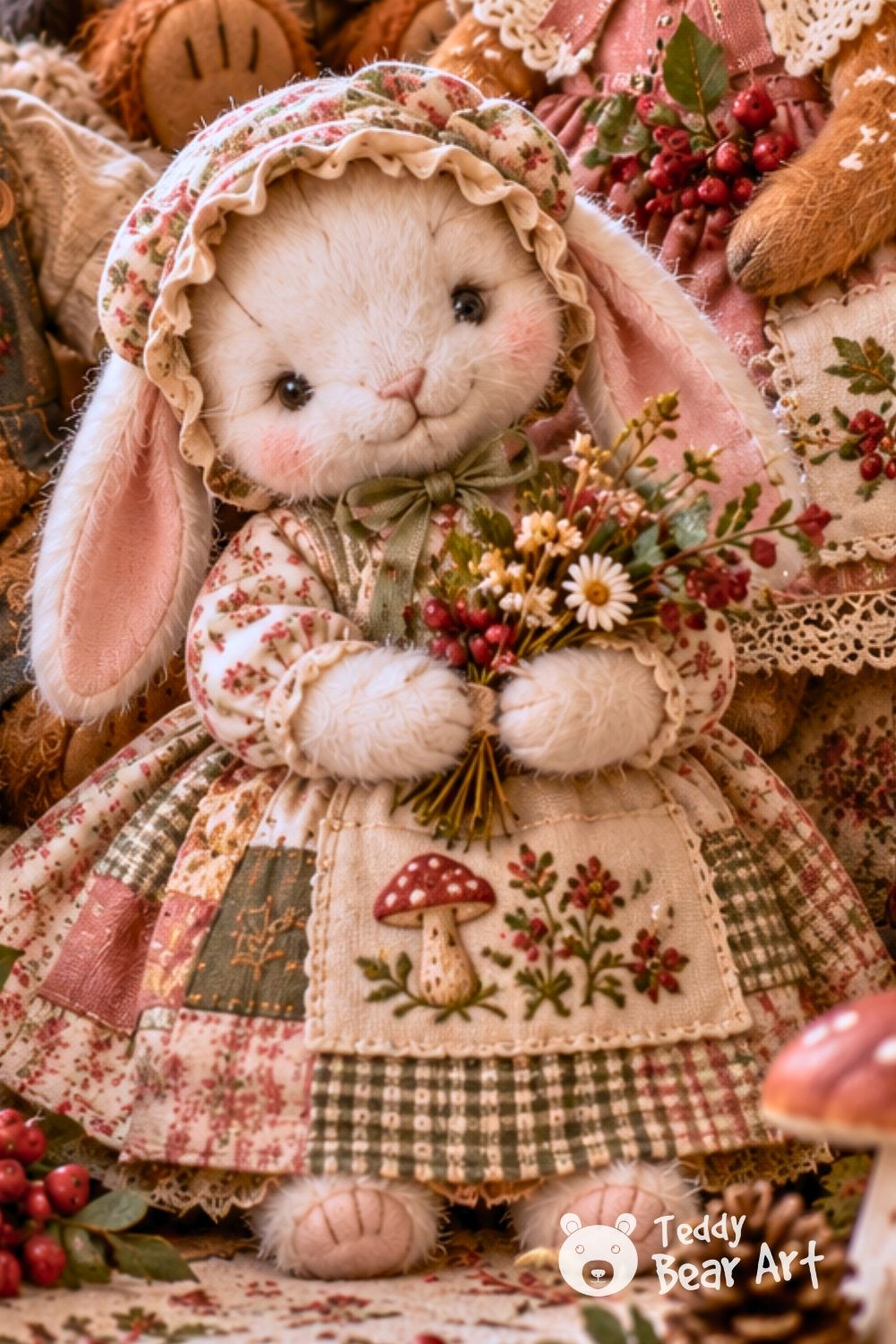
Try a Patchwork Cottagecore Look
Patchwork can give a handmade toy a lovely, well-loved feeling.
The trick is to keep the fabrics connected through color.
For example, combine a faded floral cotton with a tiny beige check and a soft muted green fabric. The patterns can be different, but the overall palette keeps them together.
Small patches can be added to trousers, an apron, a fabric bag, or a dress.
Visible hand stitching around a patch can make the detail even more charming.
Patchwork also gives us a chance to bring in tiny cottage motifs such as berries, mushrooms, flowers, and checks without making every part of the outfit look identical.
Create a Slightly Vintage Look
Cottagecore does not need to look genuinely antique.
We can suggest a vintage feeling through a few carefully chosen details:
- faded colors
- matte fabrics
- tiny buttons
- rounded collars
- simple aprons
- suspenders
- waistcoats
- modest floral prints
- old-fashioned dress shapes
- patchwork textiles
The setting can help too.
A patchwork quilt, old books, a wooden chair, a crocheted blanket, or flowers in a simple ceramic jug can create a vintage cottage atmosphere around a very simply styled plushie.
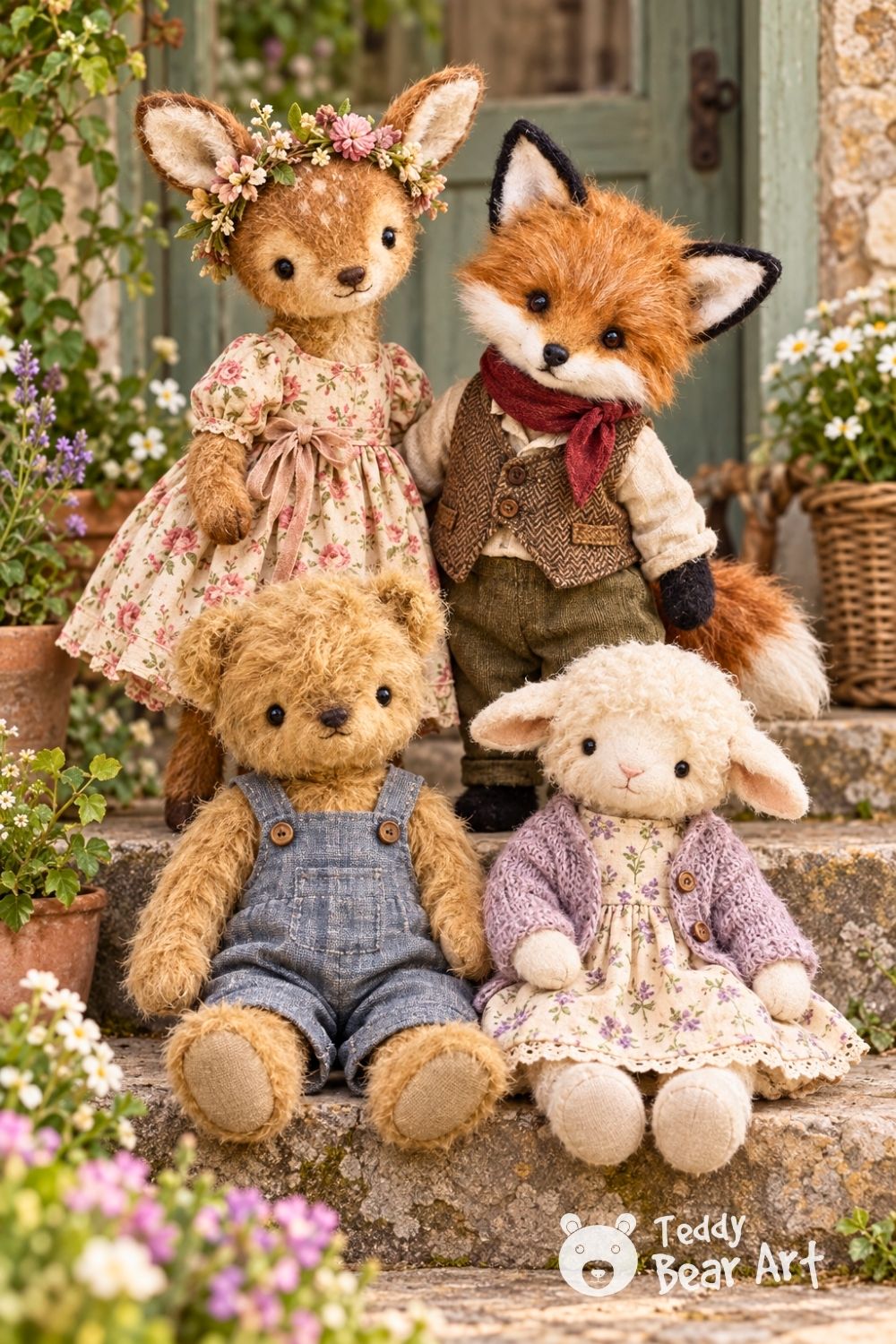
Match the Cottagecore Style to the Animal
One of the most enjoyable parts of styling plushies is allowing the animal itself to guide the design.
Different characters naturally suggest different colors and accessories.
Teddy Bears
Teddy bears suit warm, earthy cottagecore styling beautifully.
Try brown, oatmeal, muted green, cream, faded red, and washed blue. Waistcoats, simple trousers, overalls, scarves, suspenders, and small fabric bags all work well.
A traditional mohair-style bear often needs very little decoration because its texture and shape already carry a nostalgic feeling.
Rabbits
Rabbits work beautifully with softer garden-inspired cottagecore.
Floral dresses, aprons, bonnets, tiny baskets, dusty pink, sage green, soft blue, and cream all feel natural.
Long ears already create a strong silhouette, so keep hats and bonnets fairly simple.
Mice
Tiny mice are perfect for playful cottagecore styling.
Try gingham aprons, small dresses, berry motifs, baskets, little scarves, miniature books, and fabric satchels.
Because mice are often very small, accessories need to be especially simple.
Foxes
Foxes naturally suit woodland colors.
Rust, brown, moss green, mustard, cream, and muted burgundy can work beautifully. Add a simple scarf, waistcoat, satchel, or woodland-inspired accessory.
The rich color of the fox itself is already a strong design feature, so neutral clothing often works better than very busy prints.
Deer
Deer suit delicate, quiet styling.
Cream, beige, dusty rose, sage, and faded blue work beautifully. A small scarf, flower crown, embroidered leaves, or a simple dress may be all that is needed.
A deer already has an elegant silhouette, so heavy clothing can hide some of its charm.
Lambs and Sheep
Lambs are especially lovely with soft country styling.
Dusty rose, lavender, cream, sage, small floral prints, simple cardigans, aprons, and delicate flower crowns complement their soft texture beautifully.
Because their fleece already creates plenty of visual texture, keeping the clothing relatively simple often gives the best result.
Keep the Handmade Look
Cottagecore plushies do not need to look perfectly manufactured.
A tiny hand-stitched flower, visible blanket stitching, a slightly textured fabric, or a handmade accessory can add warmth that perfect symmetry sometimes removes.
There is still an important difference between handmade charm and careless finishing.
Threads should be secure. Accessories should sit properly. Seams should be strong. Decorative details can look relaxed while the construction underneath remains neat.
Think of the small imperfections we love in handmade pottery or an old embroidered cloth. They show the hand of the maker without making the piece feel unfinished.
Avoid Over-Styling Your Plushie
One of the easiest mistakes is continuing after the design is already finished.
Imagine a little deer in a soft sage dress with a delicate flower crown.
The look already feels cottagecore.
Now add several large bows, layers of lace, pearls, charms, roses, ribbons, extra jewelry, and more flowers. The result may still be beautiful, but it has moved into a much richer and more ornate decorative style.
That does not make the second style wrong. It simply creates a different visual language.
For a simple cottagecore look, it usually helps to choose:
- one main clothing piece
- one main accessory
- one small decorative detail
This is not a strict formula, but it is a good place to start.
If the plushie still feels too plain, add something. If it already has character, leave it alone.
Knowing when to stop is part of styling too.

Easy Cottagecore Plushie Styling Combinations
If you are not sure where to begin, try building a character from one of these simple combinations.
Floral Garden Rabbit
Start with a cream or light brown rabbit.
Add a tiny floral dress in dusty pink, faded blue, or soft sage. Finish with a simple bonnet or a small basket of flowers.
There is no need for both if the dress already has a strong print.
Woodland Fox
Use the natural rust color of the fox as the starting point.
Add a moss green scarf or muted brown waistcoat and one tiny woodland accessory, perhaps a small satchel or felt mushroom.
Vintage Teddy Bear
A medium or dark brown teddy bear works beautifully with oatmeal trousers, overalls, or a small waistcoat.
Tiny buttons can provide enough detail without adding another accessory.
Soft Woodland Deer
Keep this look delicate.
Try a beige deer with a dusty rose ribbon, muted green dress, or a simple flower crown.
Little Cottage Lamb
Try a cream lamb with a dusty rose dress, plain apron, or small knitted cardigan.
A few embroidered flowers or a delicate floral crown are enough to complete the look.
FAQ
What is the easiest way to style a cottagecore plushie?
Start with the plushie itself. Look at its color, texture, proportions, and personality, then choose a small color palette and add one simple garment or accessory. At toy scale, small prints, narrow trims, and a few carefully chosen details usually work best.
What colors work best for cottagecore plushies?
Soft, muted colors usually work best. Cream, beige, oatmeal, sage green, dusty rose, faded blue, soft brown, muted mustard, and terracotta are all good choices.
Try using a small palette rather than many unrelated colors. Two or three colors plus the natural color of the plushie are often enough.
What fabrics are best for cottagecore plushie clothes?
Cotton is one of the easiest choices because it comes in many small prints and is manageable at toy scale.
Tiny florals, gingham, fine checks, linen-look fabrics, soft felt, lightweight corduroy, and other matte textures can also work beautifully.
Pay particular attention to the scale of prints and textures. Details that look small on human clothing may look very large on a plushie.
How can I make a plushie look cottagecore without sewing new clothes?
Start with a removable accessory.
A small scarf, fabric kerchief, miniature basket, flower crown, tiny bag, little book, or simple handmade collar can change the look without sewing a complete outfit.
You can also add a small embroidered detail to an existing accessory.
Before You Go
Cottagecore styling works so well for handmade toys because it celebrates many of the same things we already love about making plushies, thoughtful details, visible craftsmanship, soft fabrics, natural colors, and characters that feel as though they have their own little stories.
Start with one simple idea rather than trying to create the entire look at once. A floral apron may be enough for one bear. Another plushie may only need a sage green scarf or a tiny flower crown.
Once the colors, scale, and details feel balanced, the cottagecore mood often appears naturally.
If you would like to make a new outfit for your plushie, take a look at our 5 Free Teddy Bear Clothes Patterns to Dress Up Your Bears for more sewing ideas and inspiration.
Get Free Patterns & Be the First to Know!
Want free teddy bear patterns, exclusive tutorials, and a chance to win craft supplies?
Sign up for our newsletter using the subscribe form in the middle of this article to receive new patterns, insider tips, and the latest news on teddy bear art. You’ll also automatically be entered into our annual giveaway for a chance to win teddy bear crafting materials.
Bonus entry: Save one of our pins on Pinterest to increase your chances of winning!
Let’s create, inspire, and craft beautiful teddy bears together!
Hello Hanna,
This is such a lovely and helpful article! The images are beautiful and make all the little outfits look so charming. I especially liked the tips about choosing fabrics and prints that work well for small teddy bear clothes. It’s amazing how just one simple accessory can completely change the character of a toy.
Thank you for sharing so many lovely ideas and practical tips. This was very enjoyable to read!
Angela M 🙂
Thank you so much, Angela! I’m very glad you enjoyed the article and found the tips helpful.
Hanna, is there a pattern for these cottage core plushies in your photos?
Especially the cute bunny and fox….
Love your articles!
Thank you so much, Pat! I’m so glad you enjoyed the article. Unfortunately, I don’t have patterns for that particular bunny and fox. Those images were created as inspiration for the cottagecore styling ideas in the article rather than for specific sewing projects. I’m very happy you liked them, though, and I’ll definitely keep a cozy cottagecore bunny and fox in mind for future patterns!
Thank you!