
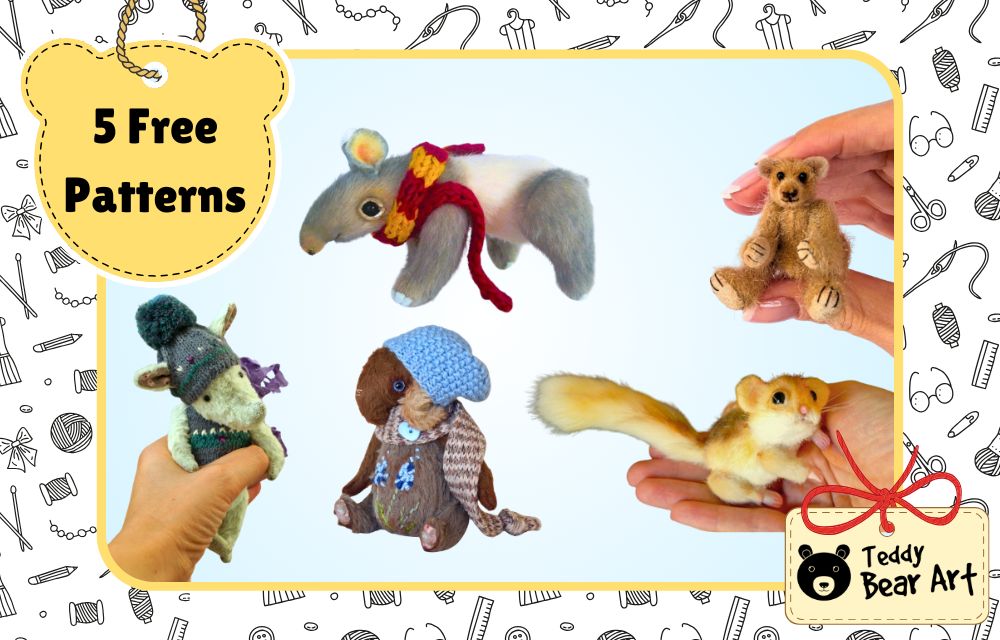

If you enjoy traditional teddy bear making on a smaller scale, these miniature teddy animal patterns are a lovely place to start. I have collected five of my small jointed designs here, including a tiny teddy bear, mouse, elephant, rhino, and tapir. Each pattern uses familiar artist teddy techniques, such as careful stuffing, shaping, and movable joints.
The printable patterns are included in this article. Under each design, you will also find a link to the original project with the materials list and detailed sewing guide.
Mini Teddy Bear Pattern
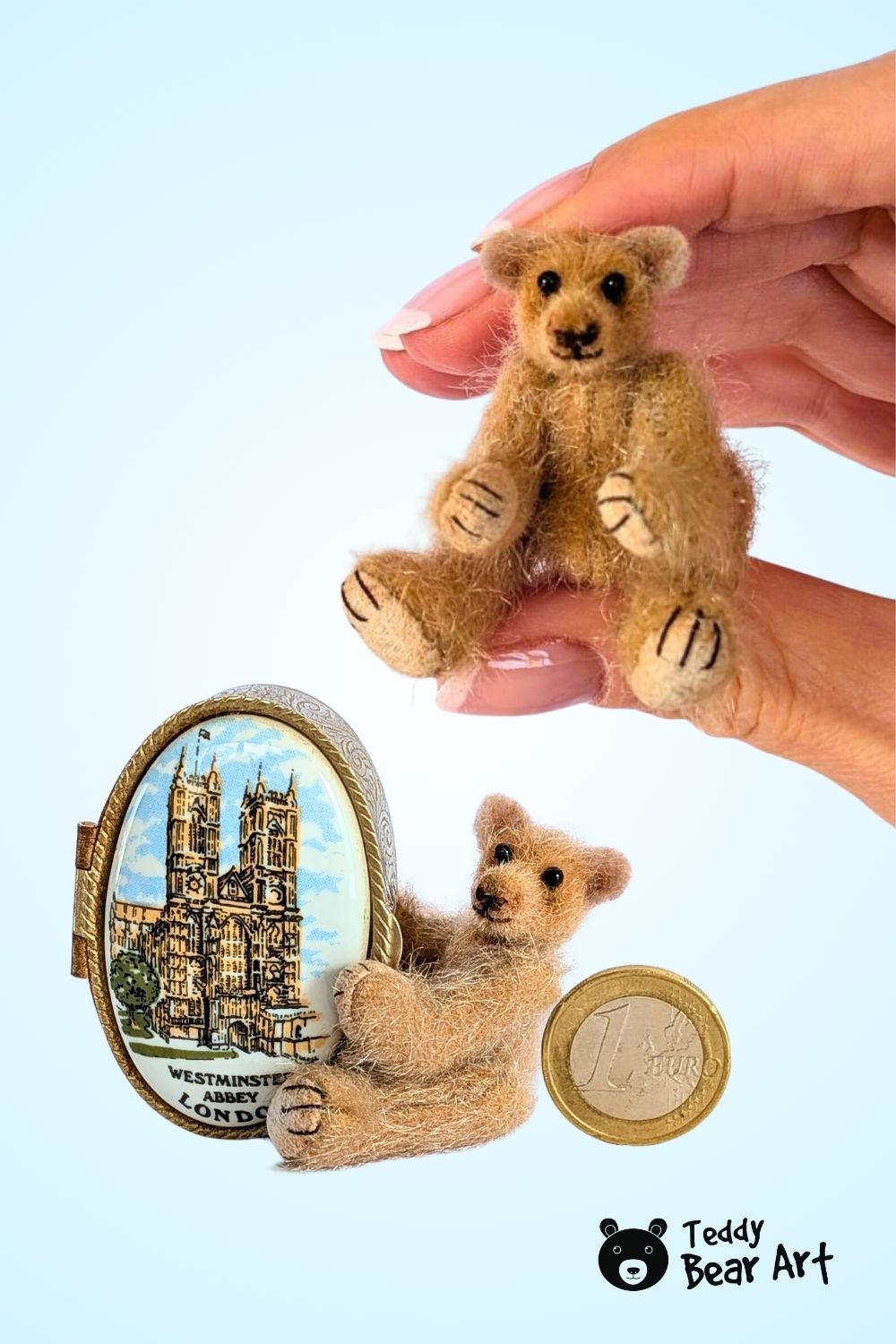
This tiny teddy bear measures only about 5 cm, or 2 inches, and is fully jointed despite its miniature size. It is a classic little artist bear with traditional proportions, movable limbs, and plenty of personality packed into a very small project.
Download the Pattern
Notice that seam allowances are not included.
To download the pattern, follow the instructions below:
From a phone or tablet: There should be a similar option for mobile devices with Android or iOS. Click on the image. Save it by holding your finger on the image and selecting the “Save Image” option. Then, go to your photo gallery and print it (an option available).
From a computer: Click on the photo of the pattern you see below. In the new tab that will open, you press the right mouse button and select the “Save image as …” option. Then, you choose where the image will be saved on your computer.
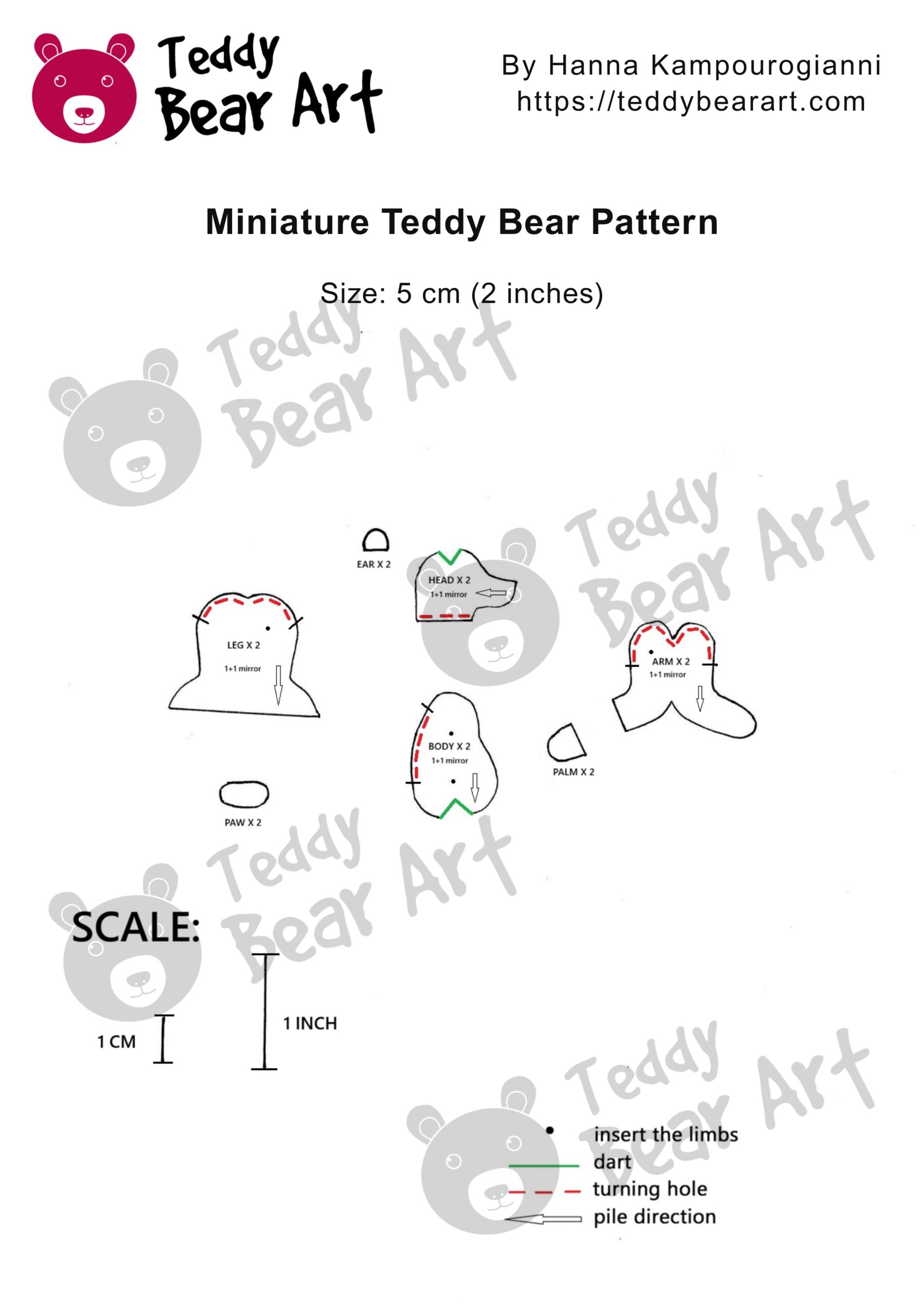
For the materials and complete sewing instructions, visit my Mini Teddy Bear pattern and Mini Teddy Bear tutorial.
Miniature Jointed Mouse Pattern
This little dormouse measures about 7 cm without the tail and combines a compact body with a long fluffy tail and expressive face. The small scale makes it especially charming, while the jointed construction gives it the feel of a traditional teddy-style collectible rather than a simple plush toy.

Download the Pattern
Notice that seam allowances are not included.
To download the pattern, follow the instructions below:
From a phone or tablet: There should be a similar option for mobile devices with Android or iOS. Click on the image. Save it by holding your finger on the image and selecting the “Save Image” option. Then, go to your photo gallery and print it (an option available).
From a computer: Click on the photo of the pattern you see below. In the new tab that will open, you press the right mouse button and select the “Save image as …” option. Then, you choose where the image will be saved on your computer.
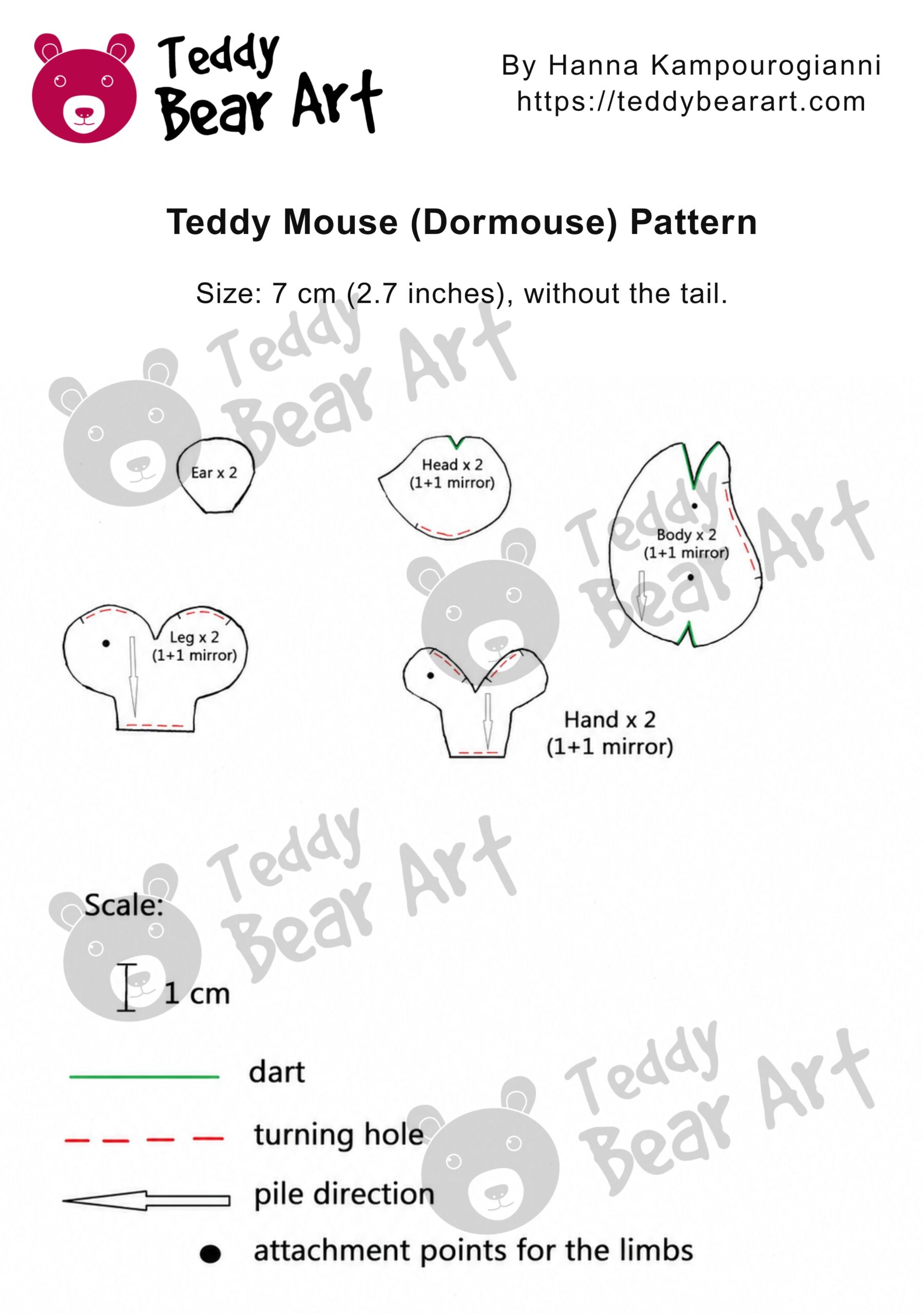
For the materials and full step-by-step guide, visit my Miniature Jointed Mouse tutorial.
Small Elephant Pattern
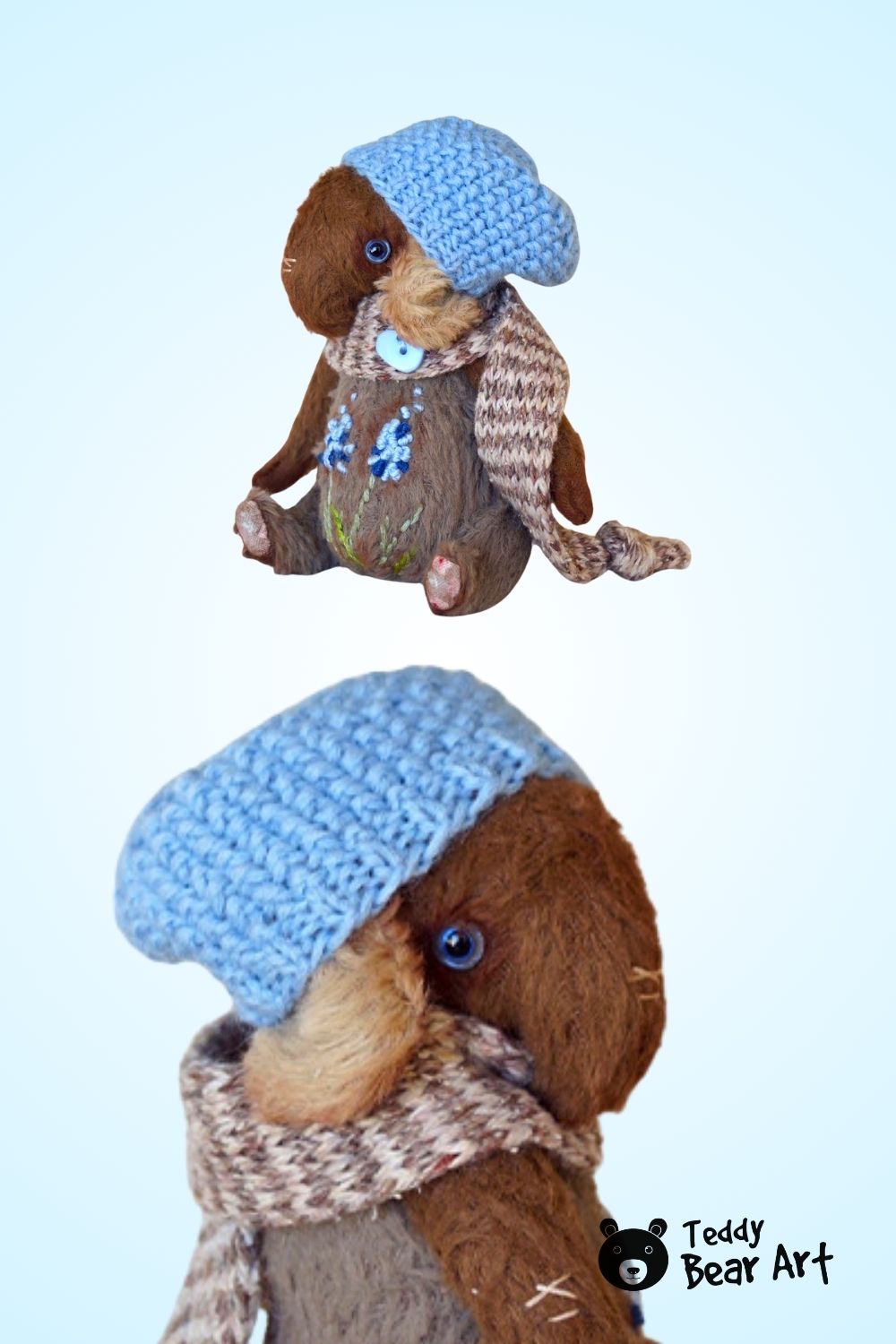
At approximately 12 cm, this elephant is slightly larger than the tiniest projects in the collection but still works beautifully as a miniature teddy animal. It is a stylized little character rather than a realistic elephant, with exaggerated proportions, a short trunk, large ears, and movable limbs that give it a playful artist-teddy look.
Download the Pattern
Notice that seam allowances are not included.
To download the pattern, follow the instructions below:
From a phone or tablet: There should be a similar option for mobile devices with Android or iOS. Click on the image. Save it by holding your finger on the image and selecting the “Save Image” option. Then, go to your photo gallery and print it (an option available).
From a computer: Click on the photo of the pattern you see below. In the new tab that will open, you press the right mouse button and select the “Save image as …” option. Then, you choose where the image will be saved on your computer.
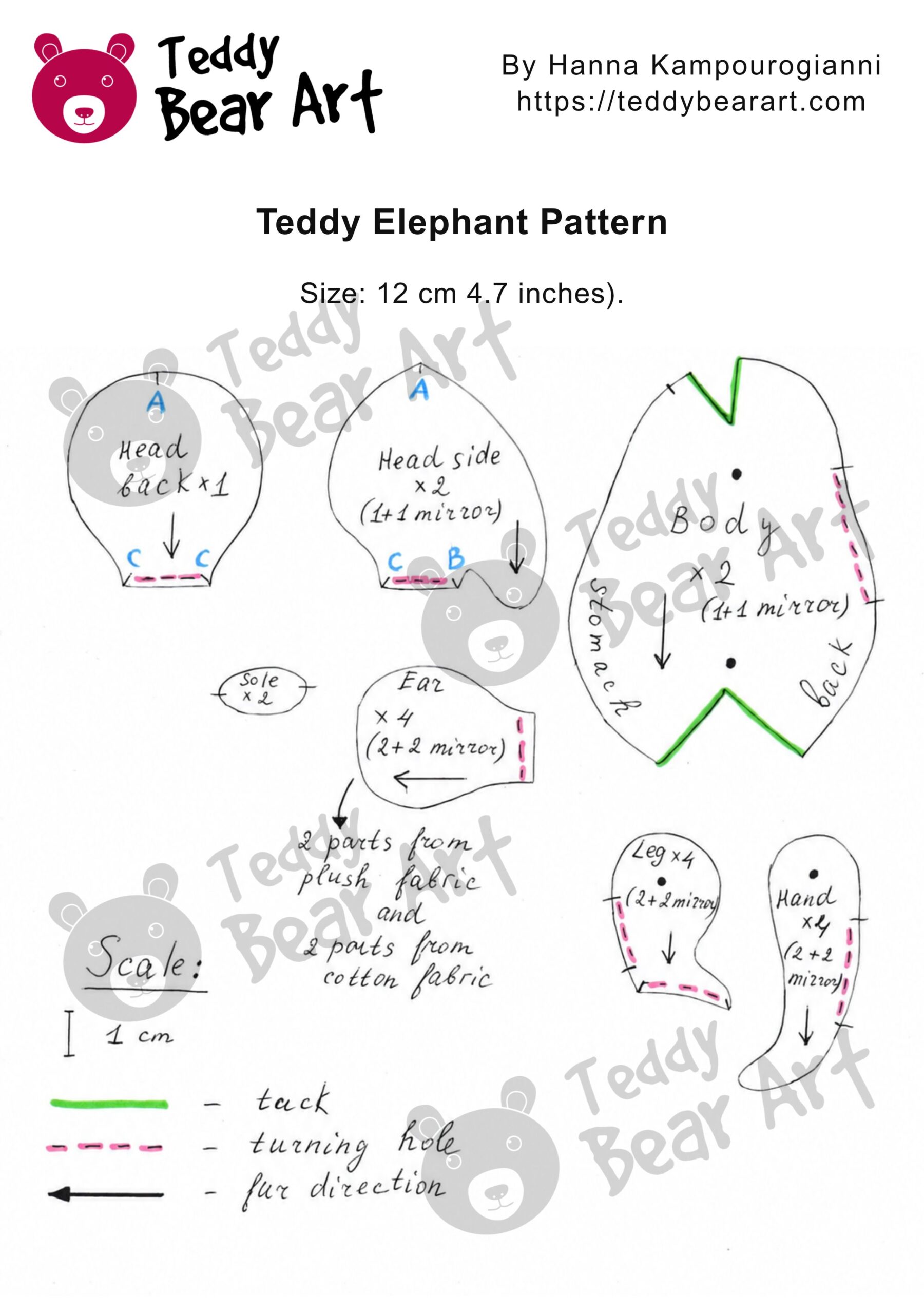
For the materials and detailed sewing instructions, see my Small Elephant tutorial.
Small Rhino Pattern
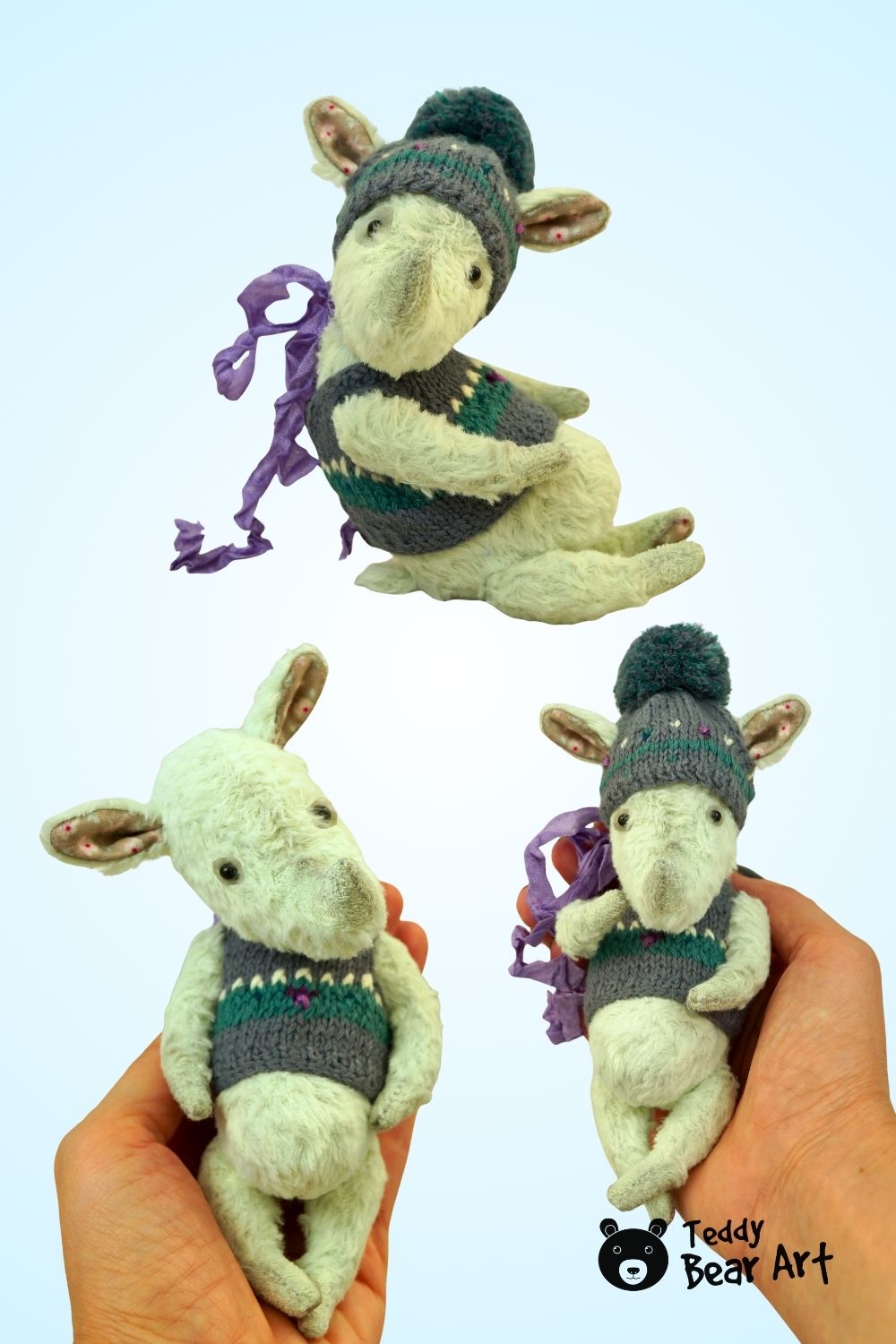
This small rhino has a compact body, tiny ears, a defined muzzle, and jointed limbs. I especially like this pattern because it shows how traditional teddy construction can be adapted to an unusual animal while keeping the finished toy small and expressive.
Download the Pattern
Notice that seam allowances are not included.
To download the pattern, follow the instructions below:
From a phone or tablet: There should be a similar option for mobile devices with Android or iOS. Click on the image. Save it by holding your finger on the image and selecting the “Save Image” option. Then, go to your photo gallery and print it (an option available).
From a computer: Click on the photo of the pattern you see below. In the new tab that will open, you press the right mouse button and select the “Save image as …” option. Then, you choose where the image will be saved on your computer.
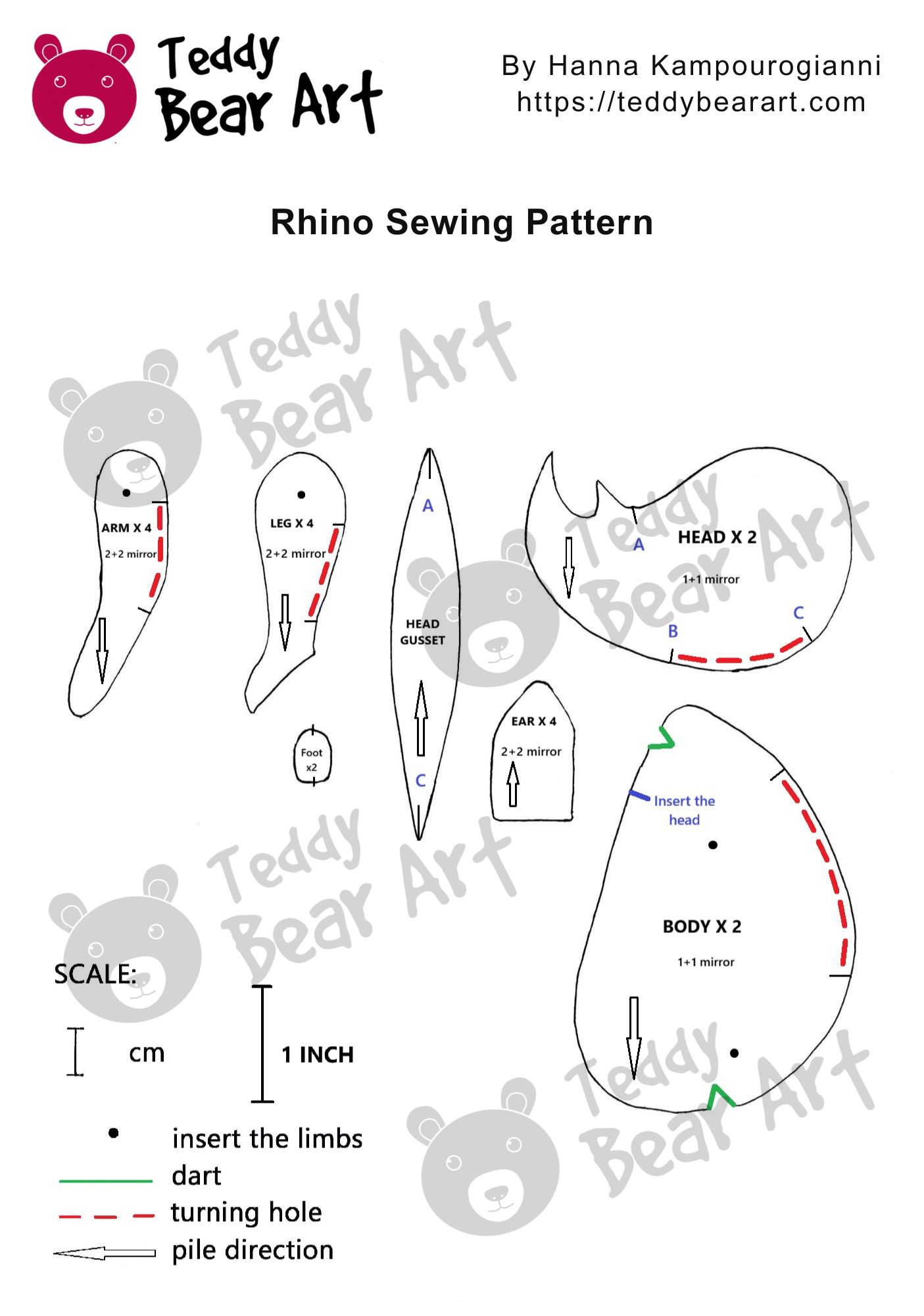
For the materials and complete guide, visit my Miniature Rhino tutorial.
Small Teddy Tapir Pattern
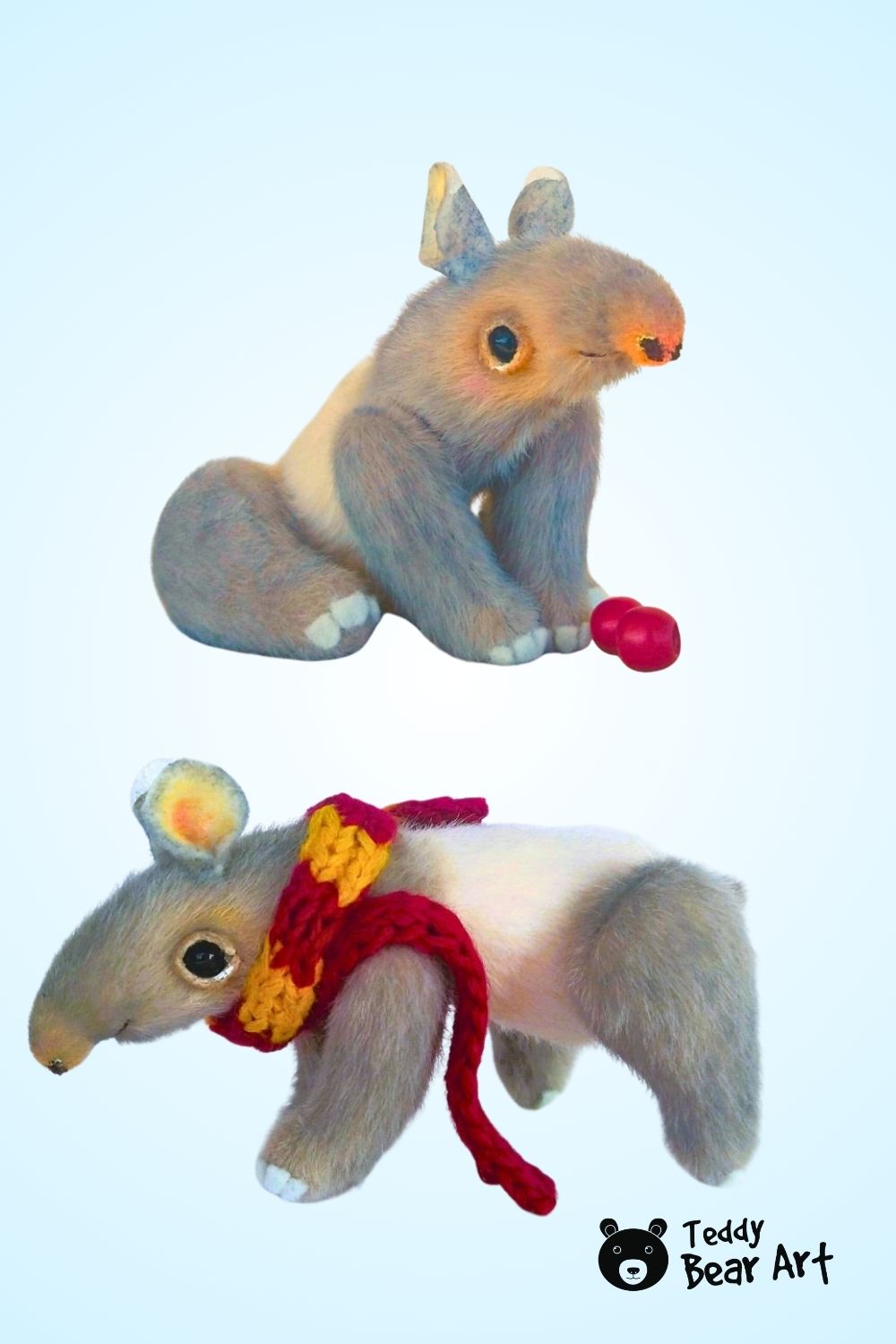
The tapir measures about 13 cm and has a distinctive elongated nose, contrasting body colors, and jointed limbs. Among these miniature teddy animal patterns, it is one of the more unusual designs and a lovely choice if you enjoy making animals that are a little different from the usual bears and bunnies.
Download the Pattern
Notice that seam allowances are not included.
To download the pattern, follow the instructions below:
From a phone or tablet: There should be a similar option for mobile devices with Android or iOS. Click on the image. Save it by holding your finger on the image and selecting the “Save Image” option. Then, go to your photo gallery and print it (an option available).
From a computer: Click on the photo of the pattern you see below. In the new tab that will open, you press the right mouse button and select the “Save image as …” option. Then, you choose where the image will be saved on your computer.
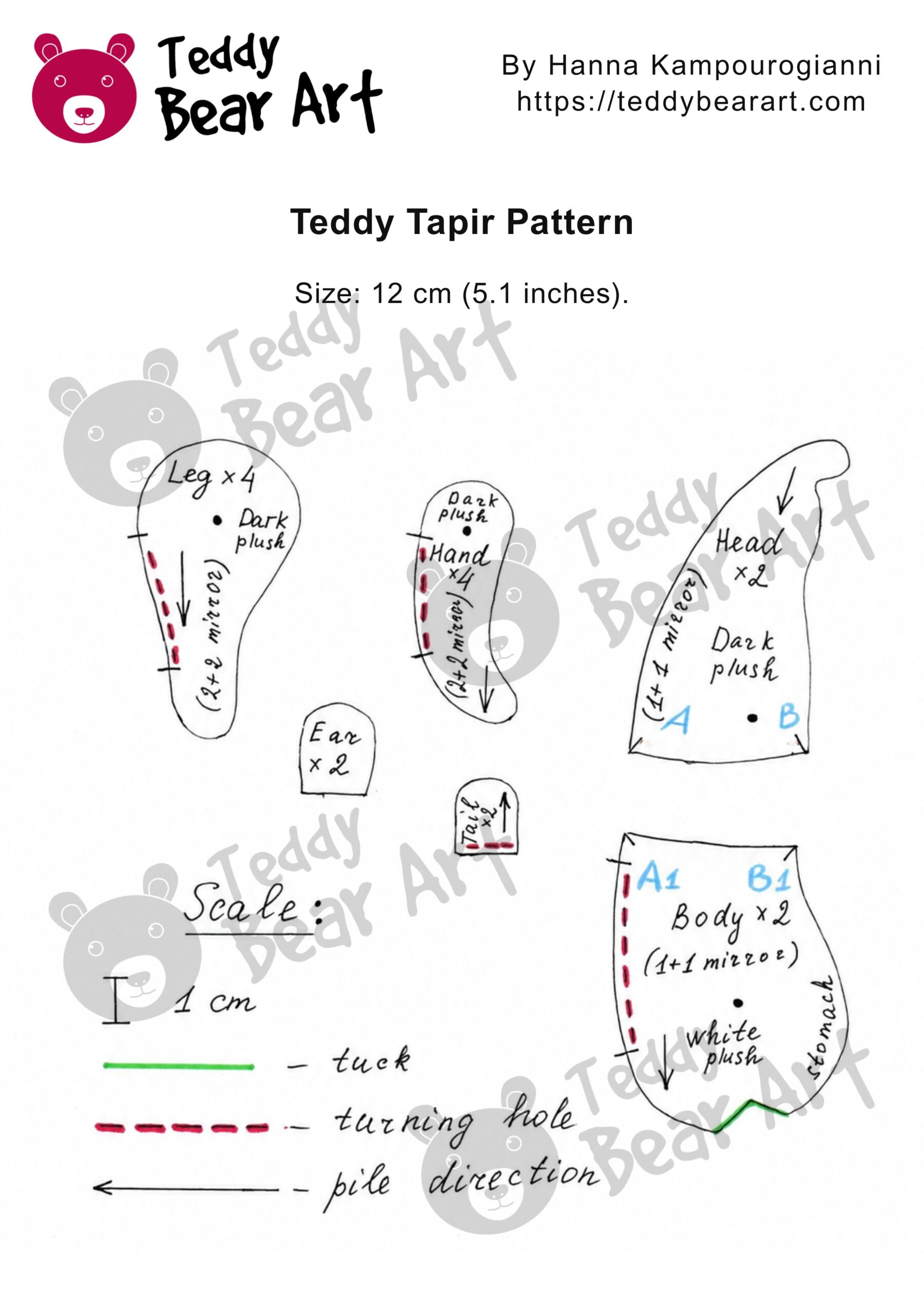
For the materials and detailed sewing guide, visit my Teddy Tapir pattern and Teddy Tapir tutorial.
FAQ
What fabric is best for miniature teddy animals?
Short-pile mohair, viscose, miniature synthetic fur, and other fine teddy fabrics work especially well because they keep small details visible and make tiny pattern pieces easier to handle.
Are miniature teddy animals suitable for beginners?
These patterns are not really designed for someone starting completely from zero. Some experience with larger teddy bears or other jointed teddy-style animals is helpful, especially when working with tiny seams, small joints, and miniature pattern pieces.
How are the limbs attached?
Most of these designs use traditional teddy bear jointing methods with small discs, cotter pins, or similar hardware. Check the linked tutorial for the exact materials and joint sizes used for each animal.
Before You Go
If you enjoy making small jointed animals, save this collection of miniature teddy animal patterns so you can come back and try another design later. You can also explore more of my free stuffed animal sewing patterns:
Get Free Patterns & Be the First to Know!
Want free teddy bear patterns, exclusive tutorials, and a chance to win craft supplies?
Sign up for our newsletter using the subscribe form in the middle of this article to receive new patterns, insider tips, and the latest news on teddy bear art. You’ll also automatically be entered into our annual giveaway for a chance to win teddy bear crafting materials.
Bonus entry: Save one of our pins on Pinterest to increase your chances of winning!
Let’s create, inspire, and craft beautiful teddy bears together!
These little animals are absolutely adorable! I’m still quite new to making handmade toys, so I don’t think I would be ready to make something this detailed just yet, especially at such a small size.
But I really enjoyed looking through all the different designs. The tiny mouse and elephant are especially sweet, and I love how much character each little animal has.
This definitely gives me something to work toward as I become more confident with toy making. I’d love to be able to make miniature animals like these one day!
Thank you! Miniature animals can definitely feel challenging at first, so starting with simpler toy projects is a great way to build confidence before trying something this detailed.