
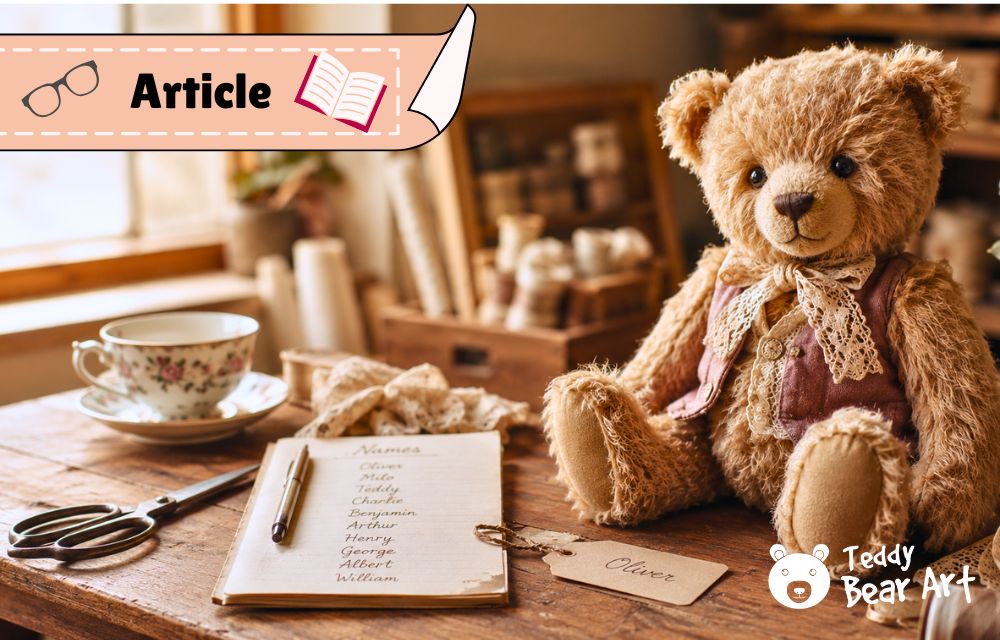

If you are wondering how to name a stuffed bear before selling it, start by looking at the bear in front of you, not at a random list of names. A handmade bear already has clues in its face, fabric, posture, color, and mood. Some bears look shy. Some look cheeky. Some have that serious old-soul expression, as if they have been sitting quietly on a shelf for fifty years. The best name usually comes from those little details.
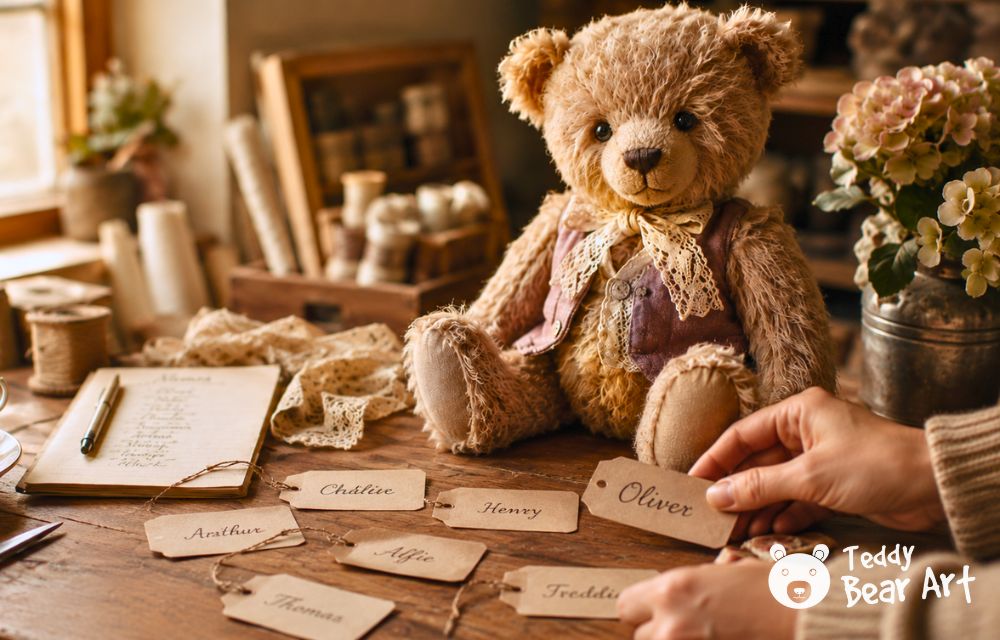
Naming a handmade teddy bear is a small step, but it can change how people see your work. A bear with a name feels more finished. It feels like someone has already loved it a little before sending it into the world. And if you sell handmade teddy bears, that emotional detail can make your listing, social media post, or shop photo feel warmer and more memorable.
Of course, you can sell a bear without a name. Many artists do. But if your style is personal, nostalgic, whimsical, or story-based, a good name can help the bear feel less like “a product” and more like “a character waiting for the right home.”
How To Name A Stuffed Bear So It Feels Ready To Sell
The easiest way to name a handmade bear is to ask yourself what kind of feeling the bear gives you. Not what name is popular. Not what name is trendy. What does this particular bear seem to say?
Look at the face first. A tiny tilted nose, wide-set eyes, or slightly serious mouth can completely change the name. A soft cream bear with sleepy eyes may not feel like a “Buster.” A chubby brown bear with a funny little smile may not feel like “Cordelia.” The name should fit naturally, almost like it was already there and you simply noticed it.
Then look at the body shape and pose. A long-limbed artist bear may suit a more elegant name, like Florence, Rupert, Clara, or Theodore. A round, cuddly plush bear may need something softer, like Biscuit, Milo, Rosie, or Honey. A small pocket-sized bear can carry a sweet little name, such as Pip, Button, Nelly, or Coco.
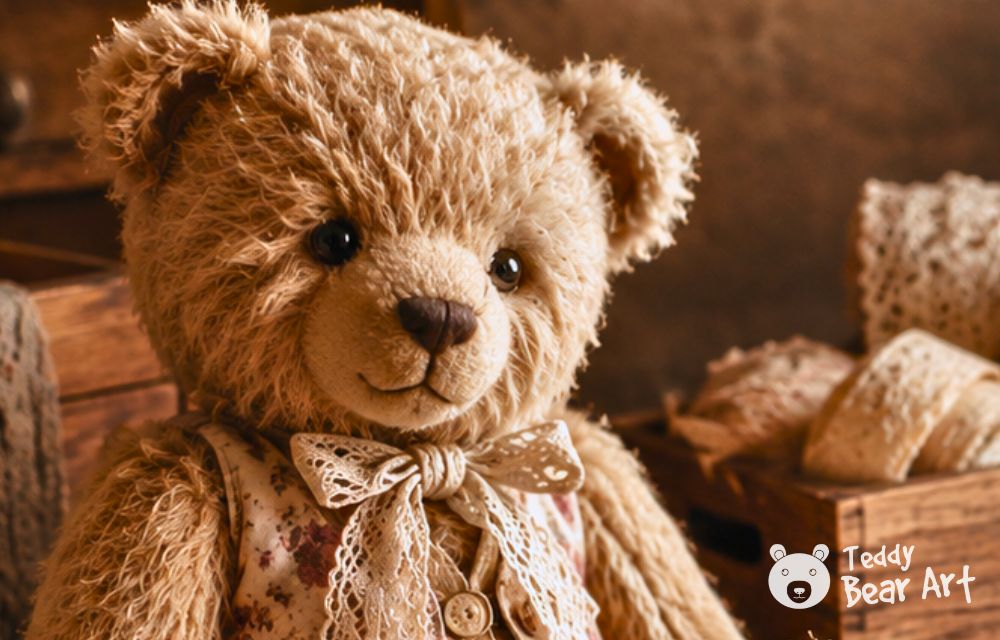
Fabric also gives strong hints. Mohair and viscose often carry a vintage feeling, so old-fashioned names work beautifully. Fleece, minky, or soft plush can feel more playful and cozy. A bear made from worn-looking fabric may suit a name with history. A bright pink bear may need something cheerful, floral, or slightly funny.
You can also think about the future buyer. If the bear is a collector piece, the name can be more refined. If it is a soft handmade gift, the name can be simple and lovable. If it is seasonal, the name can gently match the mood, like Holly for a Christmas bear, Hazel for an autumn bear, or Snowdrop for a winter bear.
A good name does not need to explain everything. It only needs to open a small door.
Choose A Name By Personality, Style, And Color
Personality is usually the strongest starting point. Before choosing a name, spend a minute looking at the bear as if it were alive. Is it brave, shy, sleepy, proud, silly, gentle, romantic, old-fashioned, or curious?
A shy bear may suit names like Clara, Lily, Oliver, Theo, Mabel, or Ella. A playful bear may feel more like Benny, Poppy, Daisy, Milo, or Sunny. An elegant bear may need something like Beatrice, Edward, Florence, Arthur, Margot, or Sebastian. A dreamy bear might become Nelly, Winnie, Rosie, Sophie, or Pearl.
Style matters too. Vintage teddy bears often look wonderful with classic names, especially if the bear has glass eyes, aged fabric, or traditional teddy bear proportions. Names like Walter, Edith, Albert, Agnes, Florence, George, and Clara can give that soft antique feeling.
For romantic or cottage-style bears, try gentler names, such as Flora, Primrose, Daisy, Posy, Honey, Rose, or Clementine. For artist bears, you can go a little more unusual without making the name too difficult. Amelie, Basil, Viola, Rupert, Emmeline, Hugo, and Josephine all feel special, but still easy to read.

Color can help when you feel stuck. Brown bears often suit warm names like Cocoa, Chestnut, Maple, Bruno, Toffee, or Biscuit. White or cream bears may feel like Pearl, Vanilla, Cloud, Ivory, Snowdrop, or Milky. Pink bears can become Rose, Blush, Peony, Posy, Bella, or Primrose. Golden bears often suit Honey, Amber, Marigold, Sunny, or Butterscotch.
Still, try not to choose only by color. A brown bear can be called Florence if she looks like Florence. A white bear can be called Arthur if he has that serious little gentleman face. The best names come from a mix of color, face, mood, and instinct.
If you want more inspiration from ready-made name lists, you can also look through my teddy bear name guides, such as Teddy Bear Names List A-Z Guide, 100 Good Teddy Bear Names, and 100 Cute Teddy Bear Names For Cuddly Bears. Use them as a starting point, then adjust the name to fit your own handmade bear.
Give Your Handmade Bear A Tiny Story
A name becomes stronger when it has a little story behind it. This does not mean writing a long fairy tale. One or two sentences are enough.
For example:
“Clara is a gentle little bear who loves quiet mornings, old books, and sitting near a sunny window.”
“Benny is a cheerful handmade bear with soft paws, a round belly, and the kind of smile that makes him ready for a new adventure.”
“Rupert is a classic mohair bear with thoughtful glass eyes and a calm, old-fashioned character.”
These tiny stories help buyers imagine the bear in real life. They also make your listing feel more personal. Instead of only describing fabric, size, and price, you are giving the bear a small personality.
This is especially helpful if you sell artist bears, collector bears, or one-of-a-kind handmade teddy bears. Buyers often want more than a well-made object. They want a feeling. They want to connect with the bear. A name and a short description can help that happen.
You can also use the name in the first line of your product listing.
Instead of writing:
“Brown handmade teddy bear for sale.”
Try:
“Meet Oliver, a handmade brown teddy bear with soft vintage charm, gentle glass eyes, and a quiet personality.”
Then continue with the practical details, size, materials, joints, filling, care notes, and shipping. The emotional introduction catches attention, and the details help the buyer feel confident.
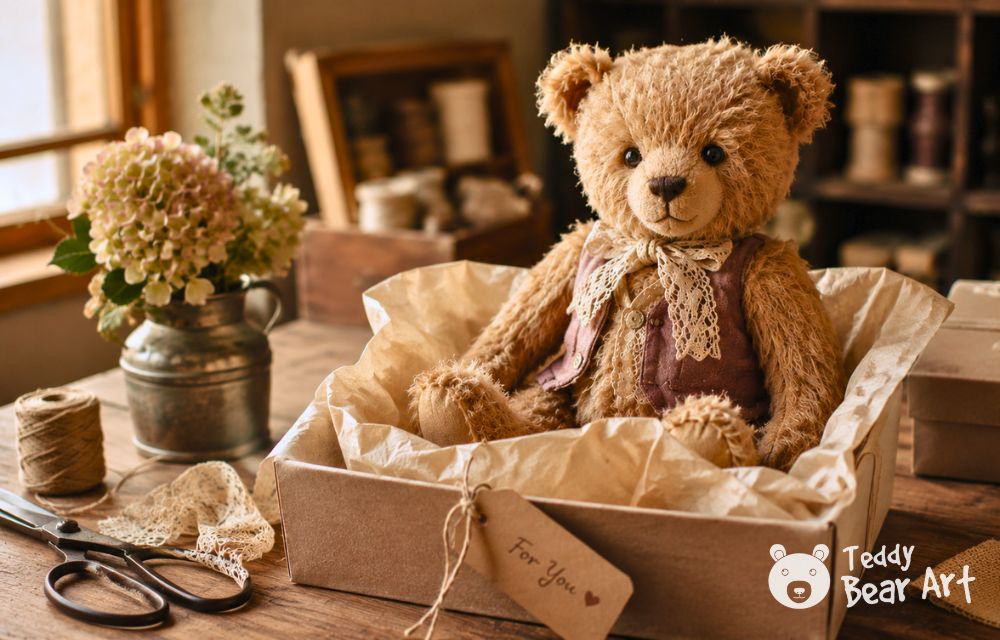
Mistakes To Avoid When Naming A Handmade Bear
The first mistake is choosing a name that fights with the bear’s face. If the bear looks calm and delicate, a loud or silly name may feel strange. If the bear looks funny and playful, a very formal name may work only if the contrast feels intentional.
The second mistake is making the name too complicated. Unusual names can be beautiful, but if buyers cannot read, remember, or pronounce them, the emotional connection may become weaker. This is especially true in online shops, where people scroll quickly.
The third mistake is copying names too closely from another artist. Of course, simple names like Rosie, Edward, or Teddy belong to everyone. But if another artist has a very specific character, story, and name combination, it is better to create your own feeling.
The fourth mistake is giving every bear the same style of name. If all your bears are called Lily, Rosie, Daisy, and Molly, your collection may start to feel flat. Mix gentle names with classic names, cozy names, and character names.
The fifth mistake is writing too much story and not enough useful information. A sweet description is lovely, but buyers still need to know the size, materials, safety notes, and what kind of bear it is. The name should support the listing, not hide the important details.
A simple balance works best: name, one warm sentence, then clear product information.
Before You Go
Naming a handmade teddy bear is not just the final little detail before listing it for sale. It can help you understand the bear better. It can also help a future buyer see personality, not just fabric and stitches.
When you finish your next bear, place it in front of you and look closely. Notice the eyes, the head tilt, the color, the mood, and the style. Say a few names out loud. Some will feel wrong immediately. One may suddenly feel just right.
That is usually the name.
If you still need more ideas, you can browse my larger teddy bear name collections her
Get Free Patterns & Be the First to Know!
Want free teddy bear patterns, exclusive tutorials, and a chance to win craft supplies?
Sign up for our newsletter using the subscribe form in the middle of this article to receive new patterns, insider tips, and the latest news on teddy bear art. You’ll also automatically be entered into our annual giveaway for a chance to win teddy bear crafting materials.
Bonus entry: Save one of our pins on Pinterest to increase your chances of winning!
Let’s create, inspire, and craft beautiful teddy bears together!
Hi Hanna! This article is absolutely wonderful. I love your advice about looking at the bear’s actual features and personality rather than just scrolling through a generic list of names. It’s so true that the fabric and the tilt of the head can reveal so much of their character. Your tip about writing a tiny, one-to-two-sentence story is brilliant. Your example of Oliver vs. “Brown handmade teddy bear for sale” is the perfect illustration of how a little bit of storytelling can completely elevate a listing. Thank you for such a warm and inspiring read.
Thank you so much for your kind words! I’m really happy this article resonated with you. I truly believe that every handmade teddy bear already has its own little personality, and sometimes the best name comes from simply looking closely at the bear itself. A small story can make such a big difference, especially when a bear is looking for the right collector. Thank you again for reading and for such a thoughtful comment!
These are some great tips on naming a stuffed bear before selling. That is the hardest part for me. I really like how you focus on how the bear makes you feel. Feeling and emotions are definitely a good selling point. When the person receives it, they should be able to feel the name.
Thank you so much! You said it so perfectly. I have felt this many times in my own practice, too. Sometimes a bear is beautifully made, but the right name gives it that final emotional touch. It helps people connect with the bear not just as a handmade toy, but as a little character with its own feelings and story.