
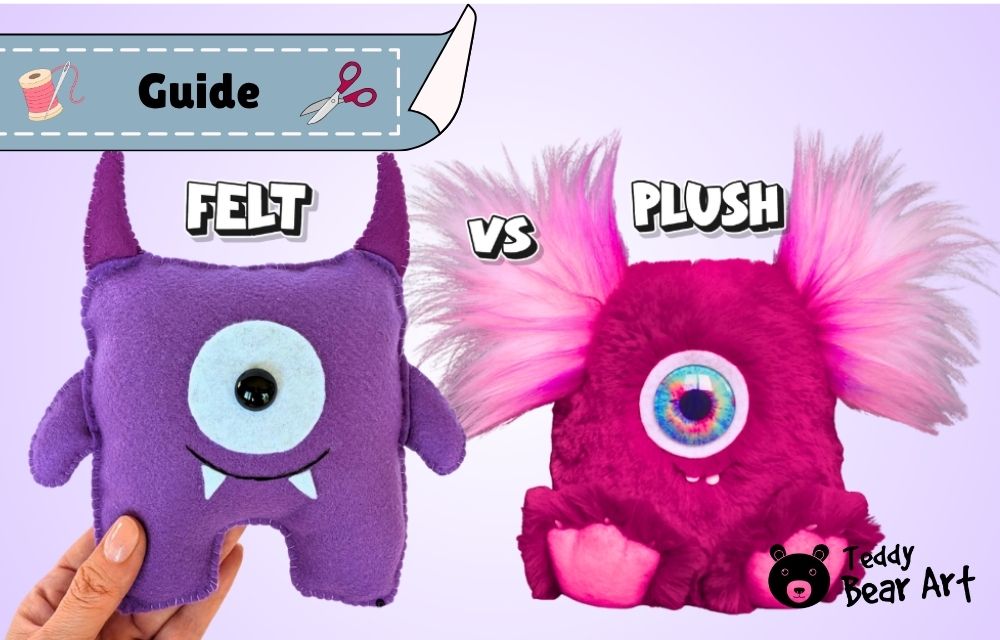

When comparing felt vs plush for toy making, there is no single winner. Felt gives you clean shapes, visible details, and a more graphic look. Plush creates softness, volume, and texture. The right choice depends on the character you want to make and the result you want to see when the toy is finished.
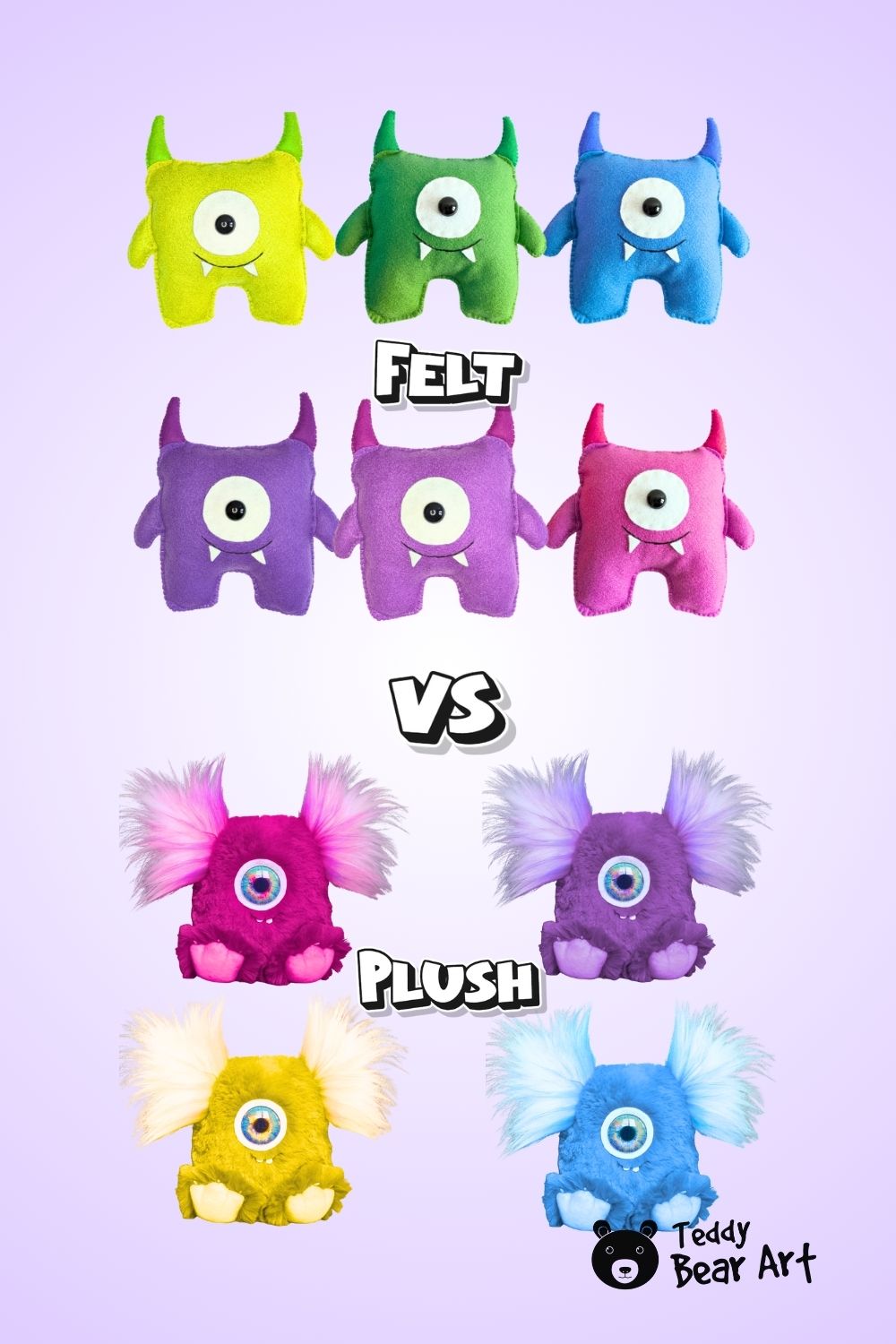
I can see this clearly in two of my own monster projects. My felt monster has simple shapes, visible stitching, and crisp details. My fuzzy one-eyed monster has a completely different personality because the long pile softens its outline and hides many of the seams.
Felt vs Plush for Toy Making: The Main Differences
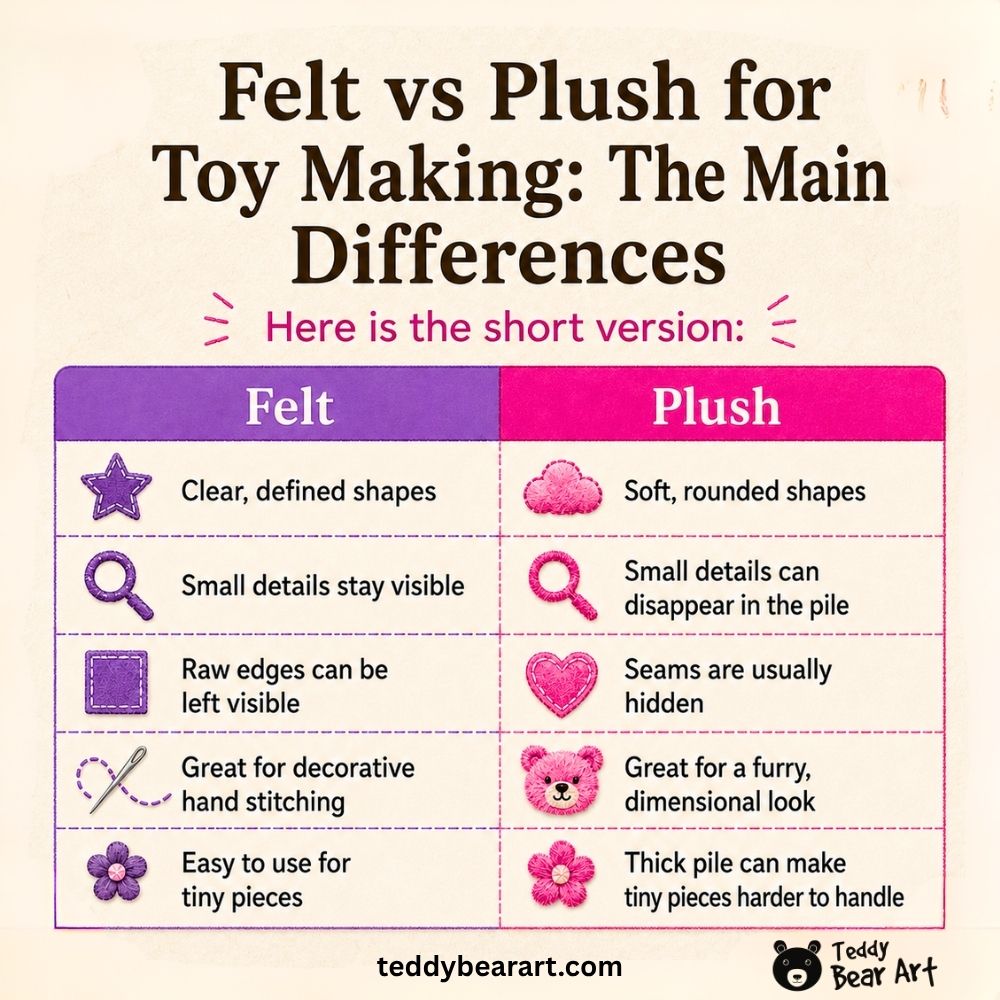
Felt and plush behave very differently even before we start thinking about a toy design. Felt is dense, has no pile, and doesn’t fray when cut, so raw edges often remain visible. Plush has a fabric backing covered with pile, which can shed along cut edges, has a clear pile direction, and usually looks best when the edges are enclosed inside seams.
For toy making, these fabric properties matter because they affect much more than the sewing process. They influence the silhouette, the visibility of small details, the way seams look, and even the personality of the finished character. Here, I am looking at felt and plush specifically from a toy design point of view, rather than simply comparing the fabrics themselves.
A pointed shape stays crisp in felt, while plush tends to soften it. Felt makes tiny details easy to see, while long pile can partly hide them. Plush, on the other hand, adds visual volume and can make even a simple pattern look softer and more dimensional.
The biggest difference is not simply how the fabric feels. It is how much the material changes the design.
A pointed felt ear usually stays pointed. A small tooth remains easy to see. With plush, the pile softens those same shapes. This can be beautiful, but it means you need to think about the fabric before cutting your pattern.
When Felt Works Best
Felt is a great choice when you want the design to stay clear and easy to read. It works especially well for toys with small ears, teeth, horns, wings, claws, or other details that you want people to notice.
It is also useful when visible stitching is part of the style. A blanket stitch around the body or contrasting thread around an ear can look decorative rather than unfinished.
Another advantage is that many felt pieces do not need to be turned right side out. This makes small shapes easier to sew and control.
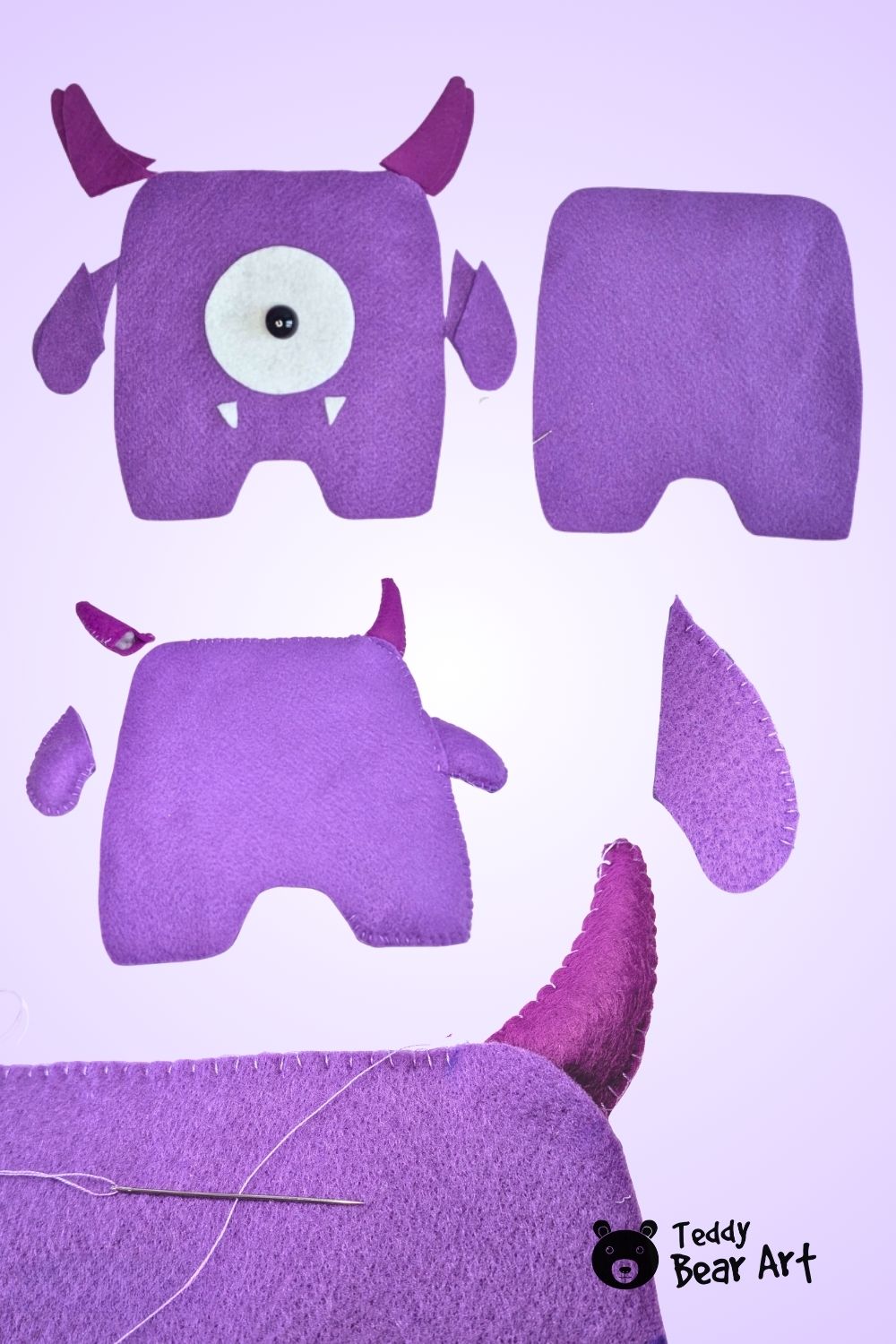
I would choose felt for a toy when I want:
- clean outlines
- precise small details
- visible decorative stitching
- simple or stylized shapes
- a flatter, more graphic appearance
My Easy DIY Felt Monster Stuffie is a good example. The shape of the pattern remains very clear in the finished toy, and the stitches become part of its character.
When Plush Works Best
Plush gives a toy a completely different feeling. The pile adds texture and visual volume, so even a simple pattern can look rich and expressive.
This is especially useful for teddy bears, furry animals, and monsters where softness is part of the personality. Long pile can make a body look rounder and make seams almost disappear after the fibers are gently pulled out of them.
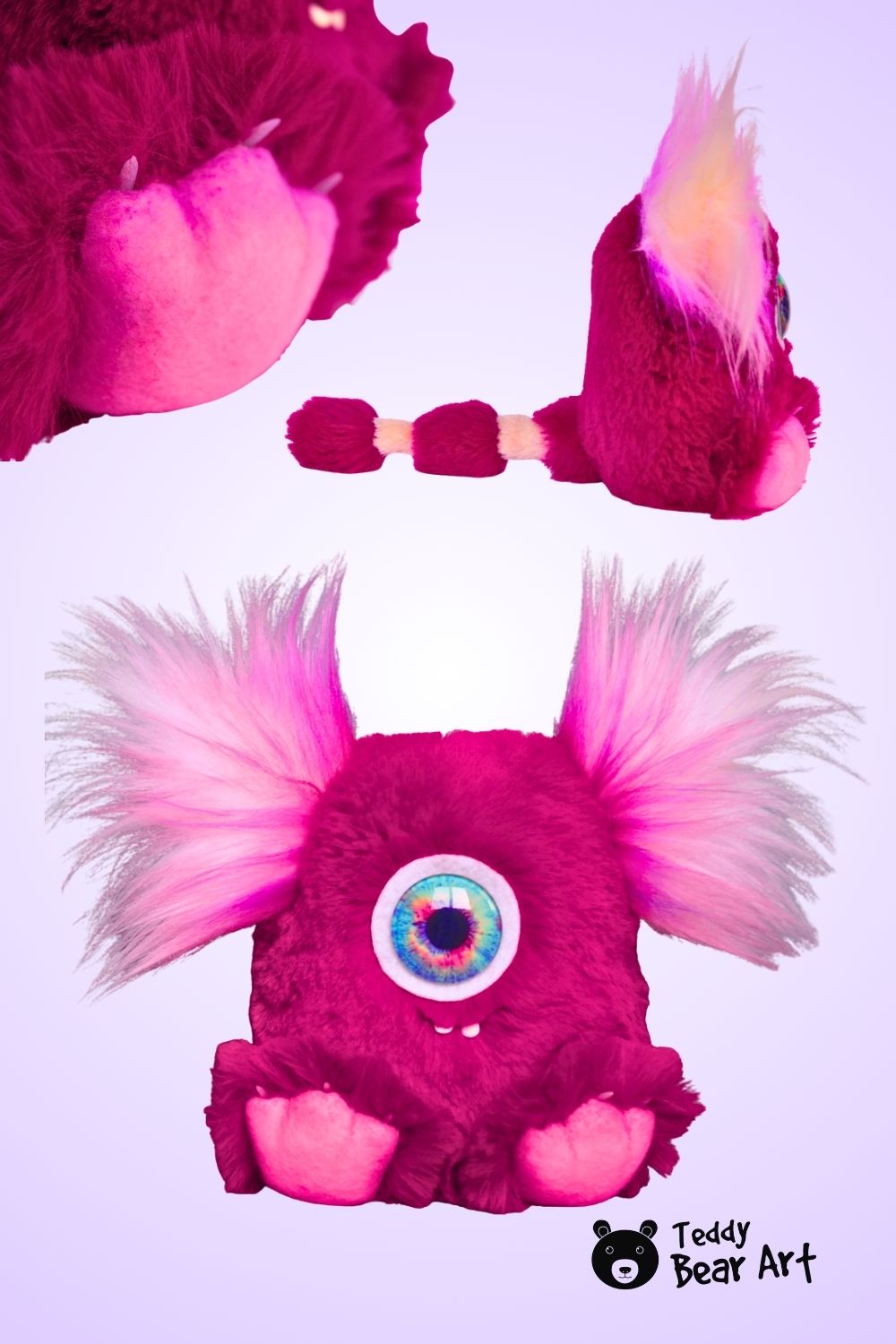
But plush also changes how you work with the pattern. The direction of the pile matters. Very small parts may lose their shape, and narrow pieces can become difficult to turn when the fabric is thick.
I would choose plush when I want:
- softness and texture
- rounded forms
- hidden seams
- a furry or cuddly appearance
- the fabric itself to become part of the character
My Fuzzy One-Eyed Monster DIY shows this well. The pattern creates the basic form, but the fur gives the monster much of its personality.
Can You Use the Same Pattern for Felt and Plush?
Sometimes, but do not expect the finished toys to look identical.
A pattern designed for felt may have tiny details that become almost invisible in thick plush. A narrow tail or small ear that works perfectly in felt may need to be slightly enlarged or simplified for plush.
This is why I like to look at the smallest pieces before choosing a fabric. If a pattern has lots of tiny details, felt may show them better. If the design relies more on a soft silhouette and texture, plush may be the better fit.
You can also combine the two. Plush works beautifully for a main body, while felt can be used for paw pads, claws, ears, wings, eyelids, or other details that need a sharper shape.
Choose the Fabric for the Look You Want
The best fabric is the one that supports your design.
Choose felt when you want clean shapes and details that stay easy to see. Choose plush when you want softness, fur, volume, and a more dimensional appearance.
Before cutting your pattern, look at the toy you are planning to make and ask yourself a few simple questions. Do the small details need to stay sharp? Do you want visible stitching or hidden seams? Is the texture part of the character? Will thick fabric make any tiny pieces difficult to sew or turn?
Those questions are more useful than asking which fabric is better.
Both materials are useful. The interesting part is seeing how each one changes the same basic idea into a completely different handmade toy.
Before You Go
Choosing the right fabric is part of designing the character, not just preparing to sew. Think about the shape, texture, and details you want to see in the finished toy, then choose the material that supports that idea.
If you are planning your next handmade toy, my How to Make DIY Stuffed Animals at Home guide covers the basic materials, patterns, and sewing steps to help you get started.
Get Free Patterns & Be the First to Know!
Want free teddy bear patterns, exclusive tutorials, and a chance to win craft supplies?
Sign up for our newsletter using the subscribe form in the middle of this article to receive new patterns, insider tips, and the latest news on teddy bear art. You’ll also automatically be entered into our annual giveaway for a chance to win teddy bear crafting materials.
Bonus entry: Save one of our pins on Pinterest to increase your chances of winning!
Let’s create, inspire, and craft beautiful teddy bears together!